Astronomers identify Planet Nine candidate in archival infrared survey data
Archival data from two infrared space telescopes revealed a moving trans-Neptunian object candidate, but its orbital tilt challenges theoretical models.
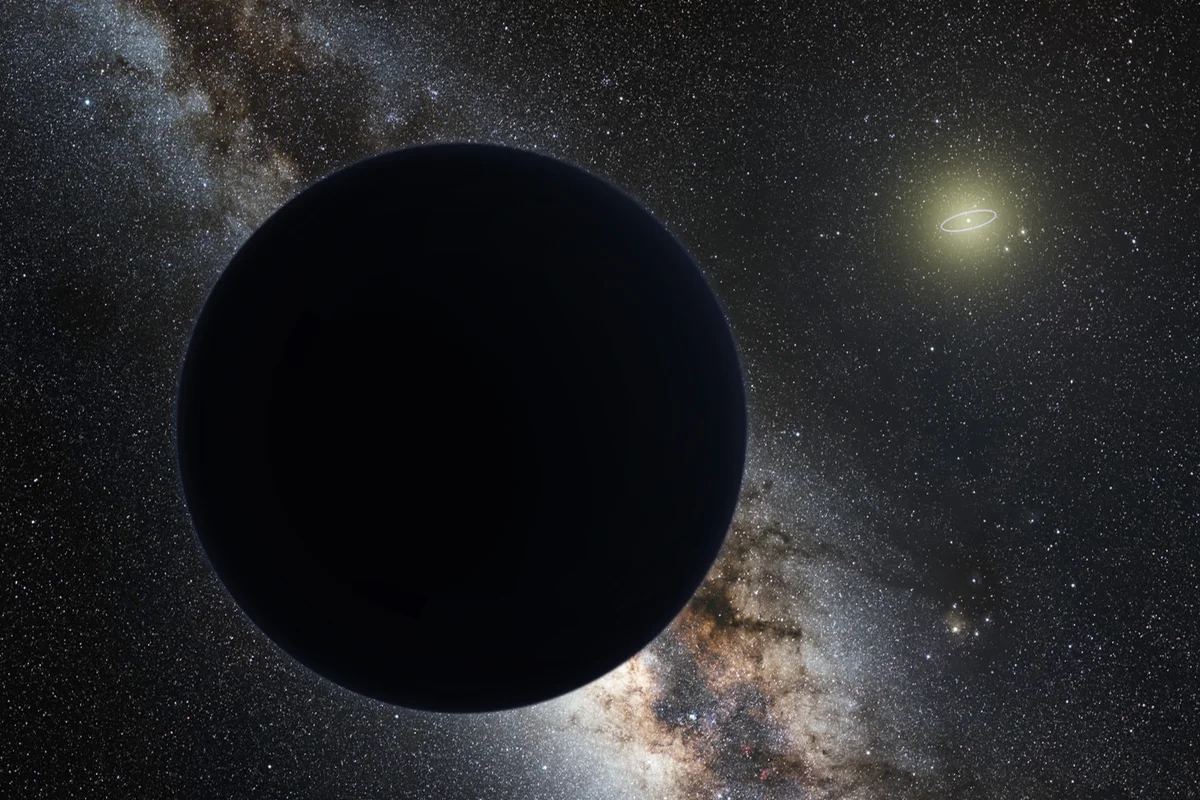
An international team of astronomers reported the detection of a candidate for a massive trans-Neptunian object after cross-referencing archival infrared sky surveys, according to scientificamerican.com scientificamerican.com
scientificamerican.comscientificamerican.comOpen source ↗. The researchers analyzed observational datasets from the Infrared Astronomical Satellite (IRAS), which operated in the early 1980s, and the Japanese space observatory AKARI, active between 2006 and 2007. By screening hundreds of thousands of candidate sources across the two-decade baseline, the team isolated a single moving point of light that matched the expected infrared brightness and displacement of an object orbiting hundreds of astronomical units beyond Neptune.
Detection method and observational challenges
Searching for distant planets using reflected visible light is mathematically constrained because solar flux drops with the fourth power of distance. In contrast, thermal infrared emissions from a cold, massive body remain detectable at long distances scientificamerican.com
scientificamerican.comscientificamerican.comOpen source ↗. The researchers looked for paired points of light appearing exclusively in the IRAS and AKARI catalogs with corresponding positions and fluxes. However, two observational points cannot conclusively establish a true orbit. The signatures could also stem from false positives, such as faint variable stars shifting in brightness or flares generated by supermassive black holes in distant galaxies.
Orbital mismatch with theoretical models
Beyond verification issues, the candidate's trajectory diverges significantly from prevailing models of Planet Nine scientificamerican.com
scientificamerican.comscientificamerican.comOpen source ↗. The hypothesis formulated in 2016 by Mike Brown and Konstantin Batygin posited that an undiscovered planet aligns the eccentric orbits of several distant trans-Neptunian objects. That model requires an orbital inclination between 15 and 20 degrees relative to Earth's orbital plane. Analysis of the vector connecting the IRAS and AKARI detections indicates an inclination of approximately 120 degrees, prompting researchers to note that even if real, the body cannot explain the clustering of outer solar system bodies. Confirmation will require follow-up observations from facilities such as the Dark Energy Camera or the Vera C. Rubin Observatory.