Simulations show asteroids near white dwarfs break into 100-meter to 1-kilometer fragments
A new simulation study reveals that tidal disruption around white dwarfs leaves behind substantial large debris rather than immediately pulverizing asteroids into dust.
Asteroids that venture too close to white dwarfs do not immediately disintegrate into microscopic dust, according to a modeling study published in The Astrophysical Journal Letters and reported by El Heraldo elheraldo.co
El Heraldoelheraldo.coOpen source ↗. Researchers Jordan Steckloff, Kathryn Volk, and Dimitri Veras, affiliated with the Planetary Science Institute and partner universities across the United States and the United Kingdom, analyzed tidal disruption dynamics in these dense stellar remnants
elheraldo.co
El Heraldoelheraldo.coOpen source ↗.
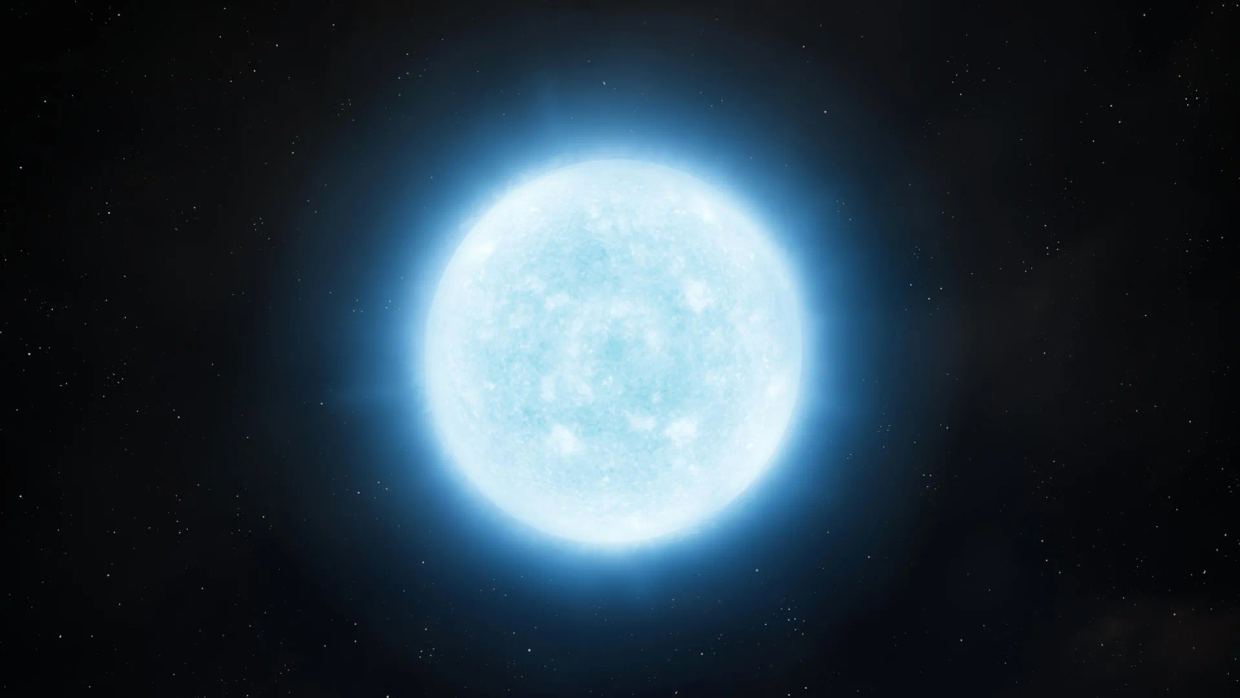
White dwarfs concentrate a mass comparable to the Sun into a volume roughly the size of Earth, continuing to emit residual heat and radiation for billions of years after nuclear fusion halts elheraldo.co
El Heraldoelheraldo.coOpen source ↗. When small celestial bodies approach such remnants, extreme gravitational tidal forces exceed the internal structural cohesion of the objects
elheraldo.co
El Heraldoelheraldo.coOpen source ↗. Many asteroids are not monolithic rocks but rubble piles bound by mutual self-gravity and weak surface interactions
elheraldo.co
El Heraldoelheraldo.coOpen source ↗.
The Role of Cohesive Forces
The research team accounted for inter-particle Van der Waals forces alongside gravitational attraction within their structural models elheraldo.co
El Heraldoelheraldo.coOpen source ↗. Incorporating these microscale interactions changed the predicted outcome of gravitational destruction
elheraldo.co
El Heraldoelheraldo.coOpen source ↗. Instead of producing a cloud of uniform, fine debris, the modeled disruption preserved a significant fraction of the initial asteroid mass in macroscopic segments
elheraldo.co
El Heraldoelheraldo.coOpen source ↗.
According to the numerical simulations, large portions of the progenitor bodies remain clustered into fragments measuring between 100 meters and 1 kilometer across elheraldo.co
El Heraldoelheraldo.coOpen source ↗. This structural survival challenges earlier assumptions that tidal disruption instantaneously crushes rubble-pile asteroids down to fine dust grains
elheraldo.co
El Heraldoelheraldo.coOpen source ↗.
Implications for Debris Disks
The presence of kilometer-scale remnants alters how scientists interpret the circumstellar disks observed around numerous white dwarfs elheraldo.co
El Heraldoelheraldo.coOpen source ↗. Standard models attribute disk evolution to the Poynting-Robertson effect, wherein stellar radiation drag progressively saps orbital angular momentum from tiny dust particles, causing them to spiral inward
elheraldo.co
El Heraldoelheraldo.coOpen source ↗.
Because large fragments are largely unaffected by radiation drag compared to sub-millimeter grains, mass transfer toward the white dwarf must involve multi-stage fragmentation processes elheraldo.co
El Heraldoelheraldo.coOpen source ↗. The findings indicate that circumstellar dust production occurs more gradually as these larger fragments undergo subsequent secondary collisions
elheraldo.co
El Heraldoelheraldo.coOpen source ↗.