NASA Completes 'Big Bang' Power Reconfiguration on Voyager 1 in Deep Space
Engineers replaced three systems on Voyager 1 with lower-power alternatives to delay instrument shutdowns ahead of a one-light-day distance milestone.
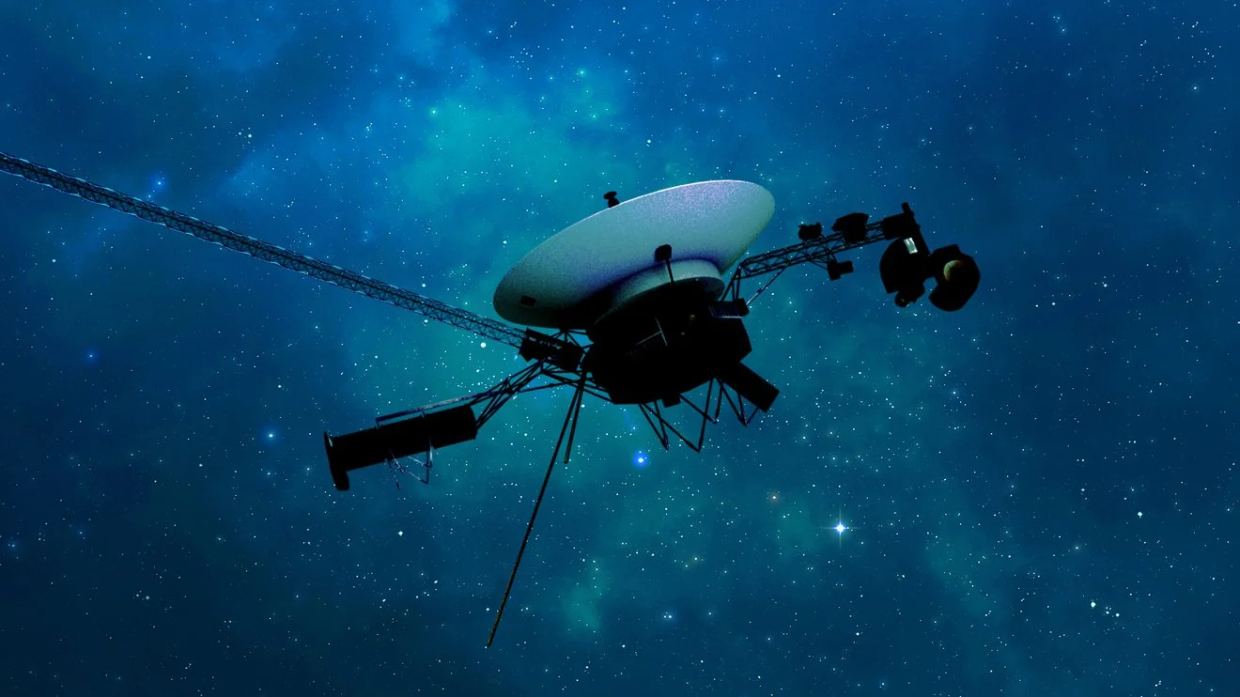
In early September, engineers at NASA's Jet Propulsion Laboratory completed an energy-saving reconfiguration nicknamed the “Big Bang” on the Voyager 1 spacecraft, as reported by jpl.nasa.gov jpl.nasa.gov
jpl.nasa.govjpl.nasa.govOpen source ↗. The procedure involved shutting down three onboard devices and simultaneously activating three lower-power alternatives. This modification followed an identical procedure executed on Voyager 2 roughly six weeks earlier and aims to prolong the operational lifespan of the probe's remaining scientific instruments.
Voyager 1 operates on electricity generated by radioisotope thermoelectric generators, which convert the heat produced by decaying plutonium into electrical power jpl.nasa.gov
jpl.nasa.govjpl.nasa.govOpen source ↗. Due to the natural radioactive decay of the fuel supply, the probe loses approximately 4 watts of power every year. The simultaneous swap of all six devices was required to reduce total power consumption while ensuring the correct distribution of heat to keep critical hardware from freezing in interstellar space. Without this adjustment, mission controllers would have had to shut down another active scientific instrument by summer 2027.
Thruster Swap and Brief Signal Loss
Following the power reconfiguration, the Deep Space Network experienced a temporary loss of communication with Voyager 1 on Oct. 18 and Oct. 19. Two scheduled communication attempts, separated by 24 hours, failed to detect a radio signal from the probe at a distance of 16 billion miles (24 billion kilometers) jpl.nasa.gov
jpl.nasa.govjpl.nasa.govOpen source ↗. Normal signal reception resumed on Oct. 20 without intervention commands from Earth.
Engineering analysis indicated that the spacecraft's fault protection system had autonomously taken one group of thrusters offline and switched to backup units jpl.nasa.gov
jpl.nasa.govjpl.nasa.govOpen source ↗. This automated routine places the probe into a stable configuration to protect the hardware while allowing ground controllers to evaluate internal telemetry.
Distance Milestone of One Light-Day
Traveling at 38,000 mph (61,155 kph), Voyager 1 reached a distance of 16.09 billion miles (25.89 billion kilometers) from Earth on Nov. 18 jpl.nasa.gov
jpl.nasa.govjpl.nasa.govOpen source ↗. This distance represents exactly one light-day, meaning radio signals require 24 hours to travel one way between the ground antennas and the spacecraft, leading to a 48-hour round-trip communication delay.
The spacecraft detects no physical transition across this boundary, but it remains the most distant human-made object and the only probe alongside Voyager 2 actively measuring particles and fields directly within interstellar space jpl.nasa.gov
jpl.nasa.govjpl.nasa.govOpen source ↗.