Canon and Coral Spawning International detect eggs in living coral with medical ultrasound
In an experiment, a Canon medical ultrasound scanned six species of stony coral underwater without cutting them open, which until now was the usual way to check for eggs.
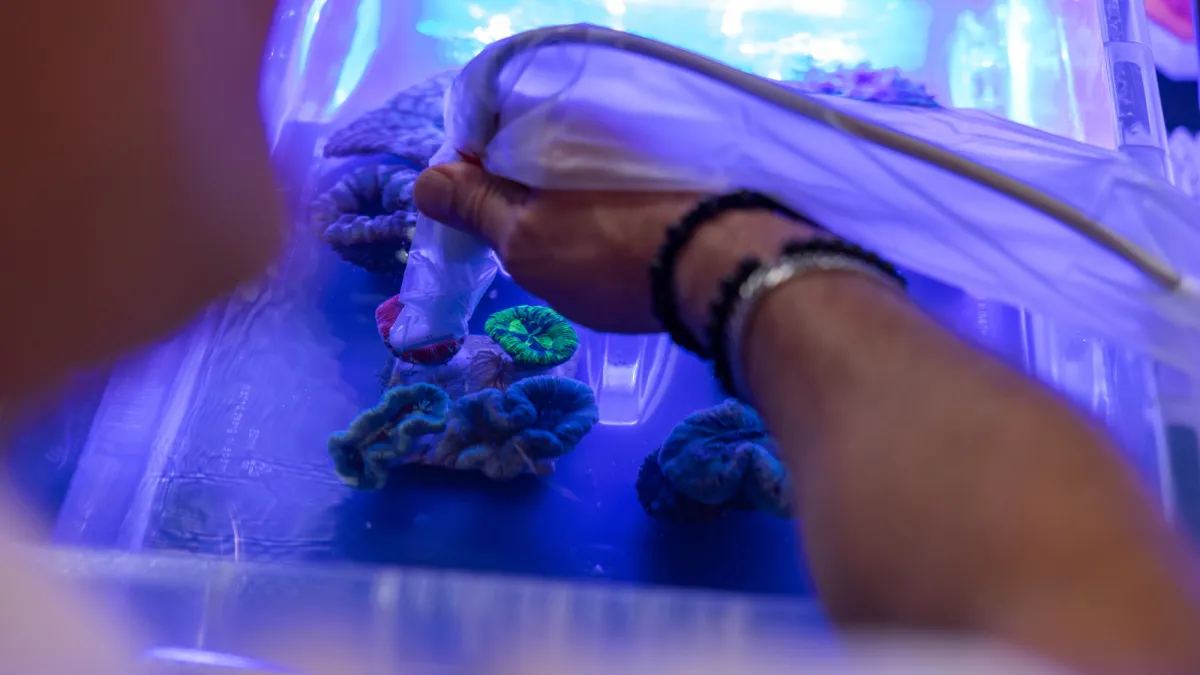
Canon has announced that its ultrasound platform can scan living coral underwater and detect eggs developing inside it, Popular Science reports. popsci.com
Popular Sciencepopsci.comOpen source ↗ Until now, checking whether a coral carried eggs typically required cutting it open. The experiment was carried out together with the UK-based conservation organization Coral Spawning International (CSI).
popsci.com
Popular Sciencepopsci.comOpen source ↗
How the ultrasound scan was done
The team used the Aplio i700, a medical ultrasound system normally used on people in hospitals. popsci.com
Popular Sciencepopsci.comOpen source ↗ It was applied to six species of large polyp stony coral with different skeletal structures. A combination of high-frequency and ultra-high-frequency probes let the researchers see through the coral skeletons and view their internal structures.
popsci.com
Popular Sciencepopsci.comOpen source ↗
To check the result, the team cut open one species, Trachyphyllia geoffroyi, and took high-power images of its interior. These images were cross-referenced with the ultrasound data, which confirmed that the structures seen in the scan were eggs. popsci.com
Popular Sciencepopsci.comOpen source ↗ Verification by dissection was thus done for one of the six species.
Peter Bragg, Canon EMEA Sustainability and Government Affairs Director, said in a statement that the experiment shows imaging can reveal what was previously unseen.
According to the report, the method lets researchers assess coral reproduction non-invasively, gather information on reproductive health and try to predict when a coral will release its eggs. Such data can help conservationists time and target restoration work without damaging or sacrificing the coral. popsci.com
Popular Sciencepopsci.comOpen source ↗
Why coral reproduction matters
Late last month the International Union for Conservation of Nature (IUCN) released an assessment saying that 96 percent of the world's coral reef ecosystems face an extremely high risk of collapse within the next 50 years. popsci.com
Popular Sciencepopsci.comOpen source ↗ The main cause named is warming oceans and heat waves linked to climate change.
Reefs support an estimated quarter of all marine species. When a reef collapses, the coral dies and is replaced by algae and sponges, which cannot support as diverse a range of marine life. popsci.com
Popular Sciencepopsci.comOpen source ↗
Knowing when corals spawn gives scientists data for breeding and restoration. Ultrasound scans could make that work more precise while sparing the coral from dissection. popsci.com
Popular Sciencepopsci.comOpen source ↗