Stalagmites reveal 450,000-year history of monsoon seesaw disruptions
Speleothems from three Peruvian caves uncovered 10 periods when Asian and South American monsoons shifted synchronously instead of in opposition.
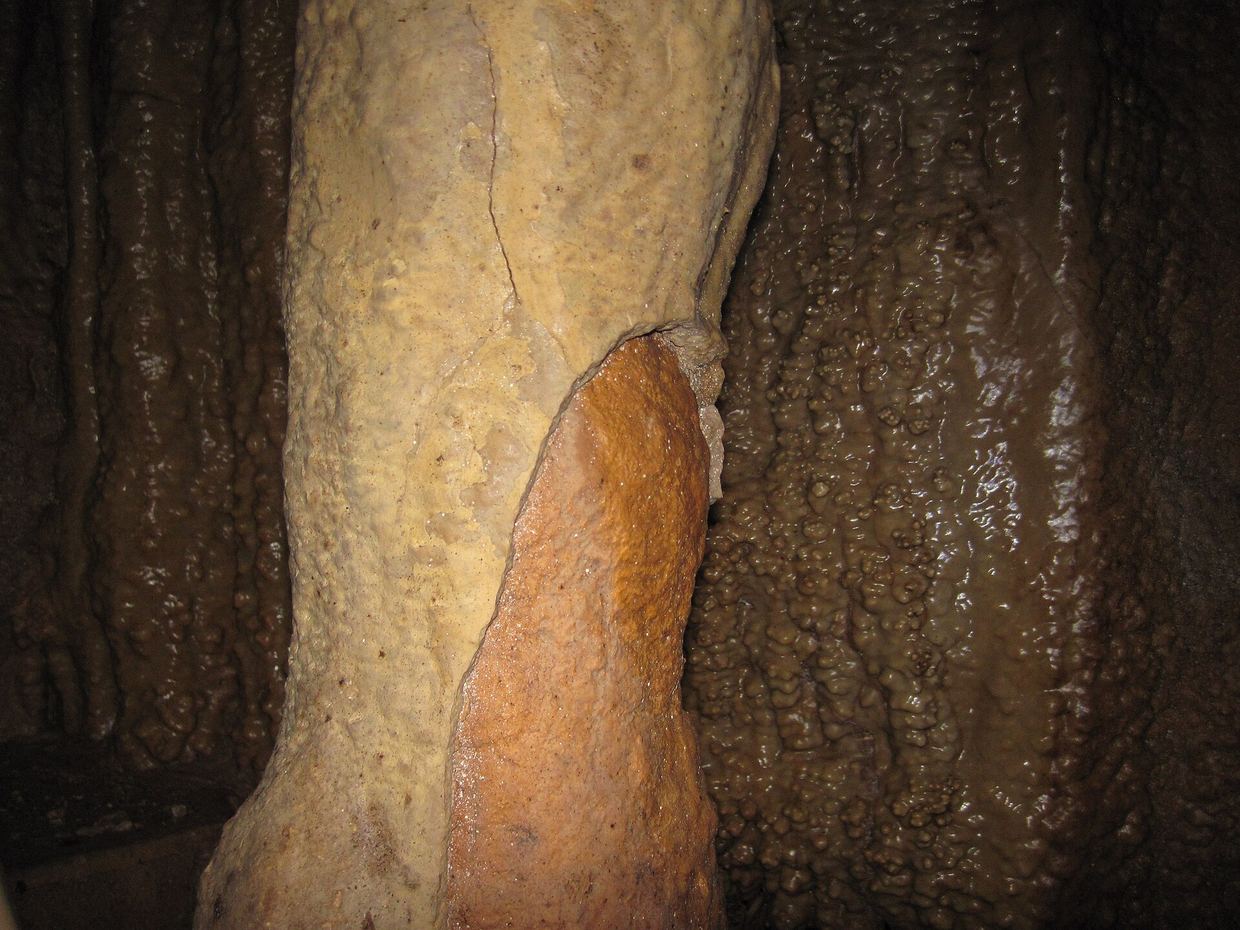
Scientists have analyzed oxygen isotope records from 30 stalagmites collected across three caves in Peru to reconstruct approximately 450,000 years of South American summer monsoon variability, according to evrimagaci.org evrimagaci.org
evrimagaci.orgevrimagaci.orgOpen source ↗. The data, published in Nature, expands the Southern Hemisphere cave record beyond previous spans that covered only two glacial cycles. Using radiometric dating, the team created a nearly continuous precipitation history, verifying the results against modern cave monitoring, lake sediments, and regional paleoclimate data.
Historically, Asian monsoon reconstructions stretching back 690,000 years demonstrated that orbital variations govern rainfall regimes, driven by the Intertropical Convergence Zone. Across these astronomical cycles of roughly 23,000 years of orbital precession, northern and southern monsoons generally operated in an antiphase seesaw pattern: when rainfall intensified in one hemisphere, conditions grew drier in the other evrimagaci.org
evrimagaci.orgevrimagaci.orgOpen source ↗.
Departures from Orbital Forcing
Comparison of the new Peruvian record with Asian data confirmed this inverse relationship as the dominant pattern. However, researchers identified 10 distinct intervals where this dipole mechanism broke down. During these anomalous phases, monsoons in both regions weakened or strengthened in unison for several millennia before returning to antiphase behavior evrimagaci.org
evrimagaci.orgevrimagaci.orgOpen source ↗.
Synchronous weakening occurred primarily during deglaciations and certain warm interglacial stages. Conversely, two periods of simultaneous intensification took place during the penultimate glacial period, between roughly 194,000 and 135,000 years ago evrimagaci.org
evrimagaci.orgevrimagaci.orgOpen source ↗.
Atmospheric Reorganization Drivers
Authors suggest these synchronous intervals demonstrate that ocean temperatures, atmospheric greenhouse gases, and interhemispheric temperature gradients can override primary orbital forcing. When the meridional temperature gradient flattened during glacial terminations, global atmospheric circulation reorganized evrimagaci.org
evrimagaci.orgevrimagaci.orgOpen source ↗.
While the triggering mechanisms are not yet definitively resolved, the 450,000-year proxy dataset establishes an empirical benchmark to test how well climate models simulate large-scale monsoon shifts evrimagaci.org
evrimagaci.orgevrimagaci.orgOpen source ↗.