ACKR3 receptor found on extracellular vesicles that bind CXCL12 and opioid peptides in cell studies
Authors report that ACKR3 is released on vesicles at rest and after ligand stimulation, and that these vesicles sequester CXCL12 and opioid peptides in cellular systems.
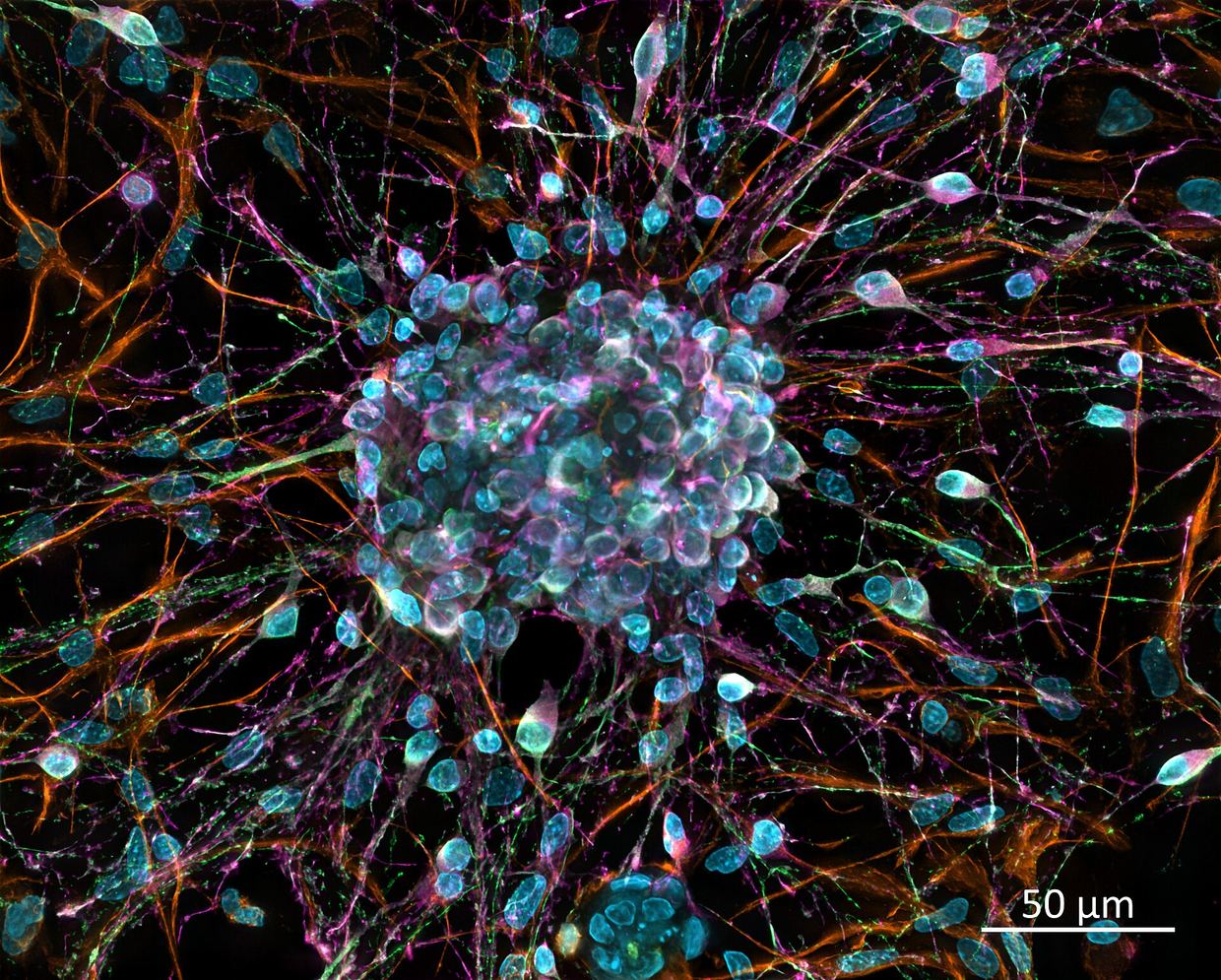
Researchers from the Luxembourg Institute of Health and partner groups in the Netherlands, Germany, Belgium, Canada and the UK have shown that the atypical chemokine receptor ACKR3 is released on extracellular vesicles (EVs). The study was published in Nature Communications on 5 November 2026; the first authors are Christie B. Palmer and Lucie Rospape. doi.org
Nature Communicationsdoi.orgOpen source ↗ According to the authors, release occurs after ligand stimulation and, to a lesser extent, under basal conditions. It was confirmed across multiple cellular contexts, including endogenous systems.
doi.org
Nature Communicationsdoi.orgOpen source ↗
ACKR3 and two release routes
ACKRs are non-signaling GPCRs that regulate ligand availability. ACKR3 acts as a dual scavenger of chemokines and opioid peptides. doi.org
Nature Communicationsdoi.orgOpen source ↗ Besides the canonical internalization after ligand stimulation, the receptor also leaves the cell on EVs, the authors report.
doi.org
Nature Communicationsdoi.orgOpen source ↗
Basal and ligand-induced EV release are independent of GRKs and β-arrestin, but each relies on different trafficking routes and C-terminal determinants. doi.org
Nature Communicationsdoi.orgOpen source ↗ Ligand-induced release is associated with plasma membrane localization and receptor recycling pathways. Basal release is governed by intracellular sorting processes and is influenced by receptor ubiquitination and RAMP3.
doi.org
Nature Communicationsdoi.orgOpen source ↗
Vesicles as ligand sinks
EV-associated ACKR3 retains high-affinity ligand binding. According to the study, this allows the vesicles to sequester CXCL12 and opioid peptides and thereby attenuate their signaling through CXCR4 and MOR. doi.org
Nature Communicationsdoi.orgOpen source ↗
Release on EVs, in particular under basal conditions, was also observed for other receptors: KOR, CXCR4 and several ACKRs. doi.org
Nature Communicationsdoi.orgOpen source ↗ The authors conclude that EVs act as regulators in chemokine and opioid systems and add a distinct dimension to the biology of ACKR3 and, more broadly, of GPCRs.
doi.org
Nature Communicationsdoi.orgOpen source ↗
The work was supervised jointly by Jérôme Paggetti, Martyna Szpakowska and Andy Chevigné. The article describes mechanisms in cellular systems.