uOttawa tests CCC model on 175 SPARC galaxies without particle dark matter
Astrophysicists applied a covarying coupling constants framework to 175 disc galaxies, matching MOND accuracy without requiring dark matter particles.
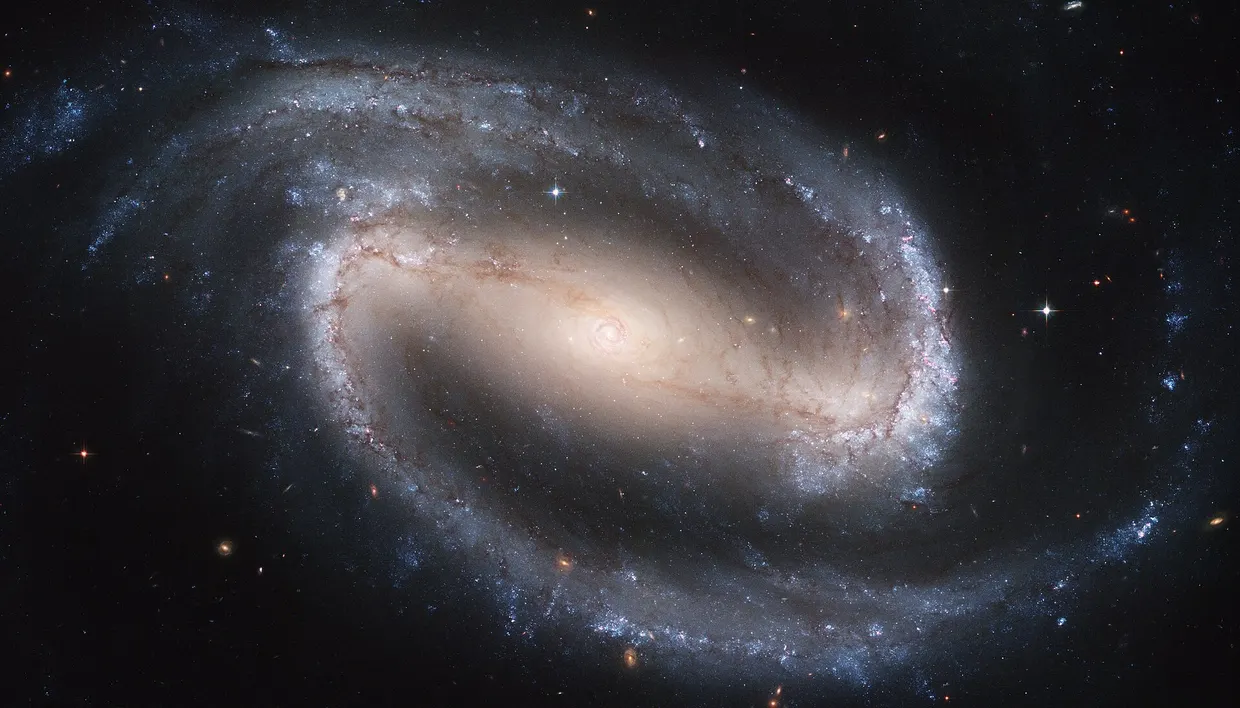
Physicists from the University of Ottawa evaluated the Covarying Coupling Constants (CCC) framework against observational data from all 175 disc galaxies in the Spitzer Photometry and Accurate Rotation Curves (SPARC) database. In a study published in the Monthly Notices of the Royal Astronomical Society, the authors demonstrated that modifying galactic dynamics via a virtual mass field keyed to local density reproduces galactic rotation curves without invoking particle dark matter oup.com
Monthly Notices of the Royal Astronomical Societyoup.comOpen source ↗.
The CCC framework was originally developed to account for high-redshift observations gathered by the James Webb Space Telescope. To assess galactic dynamics, the researchers used an inverse formulation that predicts the baryonic rotation curve from the observed curve on identical footing with alternative models. They replaced an unphysical sharp density turn-off with a smooth transition function in density space, creating a one-parameter smooth-CCC model without introducing additional free parameters.
Comparison with MOND and NFW halos
The one-parameter smooth-CCC model achieved a lower reduced chi-squared value ($\chi^2_\nu$) in 56 percent of the analyzed galaxies compared to galaxy-by-galaxy fitted Modified Newtonian Dynamics (MOND). The mean $\chi^2_\nu$ reached 2.58 for smooth-CCC versus 2.65 for MOND, showing no statistically significant performance difference between the two approaches. Conversely, standard two-parameter Navarro–Frenk–White (NFW) dark matter halos yielded a broader fit-quality distribution with a mean $\chi^2_\nu$ of approximately 7, exhibiting an extended tail of poor fits.
Turn-off density and acceleration scale
The turn-off density in the CCC formulation exhibited a scatter of 0.82 dex and correlated with galaxy size, which the authors attributed to a spherical reconstruction of flattened discs oup.com
Monthly Notices of the Royal Astronomical Societyoup.comOpen source ↗. When recast as a characteristic acceleration $a_t = V_{\mathrm{flat}}^2 / R_t$, the scatter dropped to 0.33 dex across a resolved subset of 91 galaxies. This acceleration scale measures approximately $2 \times 10^−10,\mathrm{m,s^−2}$, aligning closely with the empirical MOND acceleration scale $a_0$ of 0.34 dex scatter while eliminating the correlation with galaxy size.