Hubble archival data reveals niobium and a candidate second-generation planet around white dwarf HS 0209+0832
Astronomers reanalyzed 1999 archival spectra to detect unusual niobium signatures, pointing to a candidate gas giant formed from ejected stellar remnants.
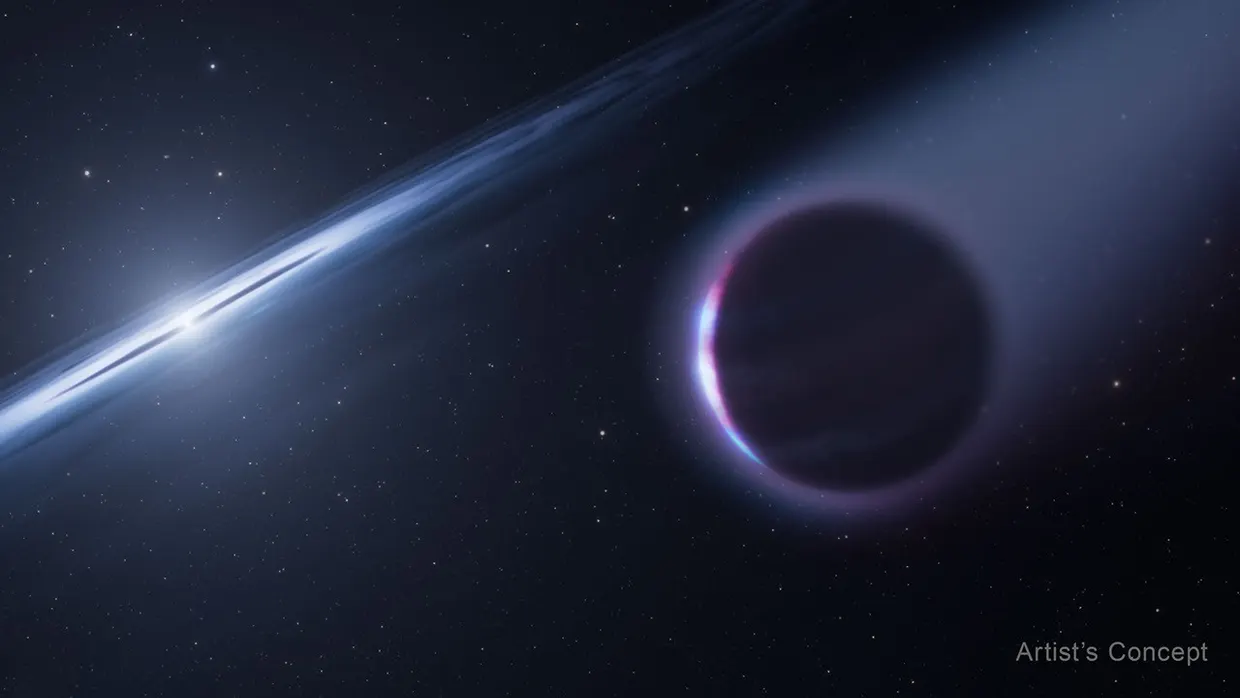
Astronomers from the University of Warwick and collaborating institutions identified strong spectral signatures of niobium in archival data from NASA's Hubble Space Telescope, pointing to a candidate second-generation planet orbiting the white dwarf HS 0209+0832, according to science.nasa.gov science.nasa.gov
science.nasa.govscience.nasa.govOpen source ↗. When Hubble first observed the stellar remnant in 1999, researchers recorded roughly 100 chemical features that could not be identified at the time. By cross-referencing those records with an updated chemical database, the team matched the mystery absorption lines to an anomalous abundance of niobium.
Synthesis in dying stars
Unlike lighter elements, elements heavier than iron are not produced by steady thermonuclear fusion in stellar cores. Theoretical astrophysicists noted that heavy elements such as niobium are synthesized exclusively under the extreme conditions that emerge inside dying stars as they shed their material into space. The researchers theorize that after the star ejected this enriched material, part of the ejecta coalesced into a gas giant planet while the rest dispersed. The niobium detection was subsequently corroborated by archival ultraviolet measurements from NASA's retired Far Ultraviolet Spectroscopic Explorer (FUSE) mission.
Orbital dynamics and mass loss
Photometric observations from NASA’s Transiting Exoplanet Survey Satellite (TESS) collected over four months revealed periodic brightness variations around the white dwarf. These signals indicate a Jupiter-sized candidate planet orbiting at a distance of approximately 3.7 million miles (6 million kilometers). Because the white dwarf is relatively young and hot, intense radiation appears to be stripping the gas giant's outer atmosphere. This escaping gas likely forms a comet-like tail and an accretion disk falling onto the stellar remnant's surface, introducing the detected niobium into the white dwarf's observable layer.