Physicists confirm electron pairing in cuprate pseudogap up to 70 meV
Shot-noise spectroscopy directly links the pseudogap in a cuprate to Cooper pairing, identifying phase coherence as the main bottleneck to higher critical temperatures.
Physicists from Utrecht University, Leiden University, and Ludwig Maximilian University of Munich have determined that the pseudogap state in high-temperature cuprate superconductors marks the onset of electron pairing, according to a study published in Science science.org
Sciencescience.orgOpen source ↗. Using localized shot-noise spectroscopy on bismuth strontium calcium copper oxide (Bi2Sr2CaCu2O8+δ), the researchers resolved the longstanding debate over whether the pseudogap arises from preformed Cooper pairs or competing local order phenomena such as charge density waves.
Resolving the pseudogap origin
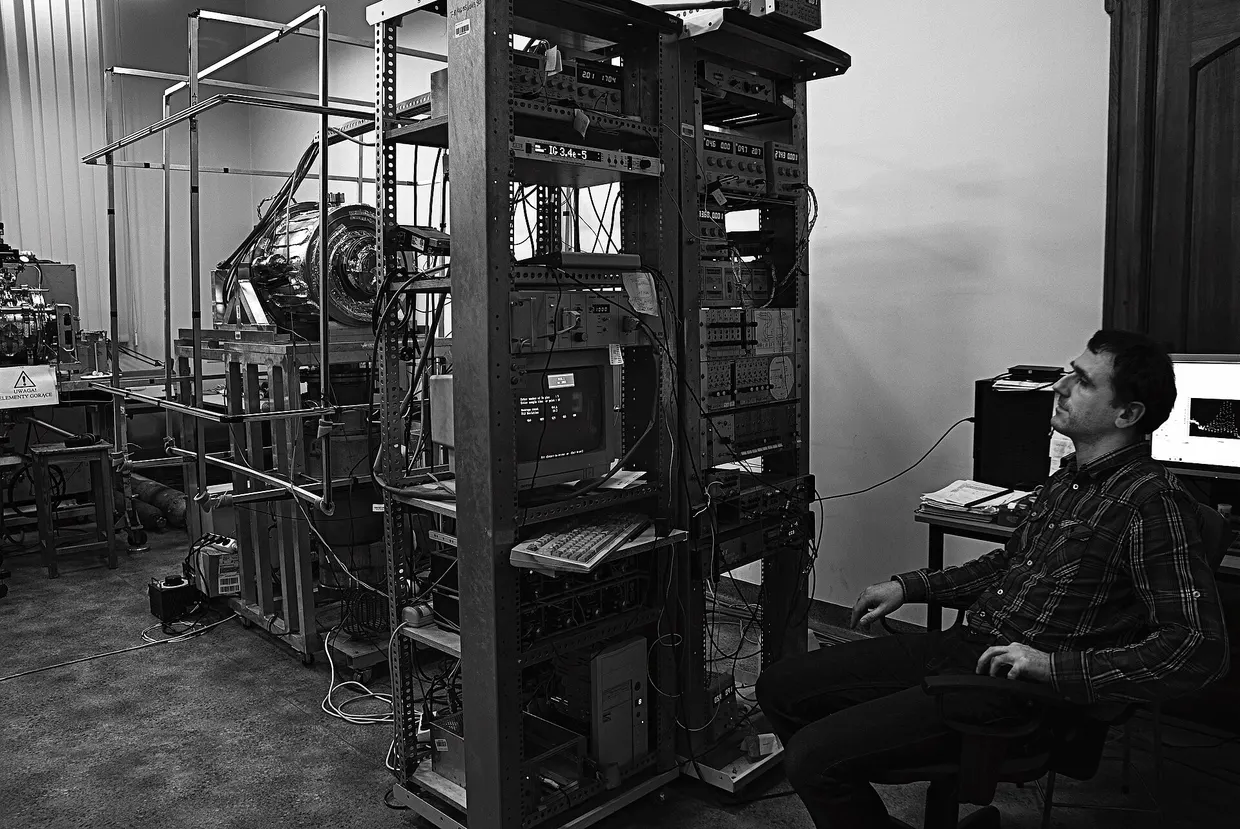
To probe the nature of current carriers, the team built custom measuring equipment capable of distinguishing electrical currents carried by single electrons from those transported by electron pairs. The measurements demonstrated that the pseudogap energy coincides directly with the binding energy required for electron pairing. The data revealed that this pairing energy is spatially heterogeneous across the material, reaching values up to 70 milli–electron volts (meV). These findings rule out scenarios where the pseudogap is driven solely by local order.
Phase coherence as the primary limit
Unlike conventional low-temperature superconductors, where electron pairing and macroscopic phase coherence emerge simultaneously, high-temperature cuprates decouple these two mechanisms. The experimental data indicate that the pairing interaction remains stable at elevated temperatures, confirming that Cooper pairs persist long before the material enters a zero-resistance state. According to the authors, macroscopic superconductivity is fundamentally limited not by pair formation, but by the lack of phase coherence among existing pairs across the lattice.