Seismic tomography reveals two slab tears beneath southeastern Iran, near the Makran–Zagros junction
Researchers interpret seismic images as two tears in a subducting slab where the Neo-Tethys Ocean is closing, a rare view of early collision onset.
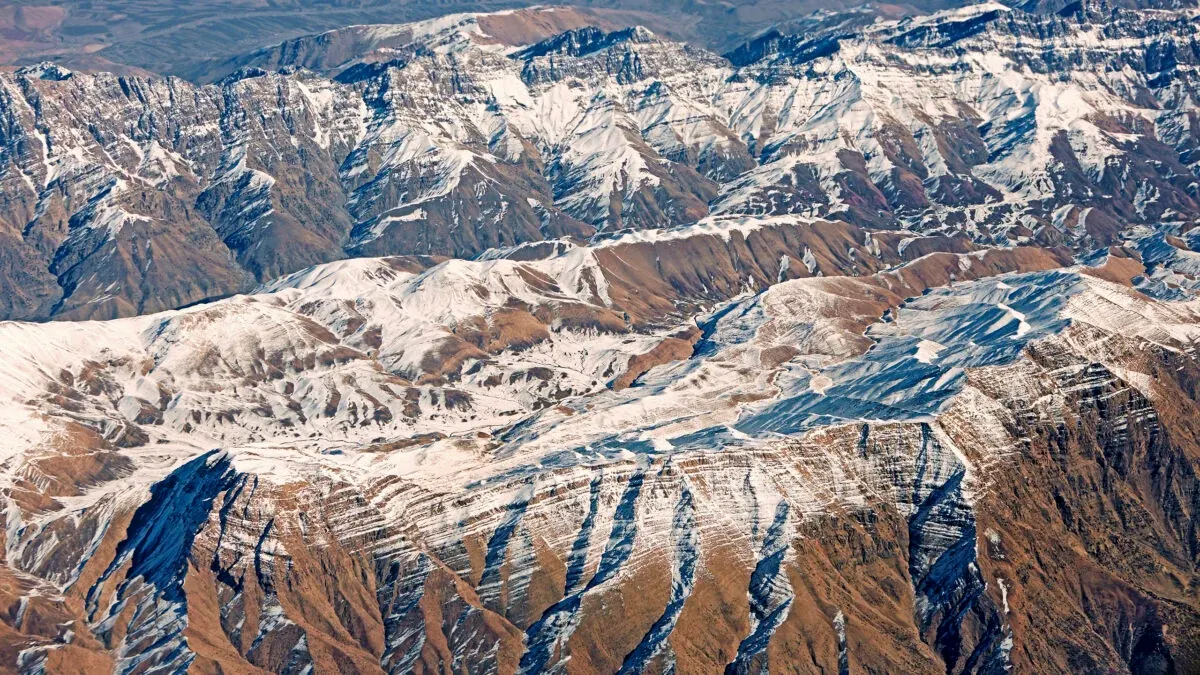
Researchers led by a team from the Chinese Academy of Sciences have presented seismic tomographic images that they interpret as evidence for two slab tears beneath southeastern Iran, where the Neo-Tethys Ocean is closing. The work, published in Nature Geoscience and available via doi.org, describes the region as a rare snapshot of the short-lived early transition from oceanic subduction to continental collision nature.com
doi.orgnature.comOpen source ↗. This transition is a key stage of the Wilson Cycle, but its processes are poorly constrained because observations of structure at depth are sparse.
Seismic data and structure at depth
The team used a network of 69 seismic stations that recorded waves from distant earthquakes between March 2017 and September 2018. Wave speed depends on the temperature and density of rock, so the records can be turned into an image of the mantle. The authors state that the resulting velocity model and the traveltime data are publicly available.
In the Makran subduction zone, the oceanic lithosphere has continuously subducted to depths of at least 450 km. In the Zagros collision zone to the west, the continental lithosphere has subducted no deeper than 300 km. According to the authors, this difference results in east–southward slab tearing and detachment.
Oceanic basalt crust is denser and thinner and sinks under the neighbouring plate. Thicker, lighter continental rock resists subduction and builds mountains instead. The researchers link the first tear to this contrast.
Two tearing modes in one region
The authors identify a second slab tear that probably initiated at the junction between the Makran Trench and the transform boundary. It has propagated southward as the continental plate advances northward nature.com
doi.orgnature.comOpen source ↗. The researchers suggest that this tear is driven more by plate motion than by the difference between oceanic and continental rock.
Detachment of the subducting slab influences both deformation and magmatism in the overriding plate. The coexistence of the two tearing modes in one region is, in the authors' words, a rare snapshot of the short-lived early transition from oceanic subduction to continental collision.