Subduction near Japan loaded Gulf of California rift with 5–15 MPa stress, 3D models show
Geodynamic models tie the rapid opening of the Gulf of California 6–8 million years ago to subduction reorganization near Japan, over 9,600 km away.
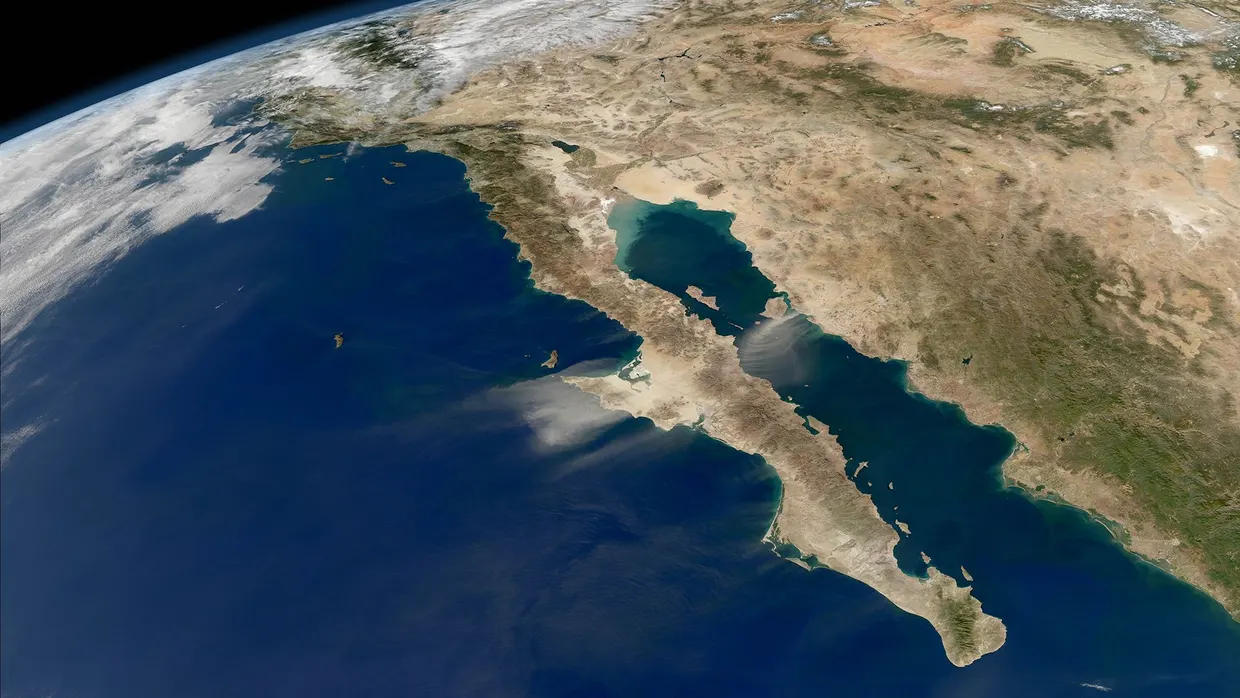
A team of geophysicists has proposed that the rapid opening of the Gulf of California was accelerated by a tectonic reorganization near Japan. In a paper published on October 29 in Science, Guido Gianni of the Czech Academy of Sciences, Xiang He, Thorsten Becker and Faccenna report that the rapid rifting of the Gulf of California oblique rift, about 6 million to 8 million years ago, coincides with the start of Western Pacific double subduction science.org
Sciencescience.orgOpen source ↗. The two regions are more than 6,000 miles (9,600 kilometers) apart.
Rifting faster than typical
A rift is a zone where continental crust pulls apart and may be filled by ocean water. The Red Sea is a currently active example. In the Gulf of California, rifting took about 6 million to 13 million years, much shorter than the typical 30 million to 80 million years.
The initial rift was caused by subduction of the Farallon Plate under the west coast of North America, which stretched and thinned the continental crust. Earlier work left open whether the fast phase was a response to external plate motions or an acceleration of long-lived extension, and neither scenario was fully explained. The rifting also moved Baja California to the Pacific Plate and gave the developing Colorado River an outlet; the river later carved the Grand Canyon on its way to sea level.
What the models show
The authors used three-dimensional geodynamic models, run on supercomputers at the Texas Advanced Computing Center. About 10 million to 12 million years ago, a single subduction zone near Japan became two. According to the models, this reorganization can transmit extensional stresses of about 5 to 15 megapascals across the Pacific plate, loading the Gulf of California rift and the southern San Andreas fault science.org
Sciencescience.orgOpen source ↗.
Becker said Baja California was one of the few places outside the Japan region affected by the change in pulling stress. The team repeated the calculations with different assumptions about stresses and mantle properties, and the result held.
The authors suggest that subduction reorganization may be the missing driver for the start of rapid rifting in an already preconditioned lithosphere, and may be an overlooked force in other rifting events. Becker said the findings could matter for understanding fault systems such as the San Andreas and the Cascadia subduction zone, a megathrust boundary capable of earthquakes above magnitude 9.