Phospholipase D1 activates NAD kinase in human neutrophils, supplying NADP⁺ for NET formation
In isolated human neutrophils, lipids produced by phospholipase D1 activate NAD kinase and raise the NADP⁺ needed for NET release, the authors of a cell-level study report.
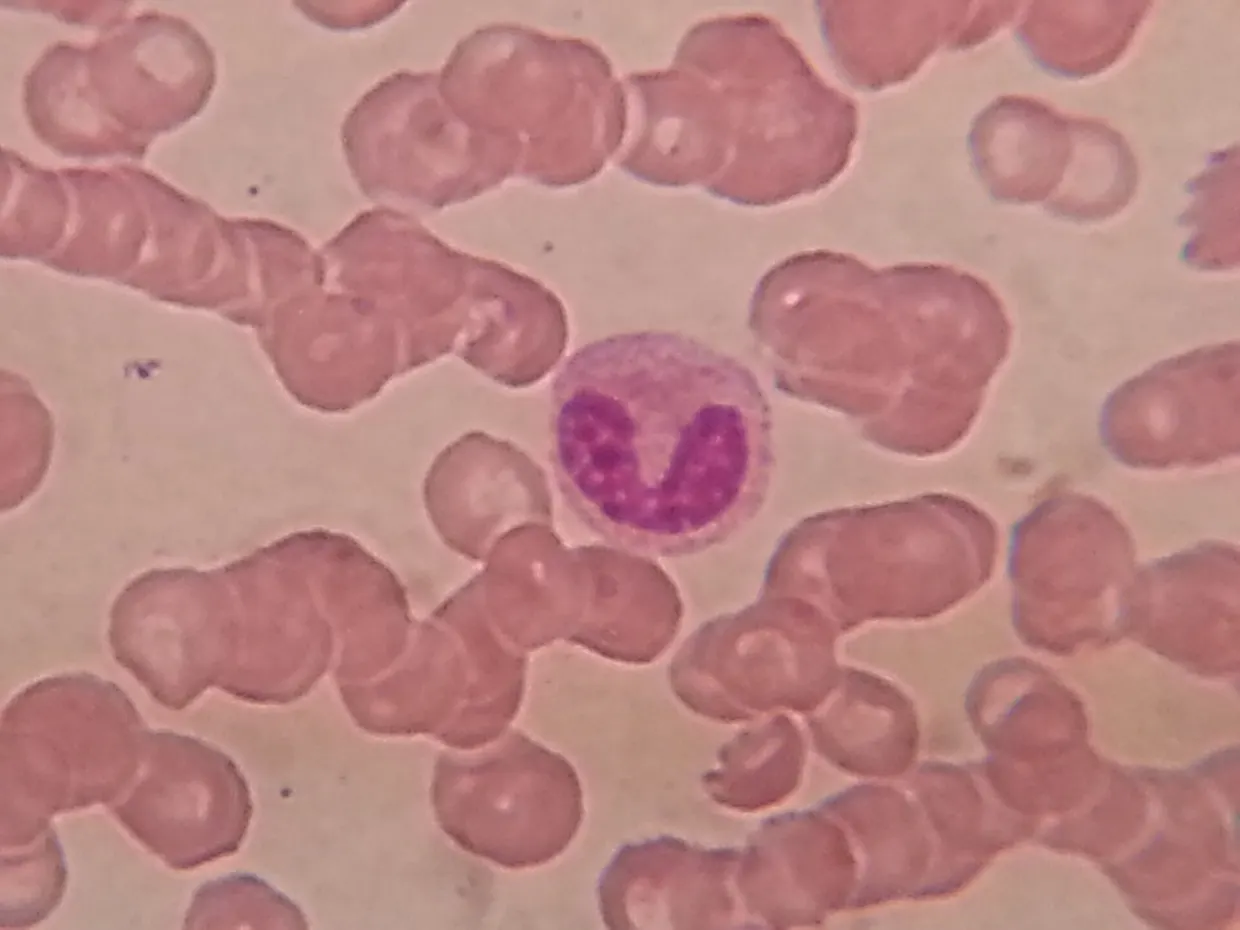
Researchers describe a lipid-dependent route that supplies NADP⁺ to human neutrophils during the formation of neutrophil extracellular traps (NETs), according to a study in Nature Communications. Using lipidomic, biochemical and functional experiments on human neutrophils, they identify NAD kinase, the only enzyme that synthesises NADP⁺, as a direct target of lipids produced downstream of phospholipase D1 (PLD1) nature.com
Nature Communicationsnature.comOpen source ↗.
Lipid remodelling after activation
NETs are web-like structures of decondensed chromatin coated with antimicrobial proteins that trap and kill pathogens. Their formation depends on reactive oxygen species made by the NADPH oxidase NOX2, which needs continuous regeneration of NADPH from NADP⁺, mainly via the oxidative pentose phosphate pathway. How NADP⁺ synthesis is regulated in activated neutrophils had remained poorly defined.
The team stimulated neutrophils from three donors with phorbol 12-myristate 13-acetate (PMA) for 30, 60 or 180 minutes and analysed cell lysates by mass spectrometry. Phosphatidic acid (PA) makes up about 0.1 % of the lipidome of unstimulated cells, yet it rose more than 10-fold after 30 minutes of PMA. Phosphatidylglycerol, diacylglycerol, triacylglycerol, lysophosphatidylethanolamine, lysophosphatidic acid, ceramides and phosphatidylinositol also increased, but to a lesser degree. The authors also report a rise in PI(4,5)P₂ (PIP₂), and state that PLD1-derived PA promotes its synthesis by enhancing the activity of phosphatidylinositol-4-phosphate 5-kinase.
PLD1, NAD kinase and NADP⁺
According to the authors, PA and PIP₂ bind to NAD kinase and activate it. The NADP⁺ formed in the cytosol is reduced to NADPH in the oxidative pentose phosphate pathway and consumed by NOX2 during NET formation nature.com
Nature Communicationsnature.comOpen source ↗.
Pharmacological or genetic disruption of PLD1 suppressed NAD kinase activity, depleted NADP⁺ and impaired NET formation. The authors state that this effect did not depend on direct inhibition of NADPH oxidase. NET release was estimated from extracellular DNA, measured with the cell-impermeable dye SYTOX Green after pre-incubation of cells with inhibitors.
In mammalian cells PA is produced by four enzyme groups: phospholipase D, diacylglycerol kinase, NAPE-specific phospholipase D and glycerol-3-acyltransferases. The study tested inhibitors of these routes; for the acyltransferases, which were not inhibited directly, a fatty acid synthase inhibitor was used because that enzyme supplies their fatty acids. The authors describe the result as a lipid–metabolic axis that couples PLD1-driven membrane remodelling to NADP⁺ availability and innate immune function.