Magnetic hydrogel soft robots with dual programming tested in a pig model for gastric ulcer therapy
Authors combined magnetic and anisotropic programming in hydrogel soft robots; a prototype ring-shaped pH-responsive version was explored with capsule endoscopy in a pig model.
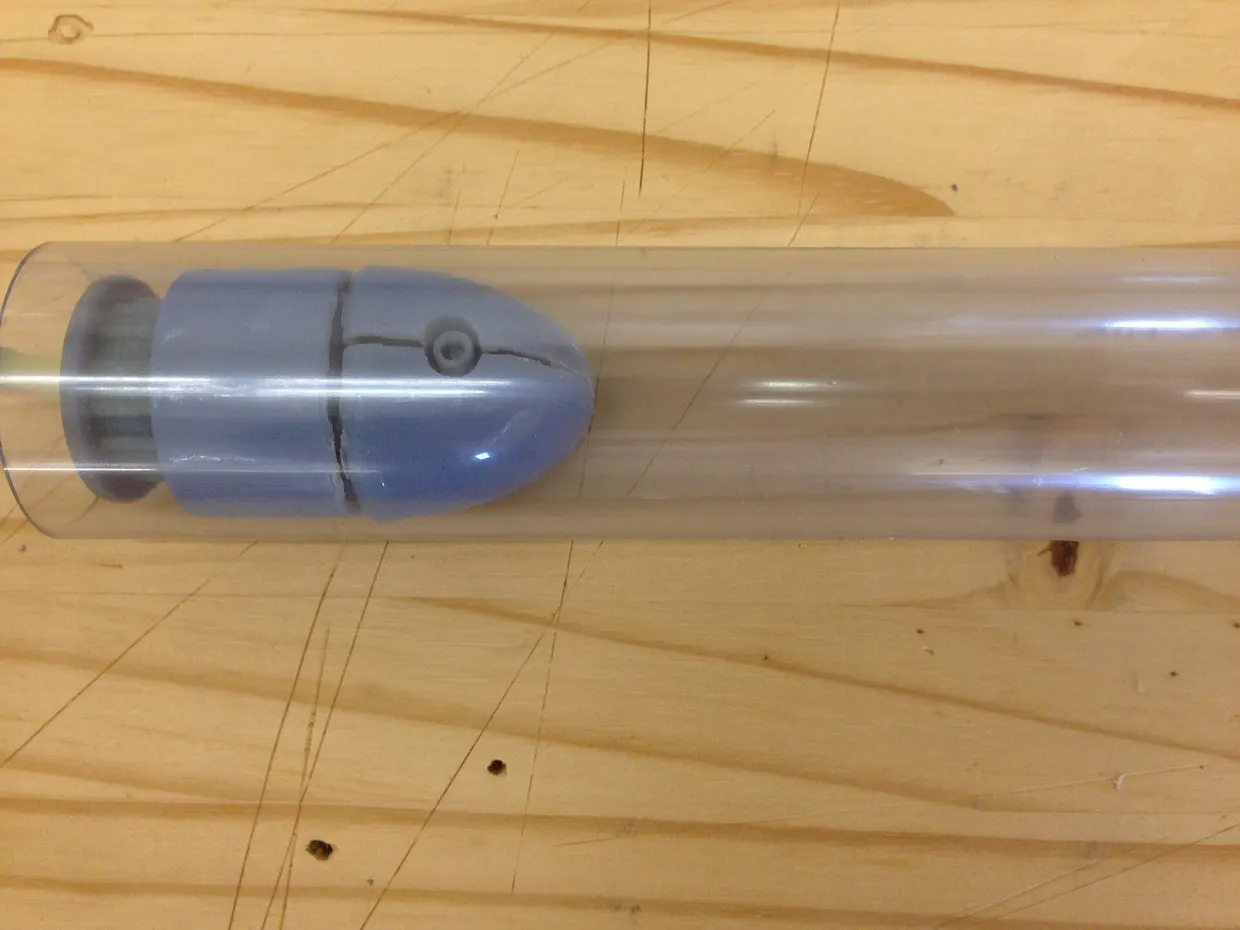
Researchers reported dual-programming hydrogel-based soft robots (DHSRs) in Science Advances. The robots couple magnetic and anisotropic programming by arranging patterned magnetic skeletons inside responsive and structural hydrogel bodies science.org
Science Advancesscience.orgOpen source ↗. According to the authors, the structures take multicurved shapes in three-dimensional space.
Behavior and locomotion
A fish-like DHSR changed its behavior with the environment: it jumped randomly on land and swam regularly in water. The authors also demonstrated decoupling of locomotion from function, with region-selective cargo delivery in an integrated "locomotion-perception-action" workflow.
Gastric ulcer prototype
As a biomedical example, the team made a ring-like pH-responsive DHSR for gastric ulcer therapy. It combines rolling, tumbling and rotating locomotion, adaptive matching and microneedle-mediated penetration.
The robot was combined with a capsule endoscopy system to explore a wireless and painless diagnostic-therapeutic platform in a pig model science.org
Science Advancesscience.orgOpen source ↗. The authors state that the approach gives the robot perception and multitask execution capabilities. The work remains at the prototype and animal-model stage.