CNIC: mouse endothelial cells lacking VEGFR2 form vessels via veins, study in Nature reports
In mouse mosaics, endothelial cells without VEGFR2 adapted over time and fed later VEGF-independent angiogenesis, the authors report. This may be relevant to resistance to anti-VEGF therapy.
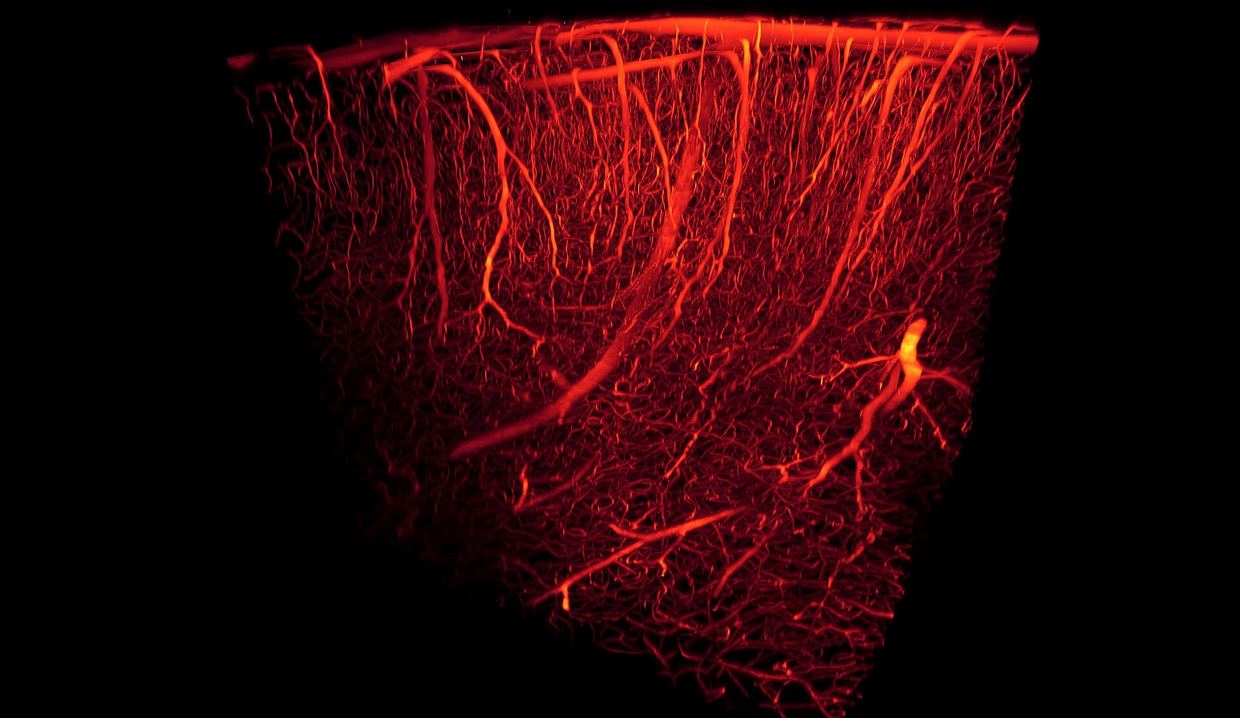
Researchers at the Centro Nacional de Investigaciones Cardiovasculares Carlos III (CNIC) and international collaborators report that endothelial cells (ECs) lacking VEGFR2 can survive, proliferate and contribute to new vessels in mice. The study was published in Nature and led by Rui Benedito, who heads groups at CNIC and at the Max Planck Institute for Molecular Biomedicine in Germany; the press release is dated 4 November 2026. The data come from dx.doi.org. dx.doi.org
dx.doi.orgdx.doi.orgOpen source ↗ Until now, VEGF–VEGFR2 signalling was considered essential for angiogenesis.
dx.doi.org
dx.doi.orgdx.doi.orgOpen source ↗
Mosaic model and the venous route
The team used the iFlpMosaics and iSuRe–HadCre systems to induce and track mosaics of Vegfr2-knockout (Vegfr2KO) and wild-type ECs through the whole embryonic and postnatal development. dx.doi.org
dx.doi.orgdx.doi.orgOpen source ↗ The Apln-FlpO allele, active from embryonic day 8.5, is mosaically silenced in female embryos and expressed in 23–50% of ECs. According to the authors, this produced relatively few mutant and wild-type cells, which was compatible with embryonic development.
dx.doi.org
dx.doi.orgdx.doi.orgOpen source ↗
Vegfr2KO ECs proliferated normally, competed with wild-type cells over time and eventually formed a substantial part of the vascular network in most organs. dx.doi.org
dx.doi.orgdx.doi.orgOpen source ↗ In most tissues they could not sprout during the first wave of angiogenesis, because this process is highly VEGF-dependent and favours wild-type ECs.
dx.doi.org
dx.doi.orgdx.doi.orgOpen source ↗ However, Vegfr2KO ECs became dominant in veins. The veins served as a long-term and continuous source of ECs for later waves of VEGF-independent angiogenesis.
dx.doi.org
dx.doi.orgdx.doi.orgOpen source ↗ The press release adds that responses of the cells varied considerably between organs.
Molecular adaptation
Single-cell RNA sequencing compared ECs with acute and long-term loss of VEGFR2. It identified common and organ-specific mechanisms of adaptation, including marked endothelial venousization and upregulation of ligands for VEGFR1 and VEGFR3. dx.doi.org
dx.doi.orgdx.doi.orgOpen source ↗ VEGFR1 only partially compensated for VEGFR2 loss in capillary ECs, and VEGFR3 compensated only in arterial ECs. Loss of all three VEGF receptors did not compromise venous growth.
dx.doi.org
dx.doi.orgdx.doi.orgOpen source ↗
Loss of NR2F2 (COUP-TFII), the master regulator of venous development, significantly compromised the expansion of Vegfr2KO ECs. dx.doi.org
dx.doi.orgdx.doi.orgOpen source ↗
The anti-VEGF antibody is among the most widely used antibodies in the clinic, and vascular resistance to anti-VEGF therapy has been reported. dx.doi.org
dx.doi.orgdx.doi.orgOpen source ↗ The authors suggest the findings may help explain such resistance and point to alternative mechanisms of angiogenesis as possible therapeutic targets. The experiments were carried out in mouse models, and no therapy was tested in the work.