Speckle spectrometer with integrating sphere reaches 6 fm resolution at 780 nm
Researchers from Adelaide University, ENS Paris and St Andrews report a laboratory speckle spectrometer about 80 times finer than earlier versions, resolving rubidium hyperfine structure.
A team from Adelaide University, the Laboratoire Kastler Brossel in Paris and the University of St Andrews has built a speckle spectrometer with a resolution of 6 fm at a wavelength of 780 nm. The work was published in Nature Communications on 7 November 2026 nature.com
Nature Communicationsnature.comOpen source ↗. The resolving power is 1.3 × 10^8, which the authors describe as an approximately 80-fold improvement over previous implementations.
Laser speckle is a granular intensity pattern that arises from random optical interference. It encodes spectral information in many dimensions, and this can be used for precision measurements. Speckle-based spectrometers are compact, mechanically robust and insensitive to alignment, but their spectral resolution had stayed at the picometre scale.
Integrating sphere as a scattering cavity
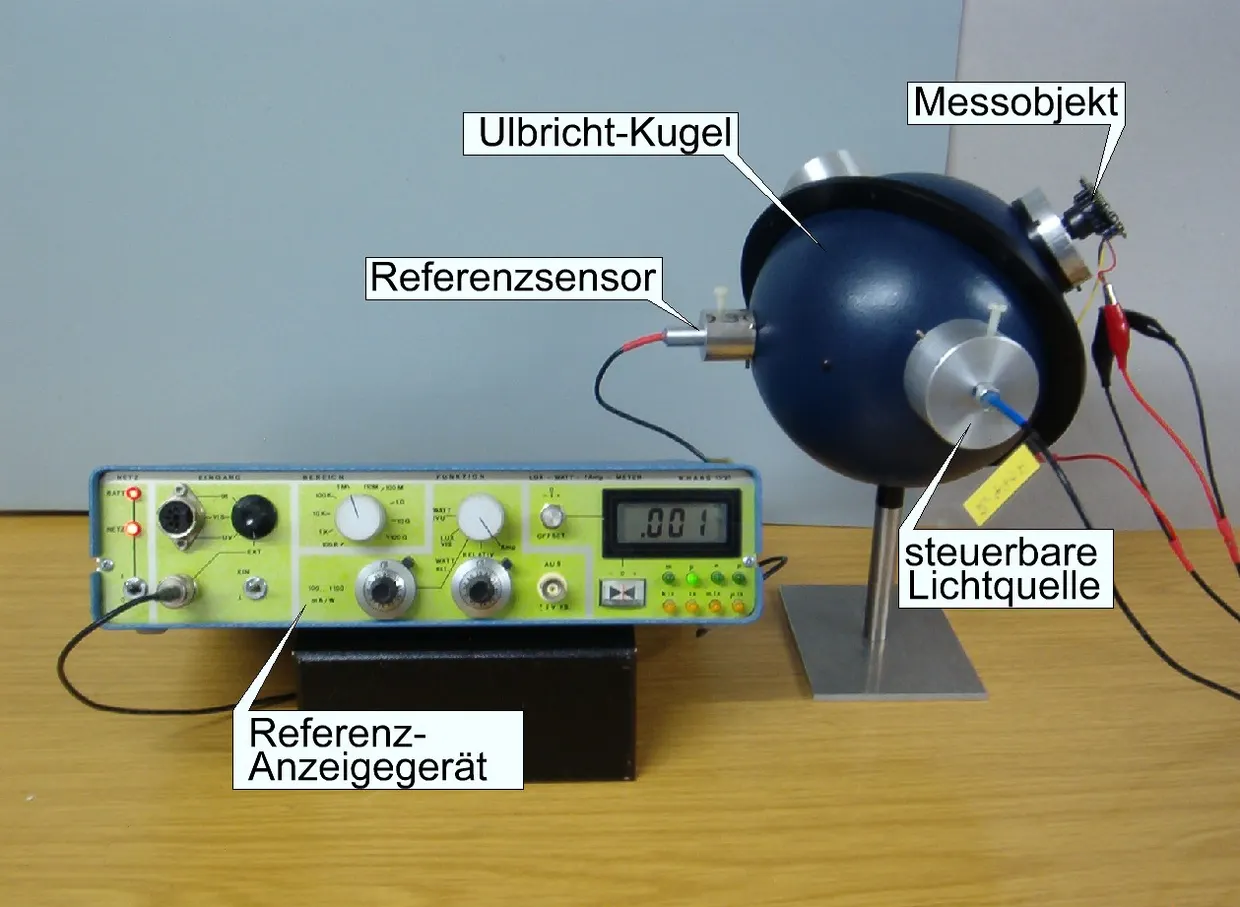
To go beyond this limit, the authors used an integrating sphere as a multiply scattering cavity. The sphere gives access to a wide range of path lengths, which increases the spectral sensitivity of the device. At 780 nm this gave the 6 fm resolution reported in the paper.
The authors used a sphere with a standard Thorlabs part number and an electro-optic modulator in the setup. The modulator served as a source of known spectral structure for testing the instrument nature.com
Nature Communicationsnature.comOpen source ↗.
Sidebands and rubidium hyperfine structure
The resolution was enough to clearly separate the laser sidebands generated by the electro-optical modulator. The sideband powers extracted from the speckle agreed with the expected values to within 1%.
The spectrometer was also used for a direct speckle-based measurement of the hyperfine structure of the D2 transition in 85Rb. The resulting transmission spectra differed by no more than 3.7% from independent measurements referenced to a wavemeter.
The authors state that these results establish speckle as a platform for ultra-high precision spectroscopy, radio-frequency spectrometry and microwave photonics nature.com
Nature Communicationsnature.comOpen source ↗. The paper describes a laboratory demonstration at a single wavelength of 780 nm.