CRISPR screen in Spodoptera frugiperda cells finds CYP333B4 gene tied to pyridalyl activation
Researchers from Henan University and partners built a genome-wide knockout screen in a cell line of the pest moth Spodoptera frugiperda to find genes behind insecticide action and resistance.
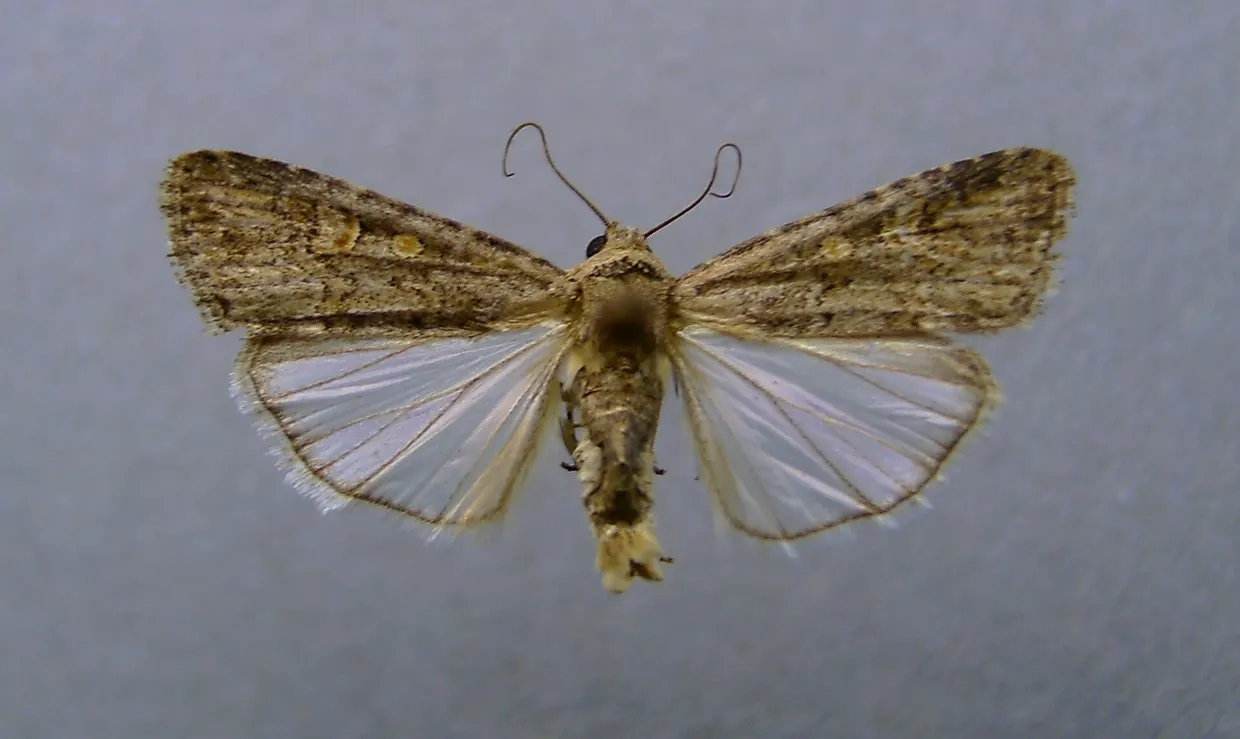
Researchers at Henan University in China, together with colleagues from Southwest University, the University of Exeter, Bayer's Crop Science Division and Nanjing Agricultural University, have described a genome-wide CRISPR knockout screening system in a cell line derived from Spodoptera frugiperda, a highly damaging insect pest. The work was published in Nature Communications on 7 November 2026 nature.com
Nature Communicationsnature.comOpen source ↗. The authors used the system to study the molecular basis of insecticide activity and resistance.
The background is a practical one. According to the paper, insecticide resistance is a growing threat to human health and food security, and a typical insect genome contains tens of thousands of genes. Finding and functionally validating the specific genes that shape insecticide mode of action and resistance remains a major challenge.
Library and three-round screen
The team constructed a library of 90,759 single guide RNAs (sgRNAs) targeting 14,434 genes. They then ran a three-round screen in which cells were exposed to successively increasing concentrations of the insecticide pyridalyl. This selection enriched for the cytochrome P450 gene CYP333B4.
Validation of the CYP333B subfamily
The authors followed up with P450 inhibitor assays, gene knockout in S. frugiperda, and ectopic expression in Drosophila melanogaster. Together, these experiments confirmed, according to the authors, that members of the CYP333B subfamily are key mediators of pyridalyl activation and serve as potential resistance targets nature.com
Nature Communicationsnature.comOpen source ↗.
The authors describe the result as uncovering long-elusive determinants of pyridalyl activity and sensitivity in insects. They also present the approach as a versatile and scalable platform for genome-wide interrogation of insecticide mode of action and resistance.
The corresponding authors are Chris Bass, Sanyuan Ma and Shutang Zhou. The screen was run in a cell line, and the follow-up work used knockout in S. frugiperda and expression in D. melanogaster; the material does not report field tests or insecticide formulations.