5th-century Germanic chieftains' cemetery discovered near Colmar
Archaeologists in France have uncovered a 5th-century cemetery with burials of Germanic chieftains and horses, shedding light on historical border communities.
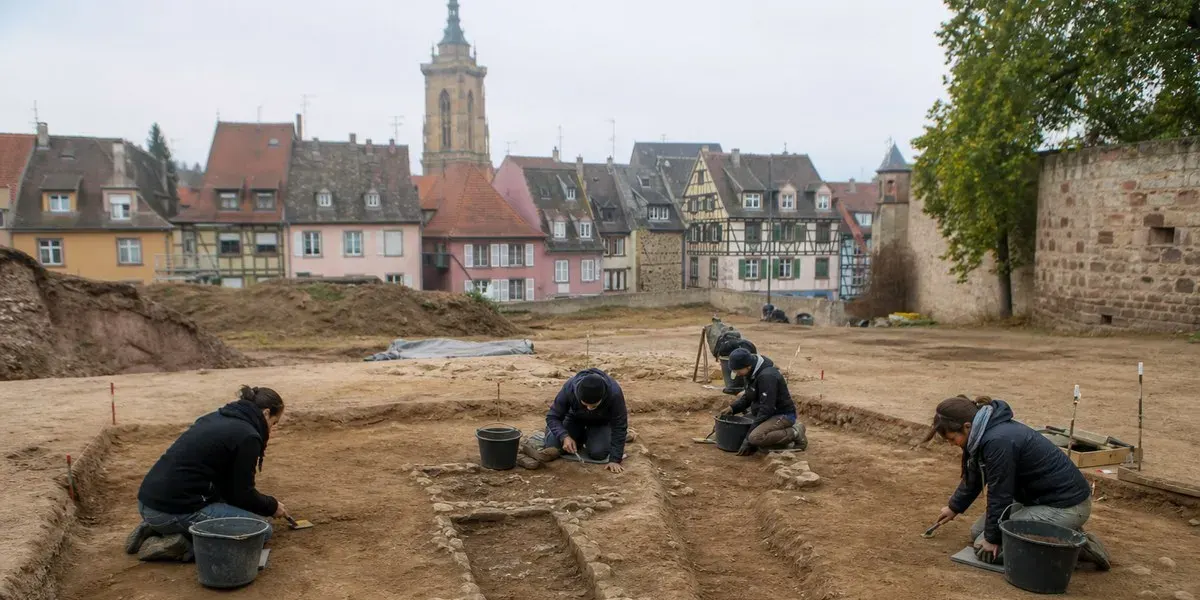
Archaeologists near Colmar in northeastern France have discovered a small 5th-century cemetery where two Germanic chieftains or mercenaries may have been buried. The site also contained the burials of two horses with horse harnesses, as reported by Live Science.
The burial complex is located several miles from the Rhine, which now serves as the border between France and Germany. Previously, a Gallo-Roman settlement dating from the 1st to the 3rd centuries existed at the site. During excavations, researchers found the remains of houses, hearths, wells, and craft areas.
The cemetery was used approximately between 450 and 500 CE. Archaeologists excavated 11 adult graves, three child burials, and two horse burials. Few such 5th-century Germanic settlements and cemeteries have been found, making this site significant for understanding changes in border communities after the decline of the Western Roman Empire.
Two male burials stood out due to their rich grave goods, including a sword with a partially preserved wooden scabbard, a shield, a javelin, and a scramasax—a Germanic short sword decorated with a gold-and-garnet fitting. Such items are characteristic of the burials of Germanic chieftains or mercenaries.
Two female burials contained silver bird-shaped fibulae, glass-bead necklaces, and a bone comb, indicating the high status of the buried women. Signs of injuries were recorded on the bones of several individuals, with two showing stab wounds and another man having fused bones in his right knee, possibly indicating a past conflict. Further examination of the remains is planned to investigate these injuries.