Discovery of Megacauda sungei, a Jurassic semiaquatic mammaliaform
A well-preserved fossil from China reveals insights into the evolution of mammalian feeding structures and ecological diversity.
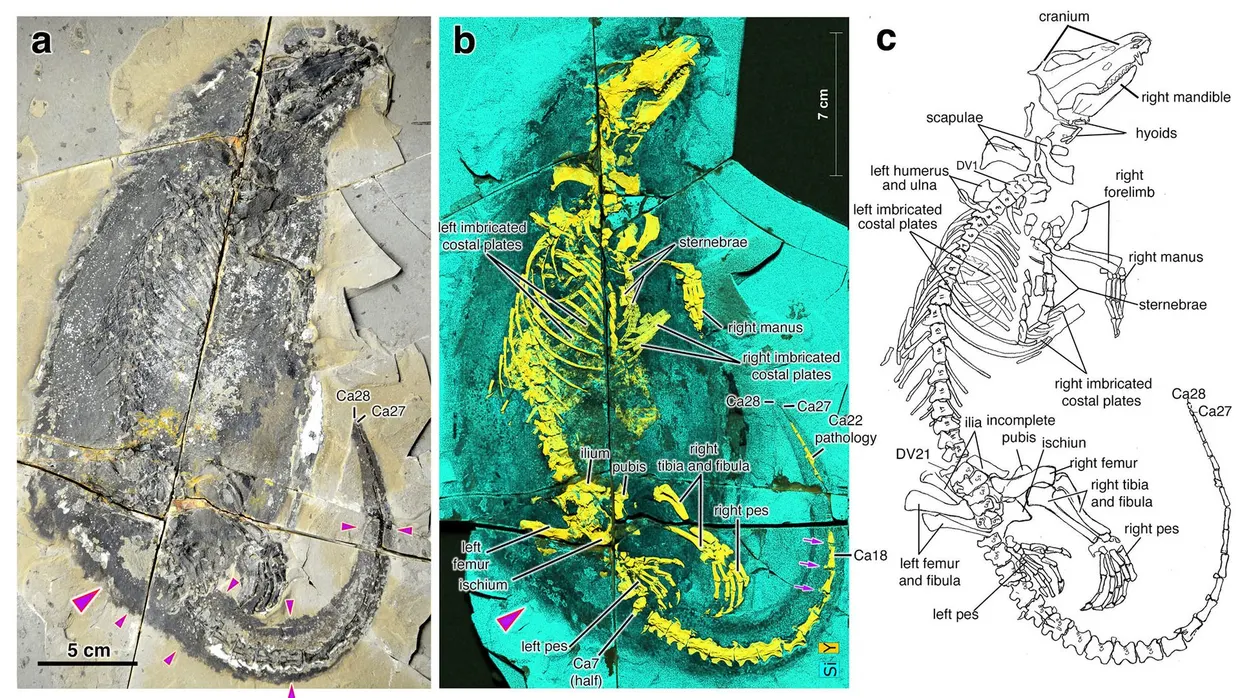
Researchers have discovered a well-preserved mammaliaform fossil named Megacauda sungei from the Middle Jurassic period in Inner Mongolia, China. This fossil, estimated to be between 163 and 168 million years old, provides significant evidence regarding the evolutionary transformation of feeding apparatuses in early mammals. The findings were published in the journal Nature.
Evolutionary Insights
Megacauda sungei is notable for its unique throat anatomy, which includes a therian-like pharyngeal vault and hyoid skeletal structure. These features suggest that critical soft-tissue anatomy for swallowing, drinking, and suckling behaviors had evolved in the common ancestors of Docodonta and Mammalia long before the rise of modern mammals. The fossil exhibits specialized features for swimming, indicating that this species was semiaquatic, akin to the modern platypus.
The estimated weight of Megacauda sungei ranges from 2.2 to 4.4 pounds (1 to 2 kilograms), making it the largest known mammal relative from the Jurassic period. Its distinctive canines and pseudo-carnassial teeth suggest a faunivorous diet, likely preying on small aquatic creatures such as fish and salamanders. The anatomical features of the fossil fill a significant gap in our understanding of the pelvis and hindlimb structures of early mammals.
Ecological Diversity
The discovery of Megacauda sungei expands the body size range of docodontans and supports the idea that multiple docodontans exploited diverse ecological niches during the Mesozoic era. This fossil represents the earliest known case of a mammal relative that lived partly in water, showcasing the ecological diversity of early mammals in a dinosaur-dominated ecosystem. The findings highlight the evolutionary significance of docodonts and their varied lifestyles, which included both swimming and burrowing behaviors.