Subduction-zone rock erosion linked to the Cambrian Explosion 540 million years ago
Geochemical records show intense weathering of juvenile volcanic arcs boosted marine nutrients and oxygen during animal diversification.
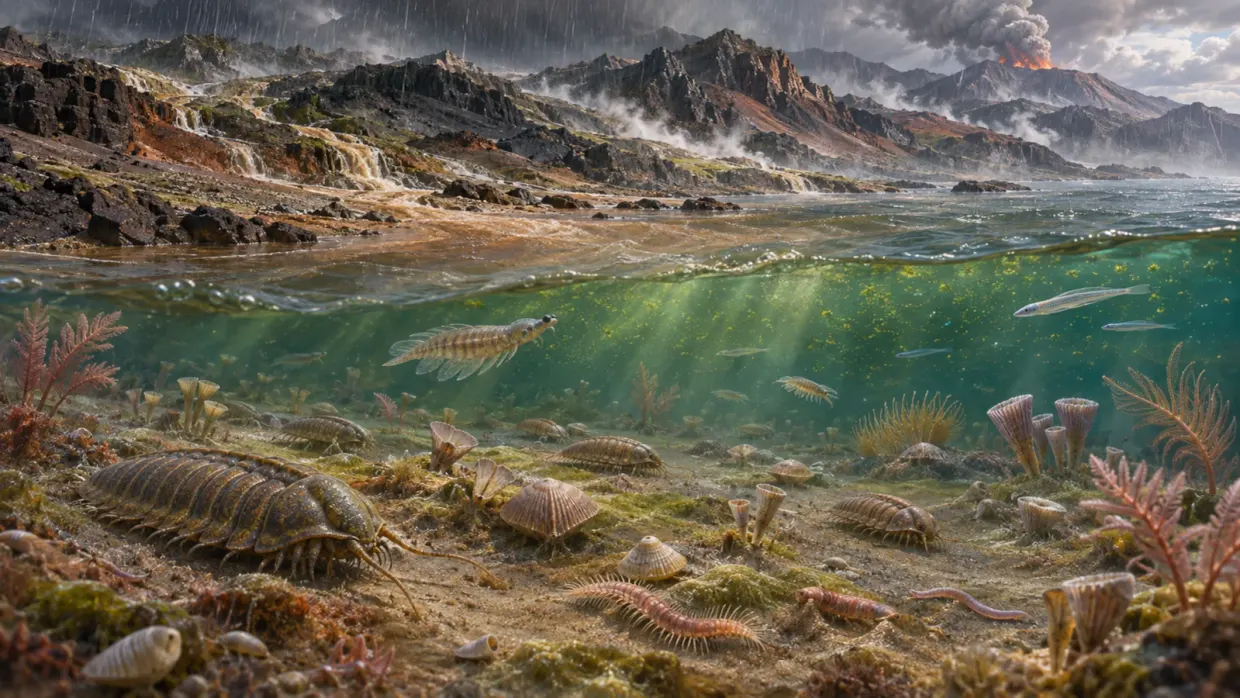
Geochemists from the Guangzhou Institute of Geochemistry analyzed sedimentary cores from the South China Yangtze Block to determine how tectonic shifts influenced the early Cambrian biosphere nature.com
nature.comnature.comOpen source ↗. In their findings published on nature.com, the authors integrated lithium and osmium isotope records with existing strontium data, revealing that fast-eroding continental volcanic arcs delivered a massive flux of nutrients into early oceans between 540 and 515 million years ago.
Shifts in weathering regimes
The isotope measurements documented a distinct transition in weathering dynamics during the Ediacaran–Cambrian transition. Between roughly 540 and 525 million years ago, seawater chemistry captured signatures of intense erosion dominated by juvenile, mantle-derived rocks from continental volcanic arcs along the active margins of Gondwana. After 525 million years ago, this shifted toward clay-forming incongruent weathering of ancient continental crust. The researchers noted that subduction zones thickened the crust, triggered regional uplift, and generated elevated volcanic carbon dioxide emissions that sustained a warm greenhouse climate.
Nutrient influx and oxygen buildup
According to the authors, juvenile arc rocks typically contain 1.5 to 2 times more phosphorus than average continental crust and are prone to rapid denudation. The enhanced erosion of these phosphorus-rich volcanic materials substantially increased oceanic nutrient levels, which stimulated primary marine productivity. The resulting acceleration in organic carbon burial prevented oxygen from being consumed in back-reactions, fostering the prolonged atmospheric and oceanic oxygenation required for early animal diversification.