Flexible ligands on isotropic nanoparticles lower lattice coordination in superlattices, study shows
Nanoparticles with deformable ligand shells formed lattices with fewer neighbours than hard-sphere packing predicts, according to experiments and simulations.
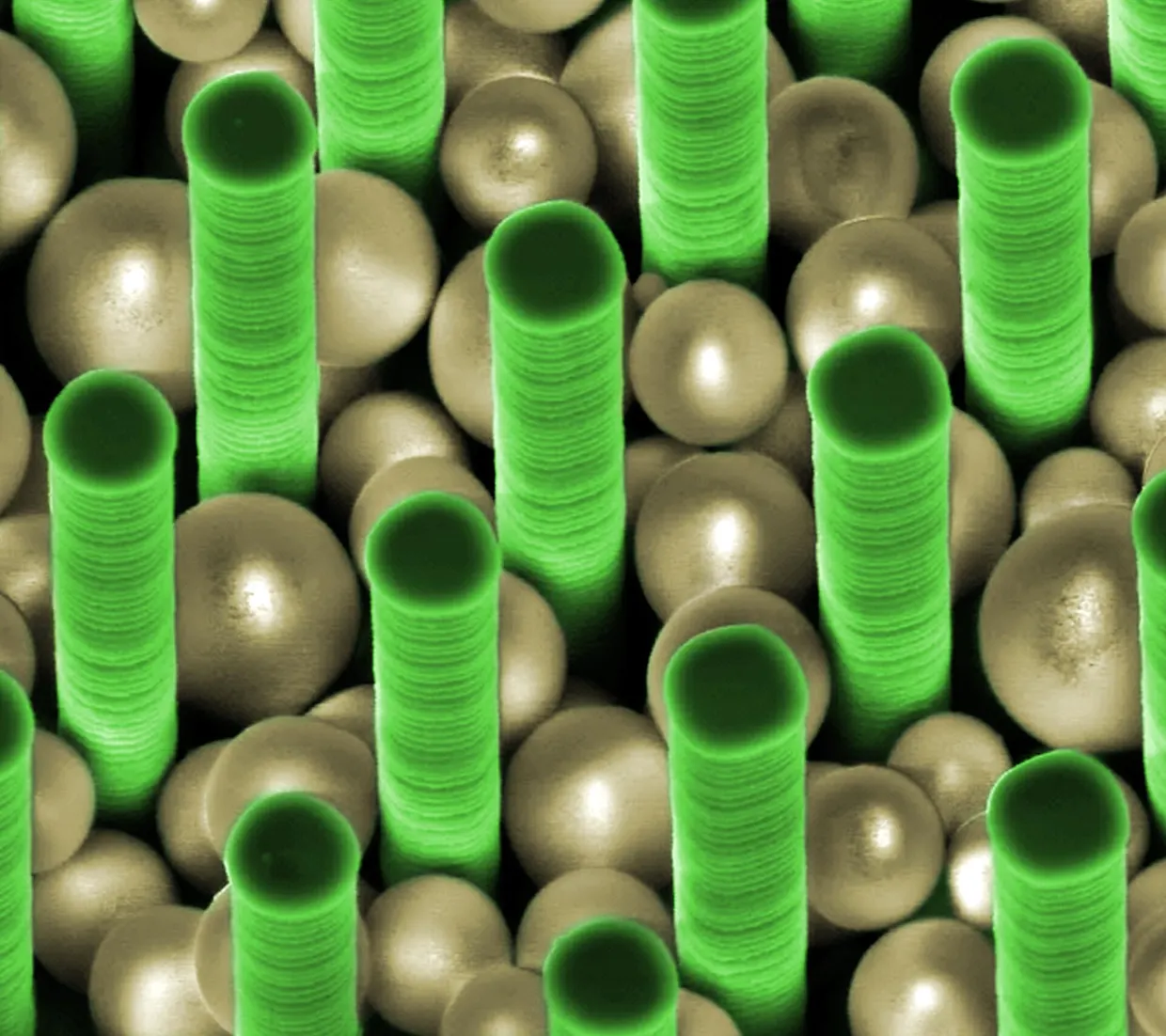
A paper published on nature.com reports that valency in nanoparticle superlattices does not have to be built into particle geometry. Using assemblies of flexible, electrostatically active isotropic nanoparticles, the authors show that valency can emerge spontaneously during assembly nature.com
nature.comnature.comOpen source ↗. According to ScienceAlert, the work appeared in Nature Materials.
In superlattices, attractive ligand interactions usually push assembly toward dense lattices that maximise nearest-neighbour bonding. Directional bonding and valency were therefore typically assumed to require anisotropy in particle shape or surface patterning.
Ligand flexibility instead of particle shape
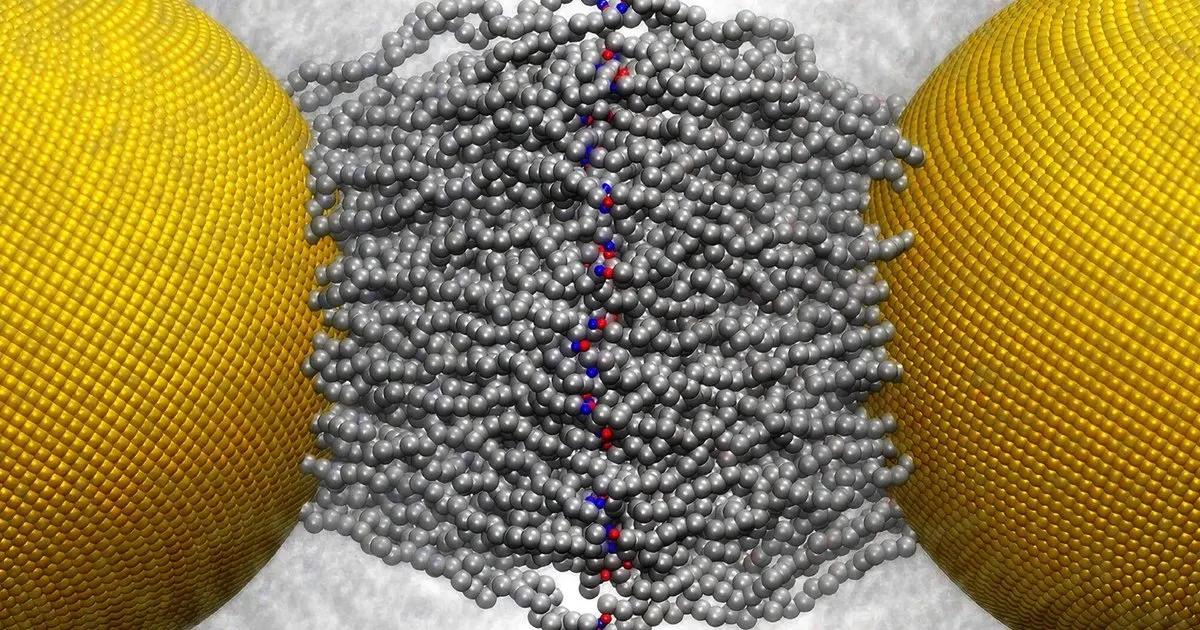
The authors found that when ligand coronas are sufficiently deformable, the ligands reconfigure and align along interparticle interfaces. This produces an effective valency. Experiments and simulations showed that greater ligand deformability lowers lattice coordination numbers.
As a result, isotropic building blocks assembled into lattices with lower coordination, lower packing density and lower symmetry than hard-sphere packing would predict nature.com
nature.comnature.comOpen source ↗. The authors also identify design considerations for such assembly and describe ligand flexibility as a design parameter for programming coordination.
Gold particles with polyethylene glycol
According to the ScienceAlert retelling, the experiments used gold nanoparticles with ligands made of flexible polyethylene glycol. Because the ligands lack rigidity, they accumulated at the contact points between particles, which limited the total number of possible bonds.
The authors say this contradicts a view that has held for the last 20 years: that bonding ligands must be rigid, and that any departure from this impedes structure formation. The assembly process can still be tuned by changing nanoparticle size and ligand length.
The researchers obtained ordered crystalline structures that had not been seen before. The functional properties of these materials have yet to be studied.