Peking University team maps layer-specific phonons in Bi2Sr2CaCu2O8+δ at sub-unit-cell resolution
STEM electron energy loss spectroscopy resolved phonon modes in the CuO2 planes and BiO layers of a cuprate superconductor, with frequencies modulated by the superstructure.
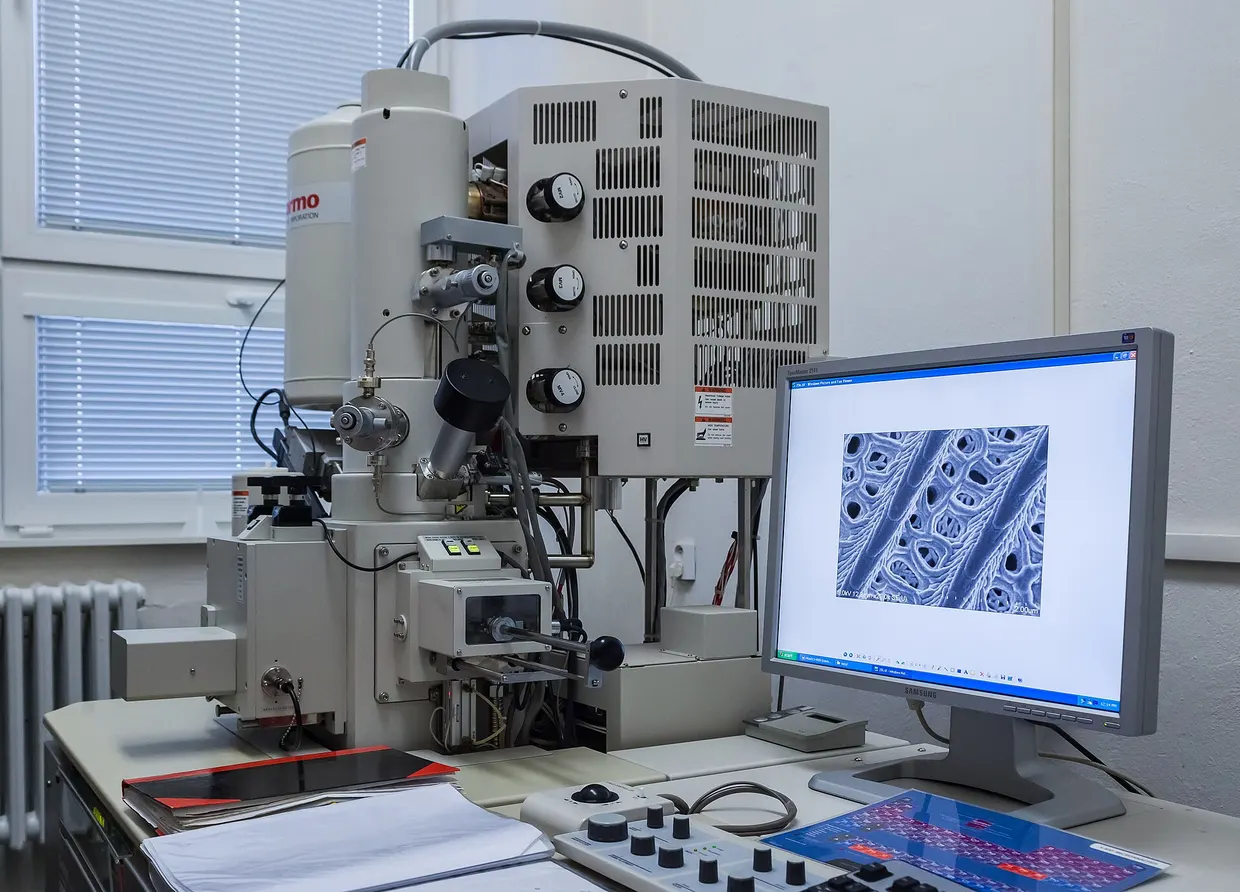
Researchers at Peking University, together with colleagues from several Chinese institutes, resolved phonon modes in the cuprate superconductor Bi2Sr2CaCu2O8+δ at sub-unit-cell resolution. The work was published in Nature Communications on 6 November 2026 nature.com
Nature Communicationsnature.comOpen source ↗. The authors used electron energy loss spectroscopy in a scanning transmission electron microscope.
The team includes groups from the University of Science and Technology Beijing, East China Normal University, Nanjing University, the Institute of Physics and the Institute of Theoretical Physics of the Chinese Academy of Sciences, Hefei National Laboratory and the Tsientang Institute for Advanced Study.
Phonon modes localized in specific layers
The authors note that the role of phonons in cuprates remains controversial, and that the complex lattice structure complicates the investigation. With sub-unit-cell resolved spectroscopy they identified phonon modes originating from the charge reservoir layers and from the superconducting layers of the material.
Several modes showed layer-specific localization nature.com
Nature Communicationsnature.comOpen source ↗. In-plane modes at about 78 meV were localized in the CuO2 planes. Hybrid modes, with both in-plane and out-of-plane character, at about 42 meV were also found in the CuO2 planes. Hybrid modes at about 38 meV were localized in the BiO layers.
Superstructure modulation and the superconducting gap
The measurements also showed a periodic modulation of phonon frequencies induced by the superstructure. According to the authors, this modulation correlates spatially with the variation of the superconducting gap.
The authors state that the results give new insights into lattice dynamics in cuprates. They also say the findings support further study of the microscopic link between structural modulation, electronic inhomogeneity and electron-phonon coupling.
The material reports an experimental measurement on Bi2Sr2CaCu2O8+δ. It lists the three mode groups by energy and by the layers in which they are localized, and it reports the correlation between the frequency modulation and the gap variation. The abstract gives no further numerical values beyond the mode energies.