Czech village shed prop identified as a Bronze Age casting mould for spearheads
A 3,000–3,300-year-old rhyolite tuff stone from Moravia proved to be half of a casting mould. Its material likely came from northern Hungary.
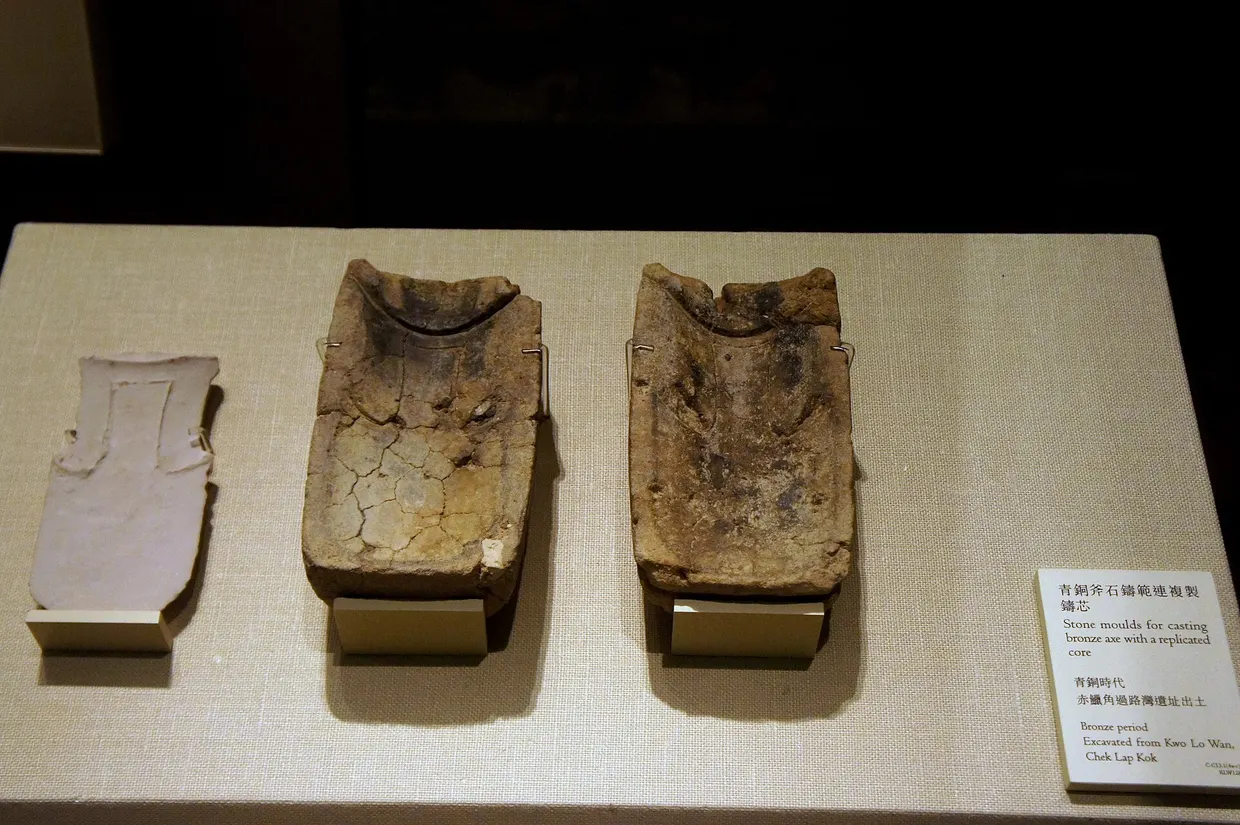
Czech researchers, including specialists of the Moravian Museum, have established that a stone used to prop up a shed in the village of Morkuvky in the historical region of Moravia is half of a Late Bronze Age casting mould. Poisk reports this on the basis of a paper published in 2025 in the journal Archeologické rozhledy poisknews.ru
Поискpoisknews.ruOpen source ↗. A local resident, J. Tomanec, found the object in 2007 during earthworks on his plot. The age of the mould is estimated at 3,000–3,300 years.
Structure and use of the mould
The artefact is about 23 cm long and weighs roughly a kilogram. It is made of rhyolite tuff, a volcanic rock that withstands high temperatures. The researchers examined its composition and structure with X-ray methods. The surface is covered with cracks and traces of glassy, vesicular slag; according to the archaeologists, this points to intensive use at high temperatures.
The mould was used to cast bronze spearheads with longitudinal stiffening ribs and a hollow socket for a wooden shaft. The casting assembly consisted of two stone halves fastened with copper wire. A metal or clay core was placed inside to form the socket cavity, and molten tin bronze, an alloy of copper and tin, was then poured in. Arrowheads, axes and chisels were cast on a similar principle.
Origin of the stone and trade links
Only two other similar moulds have been reliably found in Moravia, whereas in the Carpathian Basin, including present-day Hungary and Transylvania, such technology was far more widespread poisknews.ru
Поискpoisknews.ruOpen source ↗. The researchers suggest that the tuff comes from the Bükk Mountains in northern Hungary; the rock formed about 20 million years ago. Such material does not occur near the find site, so the mould is evidence of long-distance trade. According to the scientists, raw material for casting tools could be transported over tens and even hundreds of kilometres, and copper reached Central Europe along comparable routes.
The authors consider that what arrived in Moravia was a finished mould rather than a piece of raw rock, since spearheads of this type are rare in the region. The object is now held by the Moravian Museum.