Penn State team aligns fibroblasts with miniature solar cells on silicon chips, no wires, in lab culture
Penn State engineers patterned tiny photovoltaic cells on chips and steered fibroblast alignment with light alone. This could remove wired electrodes from bioprinting; so far tested in cell culture.
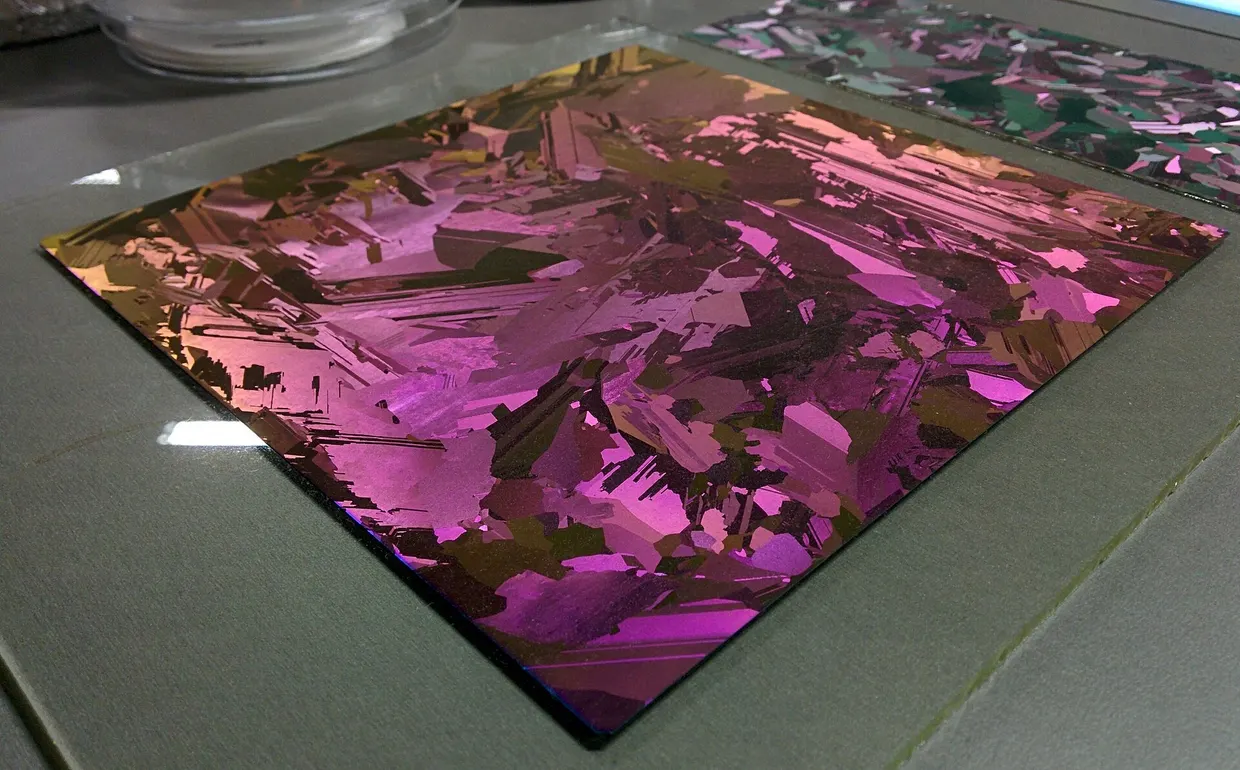
A team led by Penn State engineers has used miniature solar cells to control the alignment of cultured cells without wires, according to a Penn State release published on eurekalert.org. The work was described in Advanced Functional Materials. It was tested on fibroblasts grown on silicon chips, not on printed tissue. eurekalert.org
eurekalert.orgeurekalert.orgOpen source ↗
Bioprinting builds tissues layer by layer from bioink, a blend of cells and materials. Electricity is used to keep the cells aligned toward a target tissue, but this typically requires bulky electronic interfaces and invasive wiring.
Photovoltaic patterns on silicon wafers
The researchers dotted tiny photovoltaic cells in various patterns across silicon wafers, the base material for computer chips. Two strategies were tested. In the first, the diameter of the solar cells changed from just under a millimeter to 80 micrometers, less than the width of a human hair. In the second, the diameter was fixed and the overall shape of the pattern was changed.
The team says that changing the size, shape and spacing of the cells alters the electric field they generate. eurekalert.org
eurekalert.orgeurekalert.orgOpen source ↗
Seven days under light
Commercially sourced lung and dermal fibroblasts were placed on top of the chips and grown for seven days. During this time the chips were illuminated at different intensities, and the photovoltaic cells converted the light into electrical current. Cell alignment was then compared with fibroblasts on chips that received no light.
On unilluminated chips, alignment was largely random. Under light, alignment clearly correlated with the pattern of the photovoltaic cells. Testing also showed that illumination intensity affected the activity of the photovoltaic cells. According to the authors, alignment can therefore be influenced by a brighter light or by moving the light source closer to the sample, as well as by the pattern.
Limits and next steps
The authors note that the method does not give complete control over alignment, since cell-to-cell interactions still play a role. The experiments were done on a flat, planar surface. eurekalert.org
eurekalert.orgeurekalert.orgOpen source ↗
Corresponding author Ibrahim T. Ozbolat said future work will test more sensitive cells, such as cardiac or muscle cells, to see how the electrical influence affects cell function as well as alignment. The team also hopes to test the approach in three dimensions, where the electric field could be controlled in several directions. At present the photovoltaic cells can only be patterned directly beside one another.