MIT Researchers Identify New Class of Cosmic Objects: Black Hole Stars
A new study reveals that 'little red dots' observed by the James Webb Space Telescope are actually black hole stars, a novel class of cosmic objects.
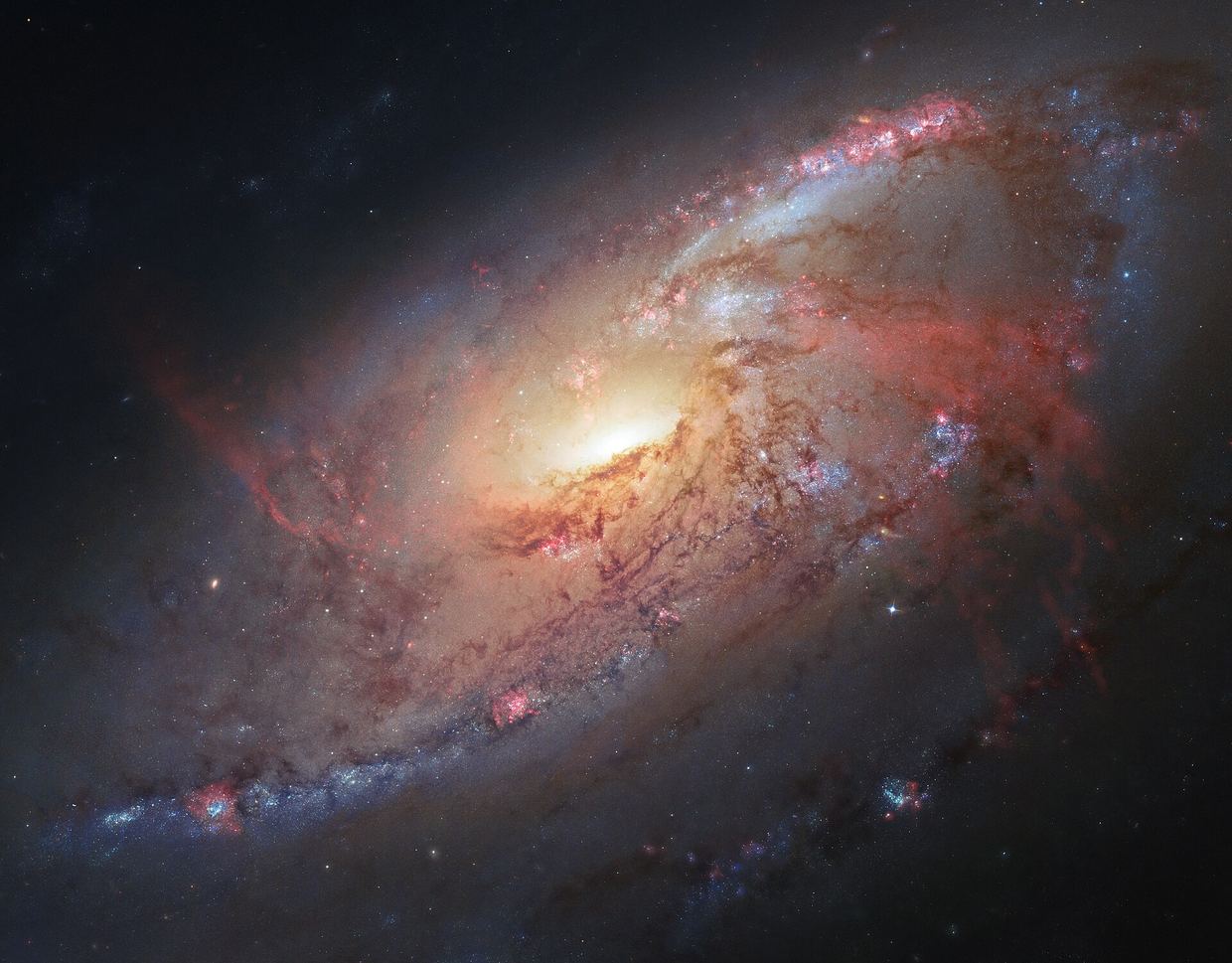
In late 2021, the James Webb Space Telescope was launched into space and reached its orbit in early 2022. Shortly after delivering its first scientific images, astronomers noticed small red dots, termed "little red dots." This observation led to various theories regarding their nature. Could they be dust-enshrouded active galactic nuclei or very dusty star-forming galaxies, or perhaps a combination of both? A paper published this summer by researchers at the Massachusetts Institute of Technology (MIT) offers a different explanation: these are black hole stars, a completely new class of objects.
According to the findings, a black hole star is a cosmic object the size of our entire solar system. However, unlike stars, there is no nuclear fusion occurring inside. Instead, at its center lies a supermassive black hole surrounded by a gas cloud. This black hole consumes matter, heating it to extreme temperatures and then releasing enormous amounts of energy—up to 100 billion times more energy than an ordinary sun. Only when the emitted radiation penetrates the massive gas envelopes does it create the appearance of a gigantic star.
The paper describes the discovery as a gas-enshrouded black hole from the early universe. The term "black hole star" is a minor PR tactic not mentioned in the paper itself, according to astrophysicist Dr. Victoria Grinberg from the European Space Agency (ESA). She describes the discovery as significant, as it could explain how supermassive black holes in galactic centers became so massive shortly after the Big Bang. This finding may help close a gap in our understanding of the universe.
Further questions raised by black hole stars are discussed in this episode of "Forschungsquartett."