KRISS leads first Nobel Collection paper on graphene quantum resistance standard working at about 4 K
Korea's KRISS led an invited paper in Measurement Science and Technology on graphene quantum resistance standards, which operate at about 4 K and 5 T instead of 2 K and 10 T.
The Korea Research Institute of Standards and Science (KRISS) said on the 11th that it led the writing of the first invited paper in the "Nobel Collection" organized by IOP Publishing, the publisher of the UK Institute of Physics, according to biz.heraldcorp.com biz.heraldcorp.com
biz.heraldcorp.combiz.heraldcorp.comOpen source ↗. The paper was written at the official invitation of Measurement Science and Technology (MST), a journal with a 100-year history. KRISS principal researcher Chae Dong-hun is first and corresponding author, with co-authors from Germany's PTB and Sweden's RISE.
Graphene and the quantum Hall effect
Graphene is a one-atom-thick layer of carbon atoms in a honeycomb arrangement. It was first isolated in 2004 and drew attention after the 2010 Nobel Prize in Physics. According to the material, many applications still remain at laboratory level, while in national electrical resistance standards graphene is used in actual precision measurement. The researchers rated this as a case of graphene technology reaching the highest technology readiness level, 9.
The basis is the quantum Hall effect, the subject of the 1985 Nobel Prize in Physics. At very low temperature and in a strong magnetic field, electrical resistance takes fixed values, which allows a resistance reference based on fundamental constants of nature.
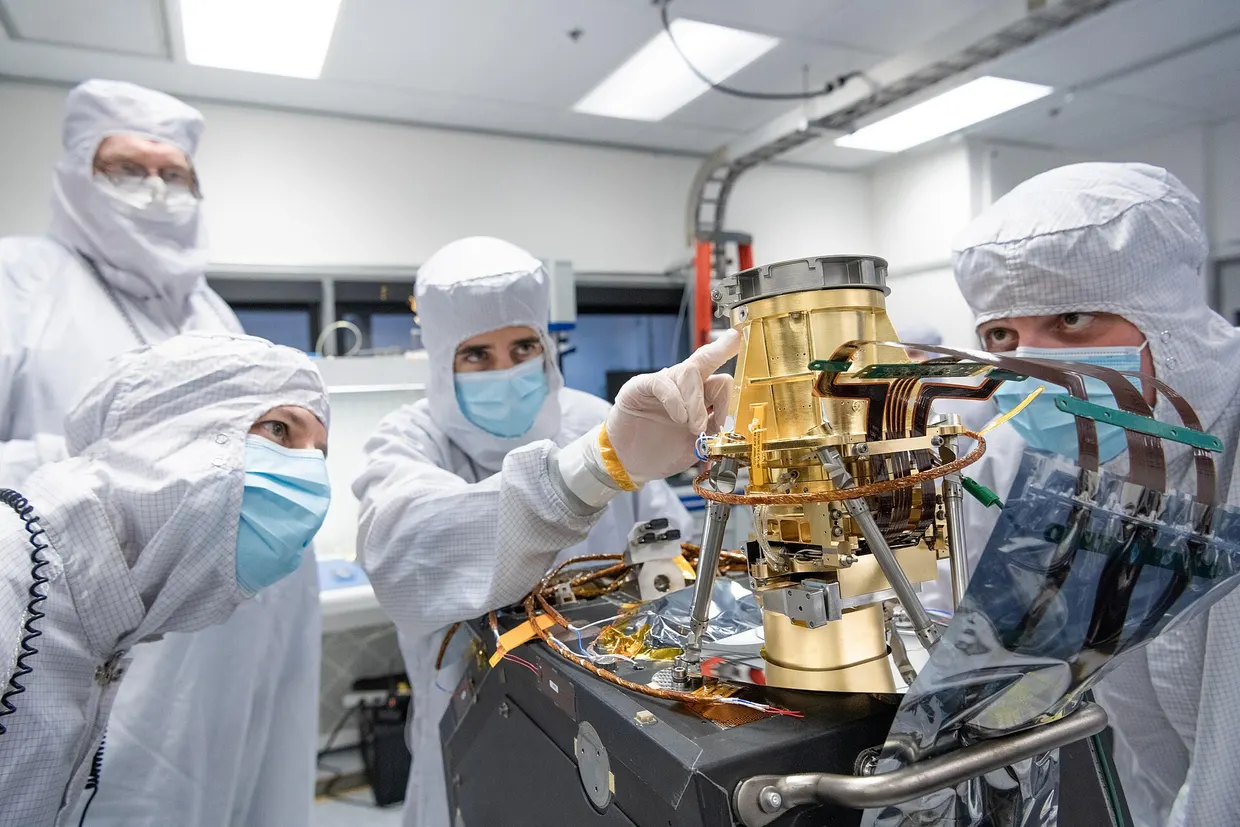
The earlier gallium arsenide quantum resistance standard required temperatures of 2 K or below and a field of about 10 T, so large cooling equipment using expensive liquid helium was essential. Graphene devices operate stably at about 4 K and 5 T. A small cryocooler that needs no continuous liquid helium supply can run year-round biz.heraldcorp.com
biz.heraldcorp.combiz.heraldcorp.comOpen source ↗. In an international comparison, results from graphene and gallium arsenide devices agreed to within a relative uncertainty of one part in 10 billion or less.
International guideline and next steps
The paper covers the technical development of the graphene quantum resistance standard, the results of international validation and possible future uses. The authors suggest extending the approach from resistance to impedance and current measurement, and point to a next-generation quantum electrical standard that would realize voltage, resistance and current standards in a single device.
In June, the Consultative Committee for Electricity and Magnetism (CCEM) under the International Committee for Weights and Measures published a quantum resistance measurement guideline reflecting the properties of graphene devices. KRISS took part in writing it with researchers from standards institutes of 11 countries, including NIST in the US and PTB in Germany.
Measurements from a graphene device that KRISS fabricated itself were included as a representative example in the guideline. KRISS work on reducing cryocooler vibration was cited as the basis for its equipment recommendations biz.heraldcorp.com
biz.heraldcorp.combiz.heraldcorp.comOpen source ↗.
Chae said that the international research network built over 15 years of work on graphene quantum resistance standards led to the invited paper and the guideline, and that Korea, a latecomer in metrology, now stands alongside advanced countries.
Sources · 1
Found a mistake?Read also