Max Planck Institute Links Gut Flagellin to Vaccine Fever in Human and Mouse Studies
Researchers found that gut microbes producing bacterial flagellin correlate with post-vaccination fever, confirming the causal link in gnotobiotic mice.
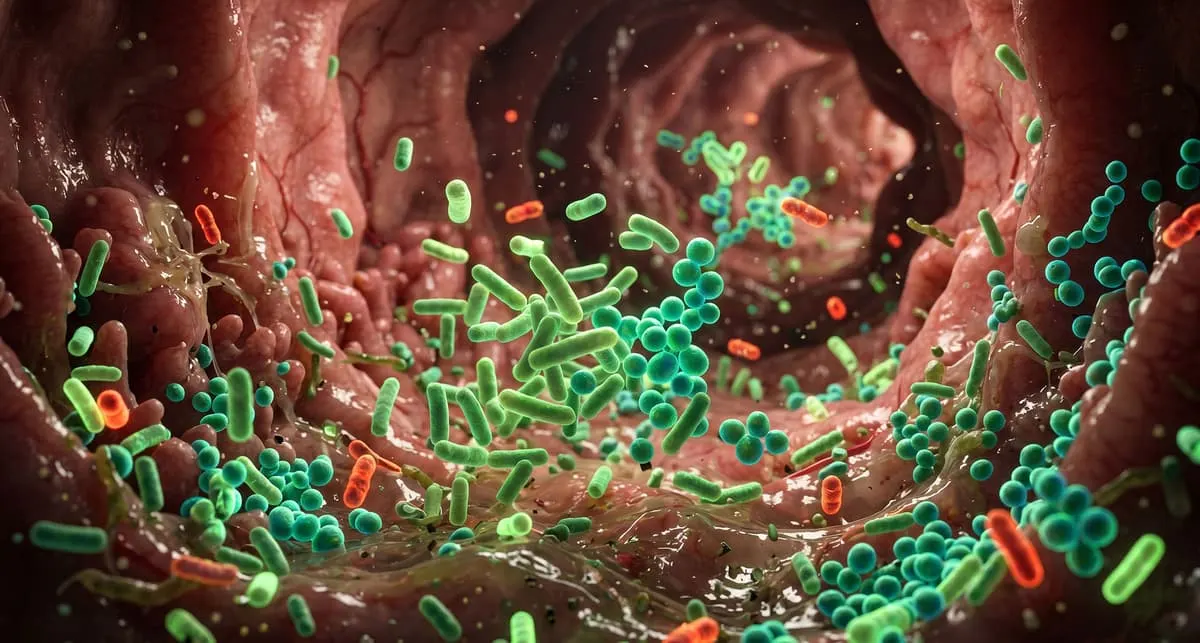
An international research team led by the Max Planck Institute for Biology Tübingen has identified a link between the baseline gut microbiome and post-vaccination fever, according to scitechdaily.com scitechdaily.com
scitechdaily.comscitechdaily.comOpen source ↗. In a study of healthy young adults receiving SARS-CoV-2 vaccines during 2021 and 2022, participants who developed substantial fevers exhibited elevated baseline inflammation and greater bacterial gene activity related to flagella prior to injection.
To establish causality beyond human observational data, the authors transferred fecal microbiota from trial participants into germ-free mice lacking native intestinal microbes. Upon subsequent vaccination, animals receiving microbiota from high-fever individuals developed stronger inflammatory responses than mice inoculated with microbes from low-fever donors. The researchers noted that this elevated response depended directly on the hosts' ability to sense flagellin, the primary structural protein of bacterial flagella.
Microbial Flagellin and Baseline Inflammation
Flagella are whip-like appendages used for bacterial motility, synthesized from flagellin proteins. Because pathogenic organisms like Salmonella express similar structures, the host immune system recognizes flagellin as an innate danger signal, which primes systemic inflammatory tone. Participants experiencing marked febrile reactions demonstrated heightened expression of microbial motility genes and increased inflammation markers in both fecal and blood samples prior to vaccination.
Dietary Influences and Experimental Models
Observations within the human cohort showed that individuals consuming plant-based diets tended to exhibit weaker febrile reactions scitechdaily.com
scitechdaily.comscitechdaily.comOpen source ↗. In laboratory settings, specific food additives boosted bacterial flagellin production in vitro, according to researchers from Institut Pasteur. Furthermore, experiments conducted at Georgia State University revealed that administering a high-fat Western-style diet to mice heightened inflammatory responses following vaccination. The authors emphasized that human interventional trials are required to establish whether direct dietary changes can modify microbial flagellin production and mitigate vaccine-induced fever.