RIKEN and Chiba University Identify OMC1 Protein Preserving Oocyte Chromosomes in Mice
Researchers showed in mice that the oocyte-specific protein OMC1 stabilizes REC8 cohesin complexes throughout prolonged meiotic arrest.
Mammalian oocytes enter meiotic arrest during fetal development and remain in this state until ovulation in adulthood. A research team from Chiba University and the RIKEN Center for Biosystems Dynamics Research identified a previously uncharacterized protein, OMC1 (Oocyte-specific Meiotic Chromosome Protein 1), that maintains chromosome cohesion throughout reproductive life, according to findings published in Nature Aging nature.com
Nature Agingnature.comOpen source ↗.
During long-term meiotic arrest, sister chromatids are held together by cohesin complexes containing the REC8 subunit. Because REC8 is not replenished after initial formation, its gradual deterioration leads to chromosome segregation errors and aneuploidy in aged oocytes. To find factors that counteract this degradation, researchers analyzed single-cell RNA sequencing data from fetal female and male germ cells, identifying the gene Omc1, which is expressed specifically in oocytes shortly before arrest.
Cohesin Stabilization Mechanism
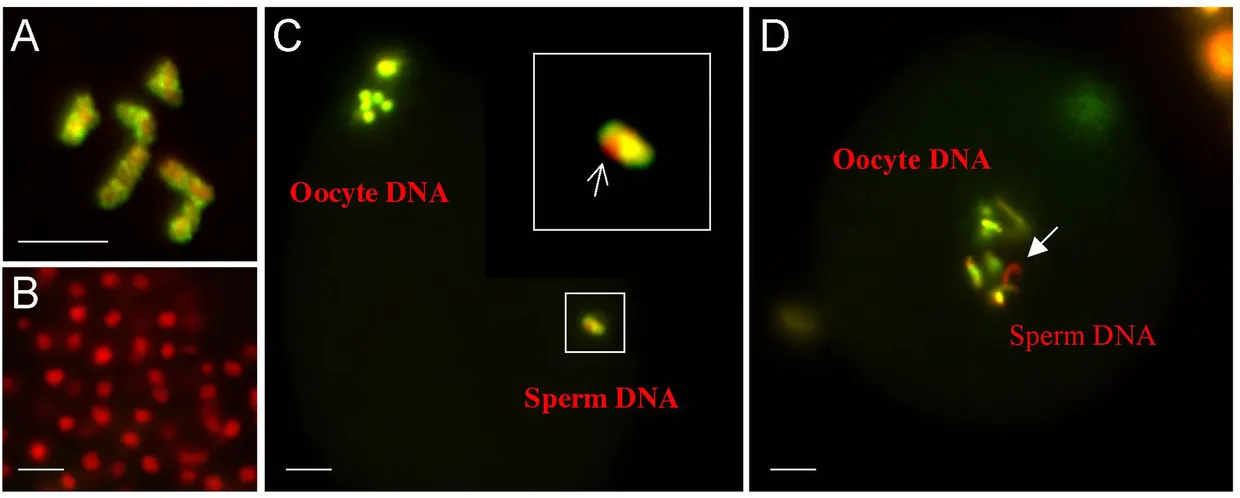
Imaging experiments demonstrated that OMC1 localizes to chromosome axes at the same sites as REC8 cohesin from fetal stages through adult meiotic maturation. To assess its physiological function, investigators generated Omc1 knockout mice. In these modified animals, REC8 disappeared prematurely from chromosome axes during meiotic arrest. Even young oocytes lacking OMC1 exhibited weakened cohesion and segregation defects comparable to those observed in aged control cells.
Reintroducing OMC1 into adult knockout oocytes partially restored REC8 levels on chromosome axes and reduced segregation errors nature.com
Nature Agingnature.comOpen source ↗. According to the authors, OMC1 functions as a sustaining factor that prolongs the structural lifespan of meiotic chromosomes rather than a general anti-aging regulator.
Human Ortholog Variants
The study also examined functional analogs in human genetics. The human ortholog of Omc1, known as CCDC201, carries variants associated with early menopause and premature ovarian insufficiency. The researchers synthesized a truncated mouse OMC1 protein mimicking one of the documented human CCDC201 mutations. In experimental models, the truncated variant failed to restore chromosome cohesion, highlighting the structural necessity of intact OMC1 complexes for suppressing age-associated oocyte aneuploidy.