University at Buffalo identifies optical fingerprints of 10 defects in h-BN via nonlinear modeling
First-principles simulations showed that atomic defects in hexagonal boron nitride increase second-harmonic generation by orders of magnitude.
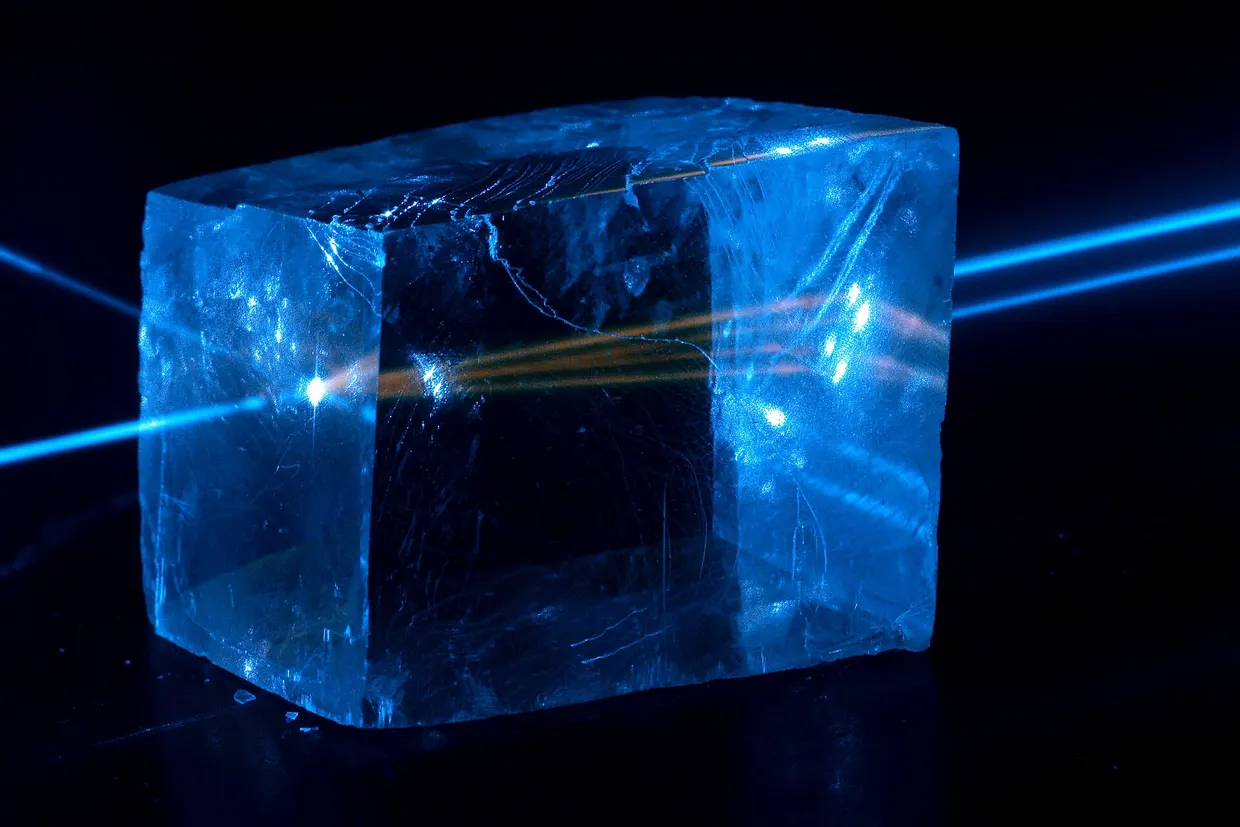
A research team led by the University at Buffalo modeled the optical signatures of 10 known atomic defects in multilayer hexagonal boron nitride (h-BN), according to a study published in Nano Letters acs.org
Nano Lettersacs.orgOpen source ↗. The researchers calculated polarization-resolved linear, second-order, and third-order optical susceptibilities to identify how specific lattice flaws interact with laser radiation. The findings provide a theoretical framework for optical identification and defect engineering in 2D materials intended for quantum photonics and sensing.
Symmetry breaking and nonlinear response
While point defects altered the linear optical response only weakly, they led to significant amplification of nonlinear susceptibilities. Carbon-based defect complexes broke local structural symmetry and introduced resonant transitions, driving orders-of-magnitude increases in second-harmonic generation (SHG). Third-harmonic generation was also amplified across the defect configurations, though it proved less sensitive to local atomic coordination than second-order processes.
Simulations included boron and nitrogen vacancies alongside carbon replacement complexes. The calculations revealed that nonlinear signatures vary sharply with defect geometry, even among structures with identical chemical compositions. For instance, when evaluating two configurations of four-carbon defects, one structure generated intense nonlinear emission across two polarization directions, whereas the alternative geometry confined the strong optical response to a single polarization direction.
Experimental verification
Measurements performed on carbon-doped h-BN samples qualitatively supported the calculated trends in nonlinear optical enhancement acs.org
Nano Lettersacs.orgOpen source ↗. Because specific h-BN defects can operate as single-photon emitters, reliable nonlinear optical fingerprints allow researchers to map and classify active quantum centers non-destructively. The authors reported that establishing these distinct optical signatures is an essential operational step toward designing deterministic defect arrays for quantum communication systems.