Single-Dopant Pure Organic WOLED Reaches Record 27.1% External Quantum Efficiency
Researchers from Jilin University and Ji Hua Laboratory built a prototype single-dopant white OLED that hits 27.1% EQE via excimer emissions.
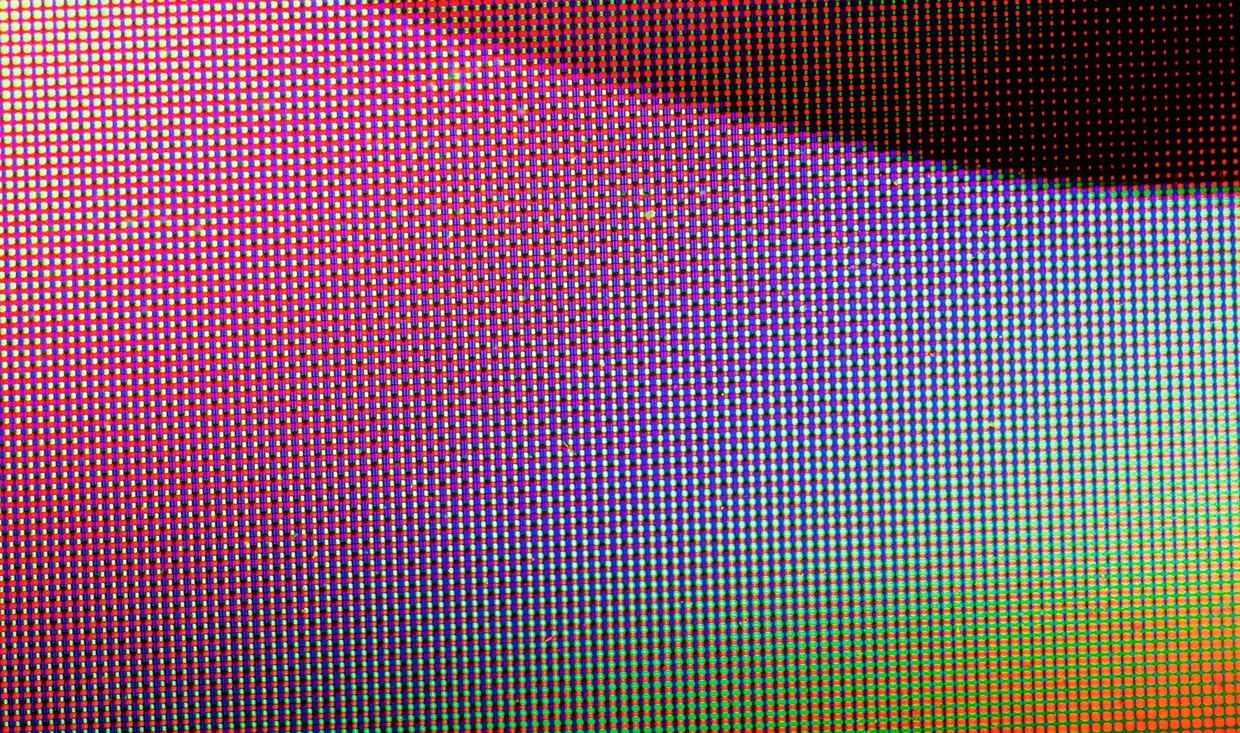
Researchers from Jilin University and Ji Hua Laboratory have developed a pure organic white organic light-emitting diode (WOLED) prototype based on a single dopant that achieved a record maximum external quantum efficiency (EQEmax) of 27.1% oup.com
National Science Reviewoup.comOpen source ↗. Traditional purely organic single-dopant WOLED devices have consistently remained below 15% EQE due to poor exciton utilization, according to a paper published in National Science Review. The prototype produced warm white light with Commission Internationale de l'Eclairage (CIE) coordinates of (0.35, 0.50) and sustained an operational lifetime (LT80) of 398 hours at an initial luminance of 1000 cd m−2.
Dual MR-TADF Emission Mechanism
To overcome previous limits, the team synthesized a multi-resonance thermally activated delayed fluorescence (MR-TADF) emitter designated as Th-DBN. The molecule consists of two multi-resonance units linked by a thiophene bridge to extend the π-conjugated skeleton. Instead of suppressing face-to-face stacking, the design intentionally promotes the formation of stable excimers. Isolated Th-DBN monomers emit blue-green light peaking at 499 nm, while the stacked excimer state produces an orange-yellow emission centered at 588 nm. Combining these two bands yields warm white light with a correlated color temperature near 4400 K.
Transient optical measurements confirmed that both the monomer and the excimer pathways display microsecond-scale delayed fluorescence, meaning both channels independently collect triplet excitons via reverse intersystem crossing. The doped organic film attained a photoluminescence quantum yield of 98.8%, showing that excimer aggregation does not introduce non-radiative loss channels.
Electroluminescent Device Performance
When incorporated into a conventional bipolar host at an 8 wt% doping ratio, the device exhibited a turn-on voltage of 2.4 V and a peak luminance exceeding 17,000 cd m−2. Along with the peak EQE of 27.1%, it demonstrated a maximum current efficiency of 69.6 cd A−1 and a power efficiency reaching 90.6 lm W−1 oup.com
National Science Reviewoup.comOpen source ↗. To improve device stability, researchers integrated an exciplex-forming co-host that broadened the exciton recombination zone, securing the reported 398-hour LT80 metric. The team also tested adding a secondary blue MR-TADF dopant to improve the color rendering index to 63, yielding standard white CIE coordinates of (0.33, 0.34).