Infernogallus jamesi, a turkey-sized Cretaceous dinosaur, had a parrot-like jaw for eating fruit
Reconstruction of the skull of the oviraptorosaur Infernogallus jamesi shows a jaw that moved forward and back, the first fruit-eating adaptation found in non-avian dinosaurs.
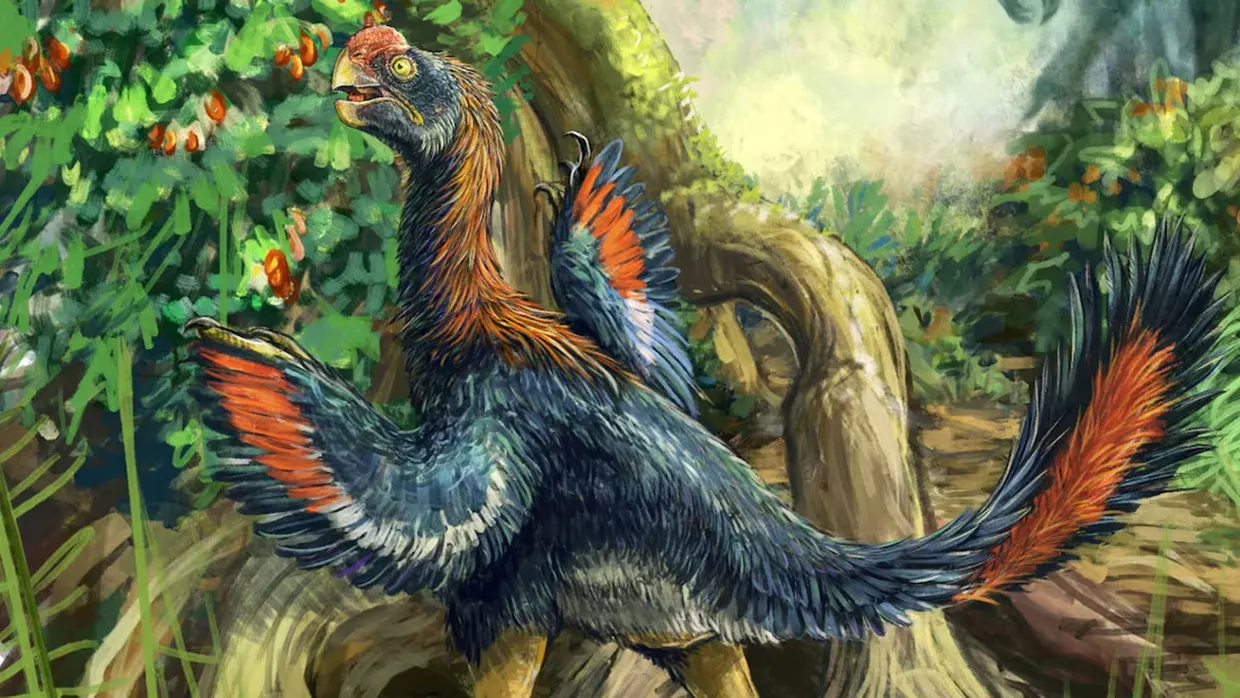
A small beaked dinosaur that lived more than 65 million years ago had a jaw built for mashing fruit, much like that of modern parrots. Researchers reported the finding in Nature Communications on October 10, according to sciencenews.org sciencenews.org
sciencenews.orgsciencenews.orgOpen source ↗. The animal, named Infernogallus jamesi, or "hell chicken", is the first non-avian dinosaur with specialized adaptations for eating fruit, the authors say.
Fossils from the Hell Creek formation
In 2011, a fossil collector found much of the skeleton of an odd theropod in eastern Montana and brought it to the attention of David Evans, a paleontologist at the Royal Ontario Museum in Canada. Over the following years, fossil collectors and paleontologists working in Montana and North and South Dakota unearthed four more partial skeletons.
The dinosaur belonged to the oviraptorosaurs, a particularly birdlike subgroup of beaked theropods that lived during the Cretaceous Period. The species probably weighed around 12 kilograms, about the size of a turkey. Evans, Greg Funston of Stony Brook University in New York, and their colleagues named it after the Hell Creek geological formation, where it was found, and its poultrylike appearance.
A jaw that moved forward and back
The researchers studied the skull and reconstructed the musculature. The construction of the jaw joints, muscles and palate suggests that the animal moved its jaw forward and back when eating, rather than up and down like its chomping relatives sciencenews.org
sciencenews.orgsciencenews.orgOpen source ↗. This chewing style is unique among non-avian dinosaurs but strikingly similar to that of fruit-eating parrots.
Funston and his colleagues think Infernogallus had adapted to a fruit-rich diet, stripping the flesh from large seeds with its tongue and sliding jaw motions. The adaptations were surprising, Funston says: "All the different lines of evidence seemed to converge on this one answer."
Angiosperms, the plants that produce flowers and fruits, were rapidly diversifying throughout the Cretaceous. Mounting evidence suggests that they were coevolving with Cretaceous animals and that dinosaurs may have eaten their fruits, and Infernogallus adds to that picture. Funston says other relatives of the "hell chicken" or other dinosaur groups may also have been habitual fruit eaters.