Petrobras installs first all-electric intelligent completion in ultra-deep water at Búzios field
The PACI-e system replaces hydraulic valve control inside the well with electric commands. Petrobras plans to use it first in up to ten Búzios wells.
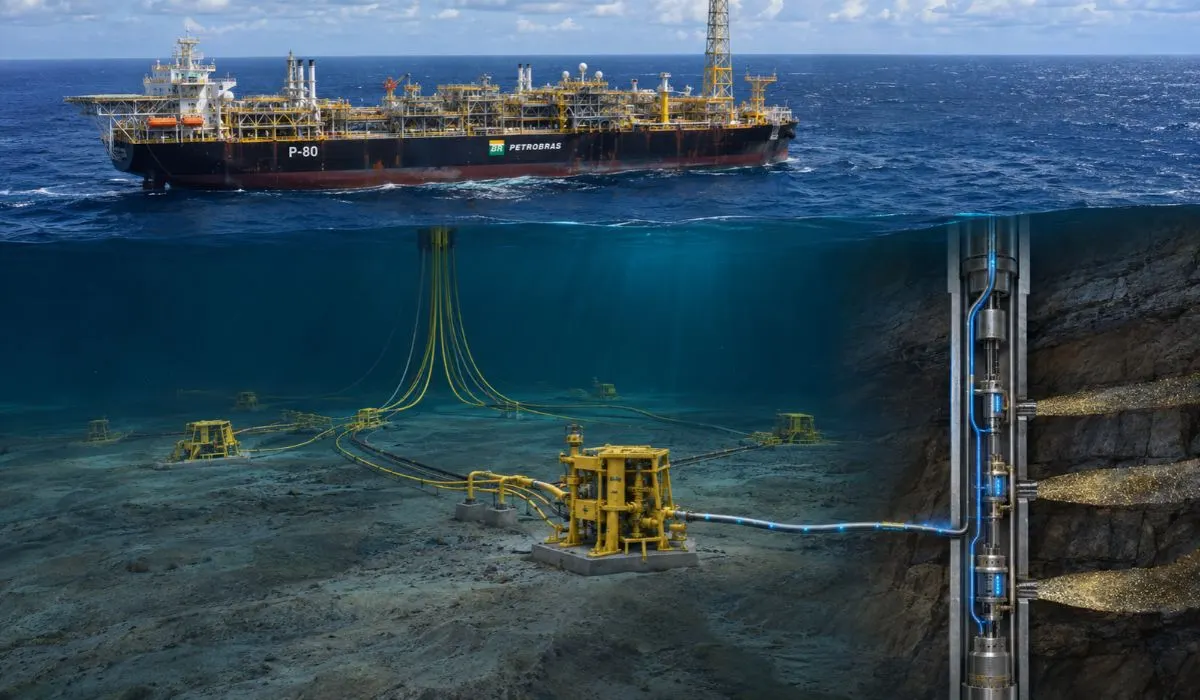
Petrobras installed what it calls the first fully electric intelligent completion in ultra-deep water, in a well of the Búzios field, Santos Basin, that will be connected to platform P-80, according to clickpetroleoegas.com.br. clickpetroleoegas.com.br
clickpetroleoegas.com.brclickpetroleoegas.com.brOpen source ↗ The company confirmed the installation on 10 November, when it published its third-quarter 2026 results. The system, named PACI-e, is to be applied first in up to ten Búzios wells.
How PACI-e works
Completion is the stage after drilling in which equipment is installed to control the inflow of reservoir fluids. In intelligent systems, sensors and valves monitor and regulate production from different reservoir intervals, so operators can adjust how much oil, gas and water enters the well. PACI-e moves these valves with electric commands instead of hydraulic pressure, which simplifies the architecture of the downhole equipment.
Eduardo Schnitzler, a senior Petrobras consultant who took part in the development, told Brasil Energia that this configuration allows the components to be tracked more precisely and gives more detailed operating data. Petrobras expects less maintenance and higher well availability, but these benefits still have to be confirmed in operation. According to Schnitzler, the equipment was installed without anomalies related to the new technology.
Platform and rollout
The well is not yet producing. P-80 left the Tuas Boulevard Yard in Singapore on 30 September 2026 for Búzios and is expected to start operating in 2027. It is designed for up to 225 thousand barrels of oil per day and 12 million cubic meters of natural gas per day, and will be the ninth production unit in the field. P-82 and P-83, also for Búzios, are expected to start production in 2027.
Development took about seven years and was carried out by Petrobras' Cenpes research center together with SLB. In April 2024 SLB announced contracts for completion equipment and services for up to 35 subsea wells; this program is separate from the ten wells of the initial PACI-e deployment. After Búzios, Petrobras intends to take the system to the Sépia, Atapu and Mero fields. The number of wells and the schedule for them have not been disclosed, and existing hydraulic completions remain in use. clickpetroleoegas.com.br
clickpetroleoegas.com.brclickpetroleoegas.com.brOpen source ↗