University of Tokyo: hamster cells keep 16.3 million base pairs of red alga DNA for 155 generations
In cultured hamster-derived cells, algal chromosomes persisted over many divisions, while DNA methylation kept most algal genes silent. The work shows how large foreign DNA is accommodated.
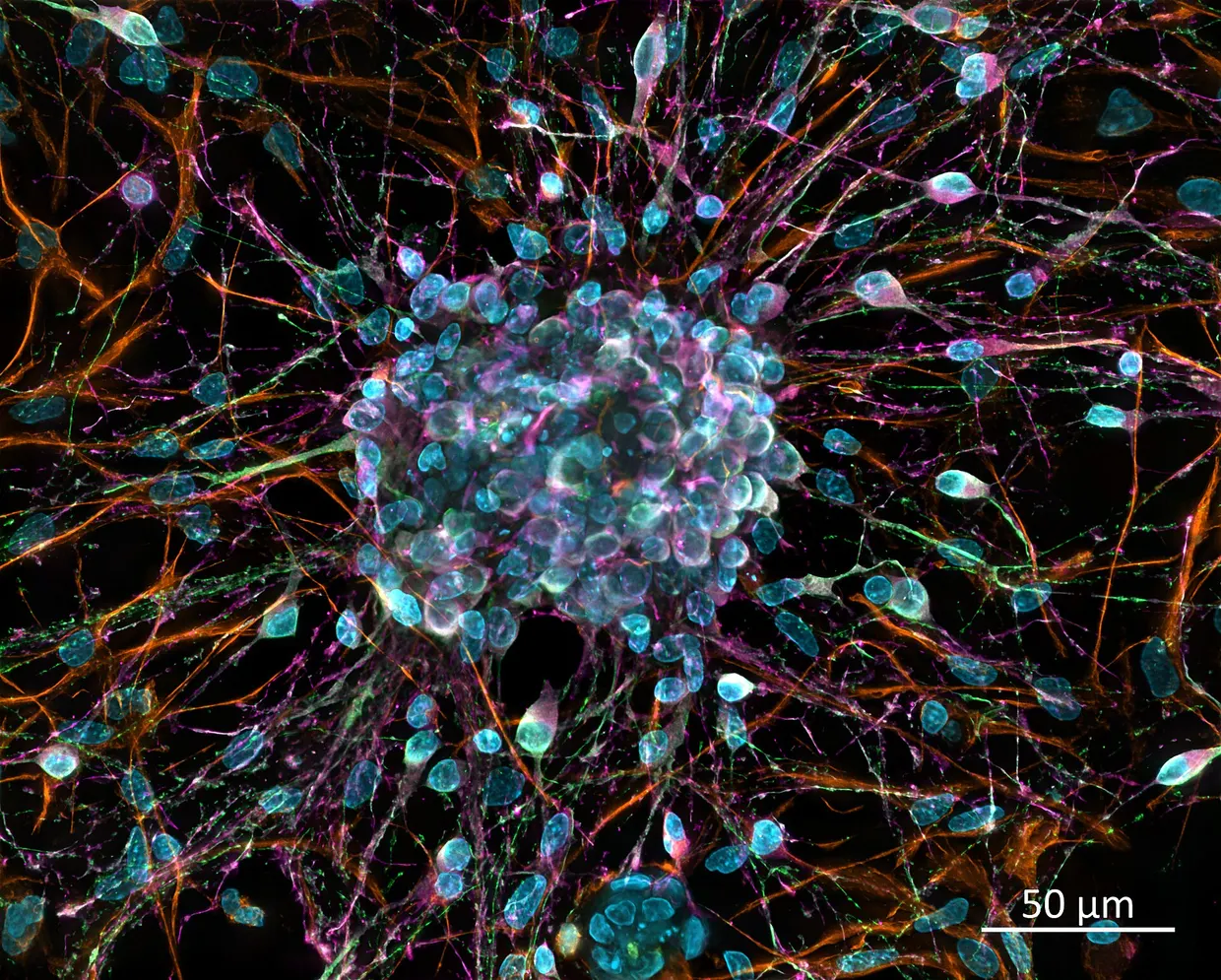
A research team led by the University of Tokyo created hybrid "planimal" cells, in which hamster-derived mammalian cells carry DNA of the unicellular red alga Cyanidioschyzon merolae. The results were published on 12 November 2026 in Nature Communications nature.com
Nature Communicationsnature.comOpen source ↗. In one cell line, about 16.3 million base pairs of algal nuclear DNA were retained, including intact chromosomes and sequences from all 20 algal chromosomes.
How the algal DNA was transferred
The researchers either fused algal cells with hamster-derived cells or let the mammalian cells engulf the algae by phagocytosis. Both routes led to transfer, but cell fusion produced stable hybrid cells much more efficiently than engulfment. Live-cell imaging captured the early appearance of algal DNA in the nucleus after fusion.
Genome sequencing and cytogenetic analyses showed that the algal DNA persisted as telomere-linked structures. It remained detectable through 155 cell generations, and substantial portions persisted for 95 generations without antibiotic selection. According to the authors, direct genome-scale demonstrations of eukaryote-to-eukaryote gene transfer had been absent before.
Methylation as a gatekeeper
The transferred algal DNA gradually acquired DNA methylation and repressive histone modifications. It formed heterochromatic domains that physically associate with host chromosomes nature.com
Nature Communicationsnature.comOpen source ↗. About 96% of the transferred algal protein-coding genes showed no detectable expression, the team reported.
In hamster cells lacking DNMT3A, an enzyme involved in establishing DNA methylation, fewer stable hybrid colonies formed and the cells retained less algal DNA. The authors interpret this as a gatekeeping role of DNA methylation in the stable accommodation of foreign genomes between distantly related eukaryotes.
The study did not produce photosynthetic animal cells. Senior author Sachihiro Matsunaga said the next task is to selectively switch on the algal genes inside animal cells. Photosynthesis in animal cells remains a long-term goal that would require functional chloroplasts and further engineering.