Engineered Corynebacterium glutamicum Produces 5.36 g/L of Heparosan in a 5 L Laboratory Bioreactor
Heparosan, a precursor of the anticoagulant heparin, was made by a modified GRAS bacterium at 5.36 g/L in fed-batch fermentation. Heparin is currently extracted mainly from animal tissue.
Researchers reported in Bioresources and Bioprocessing that an engineered strain of Corynebacterium glutamicum, designated Cg24-11, produced 5.36 g/L of heparosan in fed-batch fermentation in a 5 L bioreactor biomedcentral.com
Bioresources and Bioprocessingbiomedcentral.comOpen source ↗. Heparosan has a polysaccharide backbone similar to that of heparin and can be converted into heparin by mild enzymatic catalysis. The result was obtained at laboratory bioreactor scale.
Heparin is a widely used anticoagulant that is produced industrially mainly by extraction from animal tissue. According to the authors, this route suffers from unstable supply and potential safety hazards. They also state that heparosan shows favorable biocompatibility and non-immunogenicity, which makes its efficient and eco-friendly biosynthesis relevant. C. glutamicum was chosen as the host because it is a Generally Recognized as Safe (GRAS) microorganism.
Genome and translation-level modifications
The team used two complementary strategies. In the first, genome-scale modification stably upregulated the genes ugd, glmS and ndk. This raised the heparosan titer of the recombinant strain Cg24 to 595.39 mg/L.
In the second, translation-level fine-tuning adjusted the expression of individual genes within the kfiB-kfiC-kfiA cassette. The authors built a high-coverage random ribosome binding site (RBS) library for this purpose. The selected variants further lifted the titer to 1161.37 mg/L biomedcentral.com
Bioresources and Bioprocessingbiomedcentral.comOpen source ↗.
Fed-batch fermentation
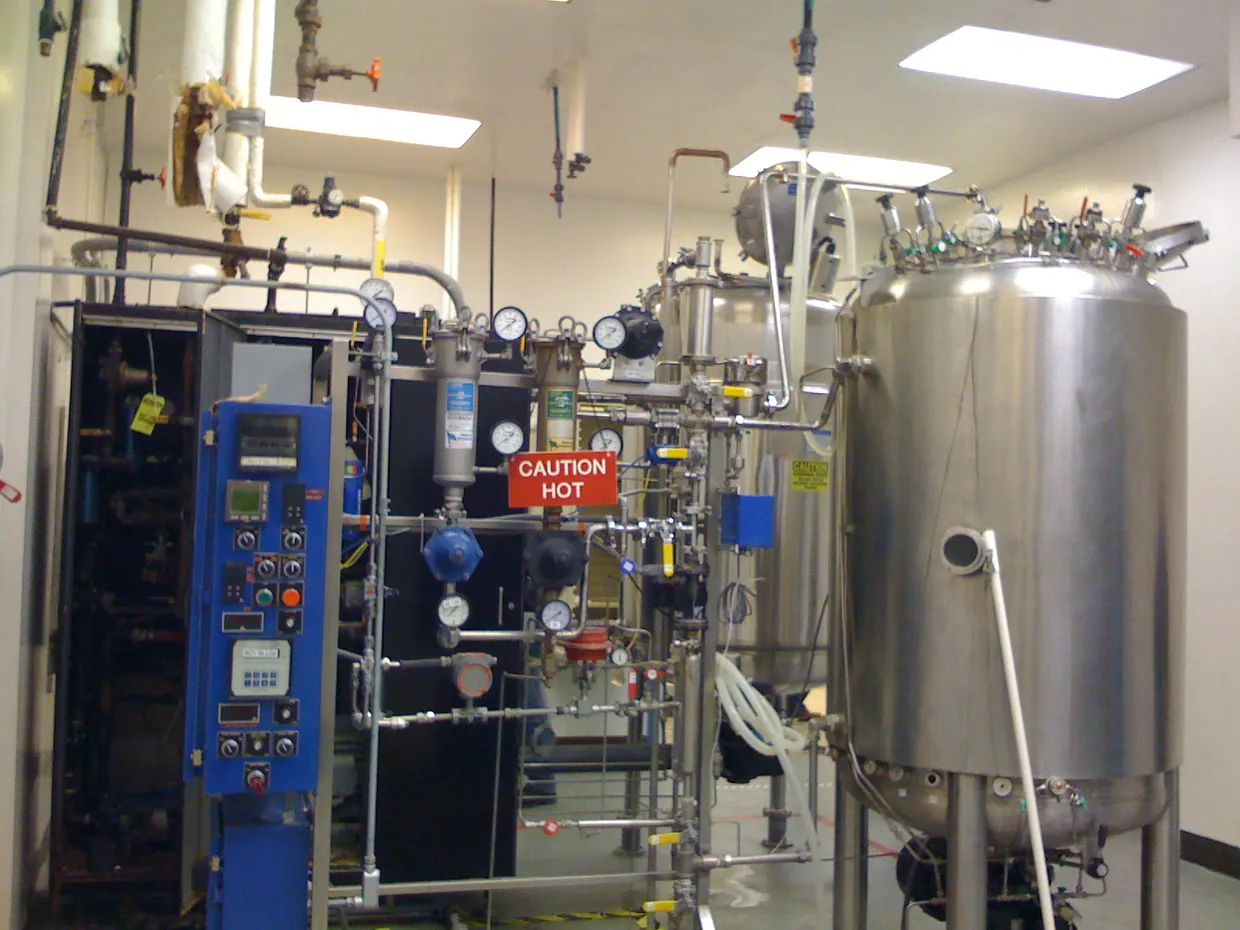
In the 5 L bioreactor the researchers applied a two-stage growth-production regulation strategy. Under it, the recombinant strain Cg24-11 reached 5.36 g/L of heparosan. The authors describe this as showing the strain's potential for efficient heparosan biosynthesis.
The reported figure is a heparosan titer, that is, a heparin precursor, and not a finished anticoagulant. The authors add that the combined modification strategy may serve as a reference for building high-efficiency cell factories for other complex compounds.