Palacký University scientists describe six new Colostethus frog species in Panama
The find raises the number of described Colostethus species from eleven to seventeen. Genetics, body features and male calls confirmed that the species differ.
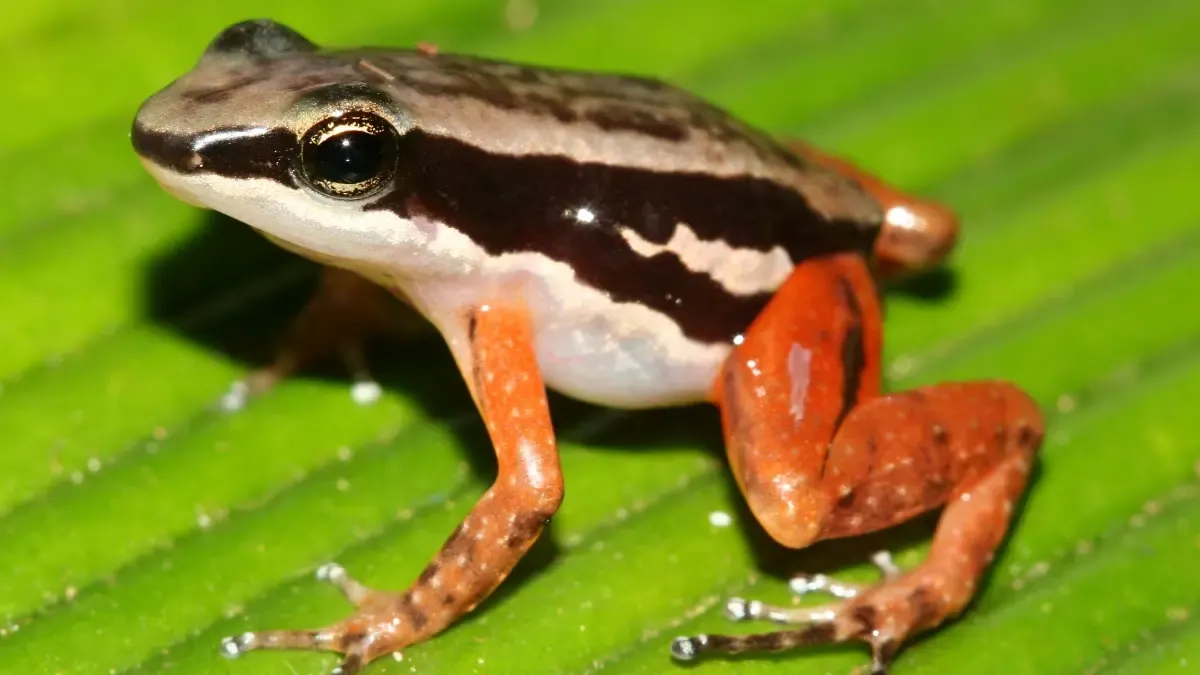
Scientists from Palacký University have described six new frog species of the genus Colostethus from Panama, novinky.cz reports. novinky.cz
novinky.cznovinky.czOpen source ↗ The discovery raises the number of scientifically described species in the genus from eleven to seventeen, said doctoral student Tadeáš Venkrbec of the Department of Zoology, who took a major part in the research. Experts had doubted the true identity of these frogs for several decades.
Genetics, body features and male calls
The differences were confirmed by genetic analyses, a comparison of body features and the vocalizations of males. Although the new species look markedly similar at first glance, their evolutionary histories differ. The researchers named them Colostethus bocatoro, Colostethus donosensis, Colostethus kuara, Colostethus portobelensis, Colostethus sanblasensis and Colostethus chucantiensis, after the areas where they occur.
The taxonomic ambiguity, a state in which an organism cannot be placed unambiguously in a predefined classification hierarchy, was resolved only by combining genetic analyses, field research and a study of the frogs' calls. Male calls proved to be one of the most reliable traits for telling the species apart. According to Veselý, the chirping sounds differ in length, cadence, frequency and number of tones, and these differences matter for mutual recognition of individuals during breeding.
Expeditions and evolutionary history
The material needed for the scientific description was collected during several demanding expeditions to remote and often hard-to-reach areas of Panama. novinky.cz
novinky.cznovinky.czOpen source ↗ According to Veselý, the main goal was not only to extend the list of known species but above all to clarify the evolutionary history of this group of amphibians. That history is closely tied to the complex geological development of the Isthmus of Panama, which connects North and South America.
Veselý also pointed out that the tropical forests of Central America probably hide a number of other, still undiscovered amphibian species.