18F-NaF PET/CT changed T category in 9.4% of 265 nasopharyngeal carcinoma patients in retrospective study
In a retrospective single-center cohort of 265 patients, adding 18F-NaF PET/CT changed T category in 25 and M category in 13; target contours changed in selected cases.
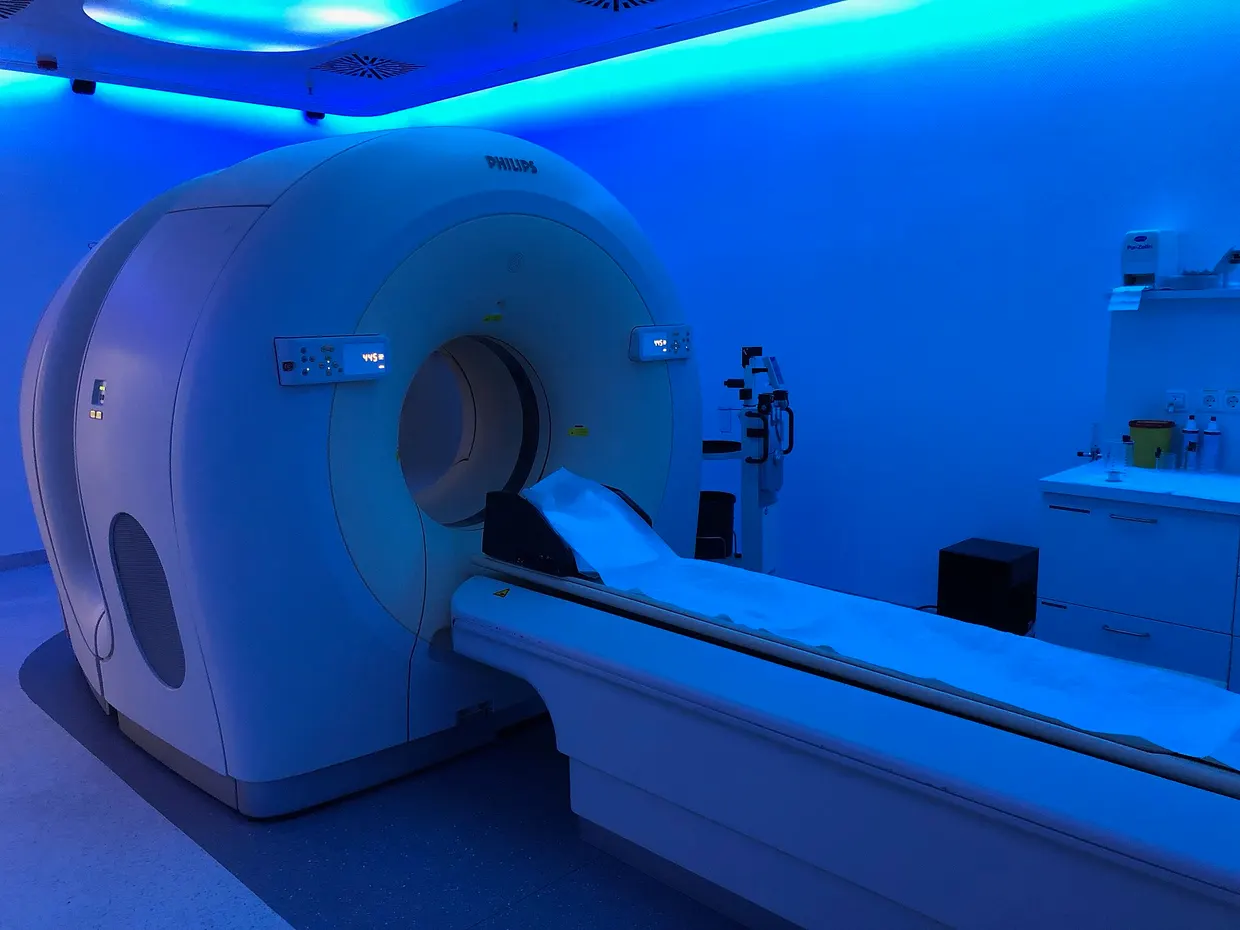
A retrospective single-center cohort study examined 265 patients with newly diagnosed nasopharyngeal carcinoma (NPC) who underwent pretreatment conventional imaging and 18F-sodium fluoride (18F-NaF) PET/CT. The authors assessed how the added scan affects staging and radiotherapy target volumes. The paper in BMC Medical Imaging (2026) is available via doi.org; staging followed AJCC/UICC Version 9 criteria applied retrospectively biomedcentral.com
doi.orgbiomedcentral.comOpen source ↗.
Staging changes after adding 18F-NaF PET/CT
Accurate assessment of skull-base bone involvement and skeletal metastases is essential for NPC staging and radiotherapy planning. After 18F-NaF PET/CT was added, T category changed in 25 of 265 patients (9.4%; 95% CI, 6.5%-13.6%). M category changed in 13 of 265 patients (4.9%; 95% CI, 2.9%-8.2%).
Four patients had established M1 disease whose M category stayed the same. In three of them, 18F-NaF revealed additional avid skeletal findings.
Effect on radiotherapy target volumes
Paired gross tumor volume (GTV), clinical target volume (CTV) and planning target volume (PTV) data were available for 11 of the 25 patients with T reclassification. The other 14 were excluded because technical limitations prevented reliable image registration between CT and 18F-NaF PET/CT biomedcentral.com
doi.orgbiomedcentral.comOpen source ↗. As a comparison, 30 of 183 eligible patients with unchanged T category were chosen by a computer-generated random-number sequence.
In the NaF-positive/MRI-negative cohort, median paired volume increases were 0.96 cm3 for GTVnx, 4.50 cm3 for CTV and 6.45 cm3 for PTV. In the NaF-positive/MRI-positive cohort they were 3.80, 1.75 and 0.05 cm3, respectively.
An exploratory 1:1 propensity score-matched analysis used age, sex and AJCC/UICC Version 9 stage. In 11 matched pairs, relative CTV and PTV changes were numerically larger in the T-changed cohort. Residual covariate imbalance persisted after matching, which limits interpretation.
Limitations
The authors state that the findings reflect imaging-based stage reclassification. The effect of 18F-NaF PET/CT on staging accuracy requires validation against an independent reference standard. Given the retrospective single-center design, the small contouring cohort and the residual imbalance, the authors call for prospective validation before routine clinical adoption biomedcentral.com
doi.orgbiomedcentral.comOpen source ↗.