Northwestern's DIAL 3D printing makes chain mail from thick inks in 30 minutes versus 124 for extrusion
Northwestern University engineers combined patterned light with paste-like inks. In a test, a porous grid printed in 30 minutes against 124 for extrusion, with finer walls.
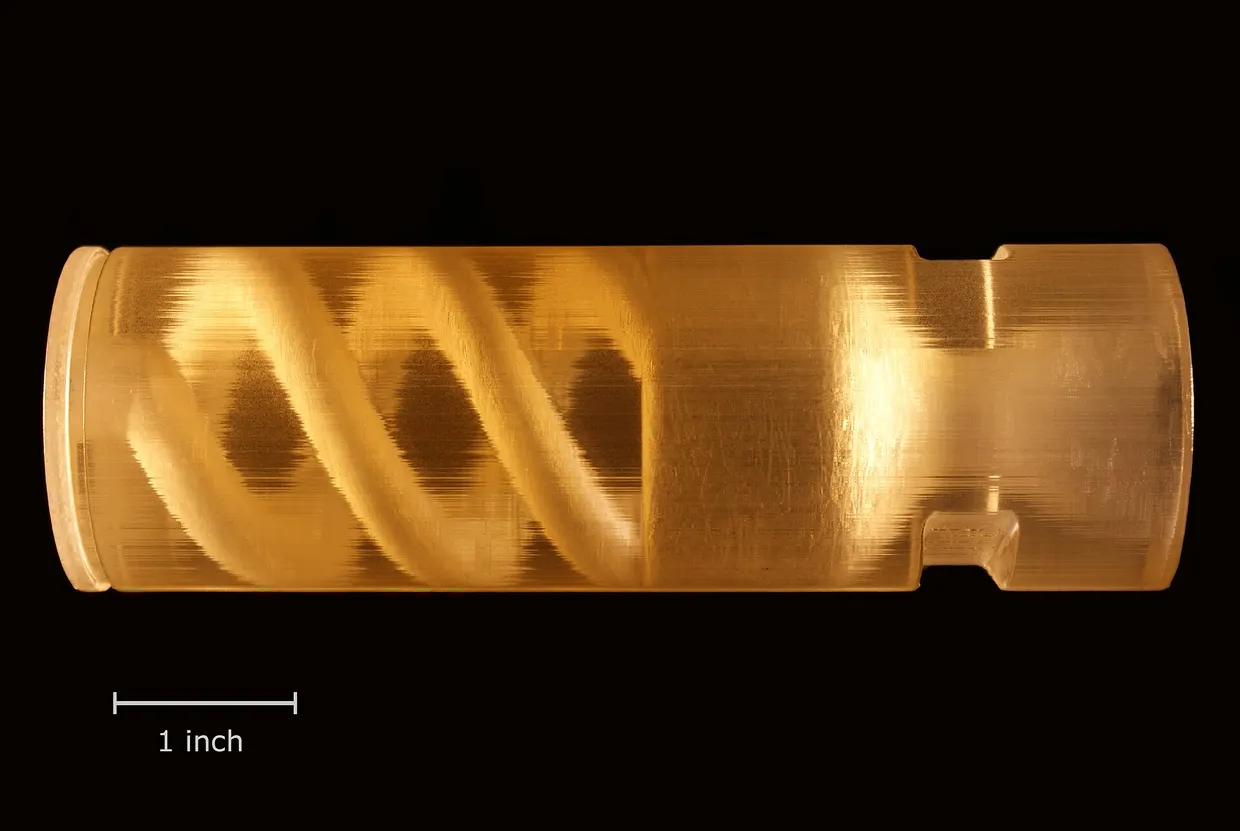
Engineers at Northwestern University have developed a 3D-printing method that builds intricate, interlocking structures from thick inks faster than conventional extrusion printing, according to knowridge.com knowridge.com
knowridge.comknowridge.comOpen source ↗. The researchers described the technique in Science Advances. It is called direct ink additive lithography, or DIAL.
Existing printers often force a compromise between speed, fine detail and material choice. Light-based systems can work quickly, but many need thin resins, while printers that squeeze out thicker materials usually build objects slowly, one line at a time. DIAL combines features of both: it spreads thick ink into thin layers and hardens selected areas with light.
How DIAL works
A long, narrow nozzle deposits ink on a flat surface. A blade spreads it into a layer about 50 micrometers thick, and a projector shines a pattern that hardens only the parts needed for that section of the object. The process repeats layer by layer.
Because a whole pattern hardens at once, the nozzle does not have to trace every fine line, and its size does not set the same limit on detail knowridge.com
knowridge.comknowridge.comOpen source ↗. The ink is designed to flow when the blade pushes it and become stiff again once the force stops. Unhardened ink therefore holds delicate overhangs in place, reducing the need for temporary supports that must be cut away.
After printing, excess ink is washed off, and material left on the print surface can be collected for reuse.
Test results and inks
In a direct comparison, DIAL printed one porous grid-like object in 30 minutes, while conventional extrusion took 124 minutes. DIAL also produced lattice walls about 150 micrometers thick, finer than the comparison extrusion approach could reproduce. The team demonstrated lattices and chain-mail-like structures whose separate links can move against one another.
The researchers also tested functional inks, including an ion-carrying material for potential energy-storage devices and water-rich gels for biomedical tools knowridge.com
knowridge.comknowridge.comOpen source ↗. These were demonstrations of printable structures, not completed batteries or clinically tested implants.
DIAL printed multiple objects together and combined different inks in successive layers. How widely the method can scale and which specialized materials perform best remain to be determined.