UCSF's B-SYNC CAR-T therapy eliminated DMG tumors in all mice in two models
The experimental CAR-T cells activate only in the brain. In mice with human glioma cells, the tumors disappeared; a clinical trial may begin as early as April 2027.

Researchers at the University of California, San Francisco (UCSF) developed an experimental B-SYNC CAR-T cell therapy that completely eliminated diffuse midline glioma (DMG) tumors in all mice across two models using human tumor cells, ua.news reports, citing ScienceDaily. ua.news
ua.newsua.newsOpen source ↗ A clinical trial at UCSF Health is being prepared and could begin as early as April 2027.
How the cells are controlled
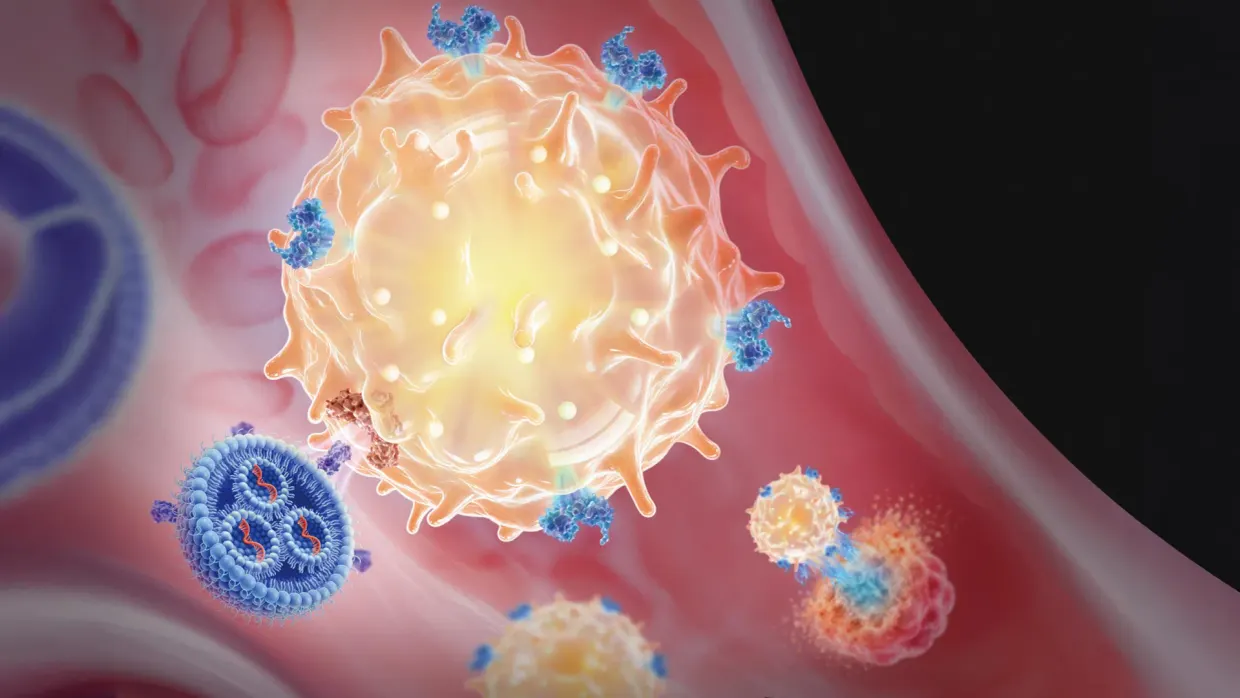
B-SYNC CAR-T consists of modified T cells. They were programmed to produce tumor-attacking receptors only after reaching the brain. Brevican, a protein common in brain tissue, serves as the activation signal. Once activated, the cells recognize the tumor proteins EphA2 or IL13Rα2.
Results in mice
First, the cells were administered intravenously to mice implanted with human DMG cells. Some cells reached the brain and attacked the tumor, while in the blood and spleen they did not produce antitumor receptors. The most pronounced result came after intraventricular administration: conventional CAR-T therapy could not bring the tumors under control, whereas B-SYNC CAR-T eliminated them in every tested mouse.
Nearly seven weeks after treatment, the mice were reinjected with DMG cells. All animals that received B-SYNC CAR-T rejected these cells. According to the team's observations, the modified cells remained functional for more than 70 days after therapy. ua.news
ua.newsua.newsOpen source ↗
DMG is an aggressive childhood brain cancer that grows into the brainstem, which regulates breathing, heartbeat, and swallowing. Nearly all children with this diagnosis die within a year, and existing treatments have limited success in containing progression. The effectiveness of B-SYNC CAR-T in humans has not yet been studied. The planned trial is to use patients' own T cells, genetically modified for this therapy.