Biomarkers in Camp Century sediment show Greenland summers 4.7 °C warmer 416,000 years ago
Biomarkers in sediment from beneath the ice sheet give summer temperature for a time when the ice edge stood more than 60 miles (97 km) back from today's.
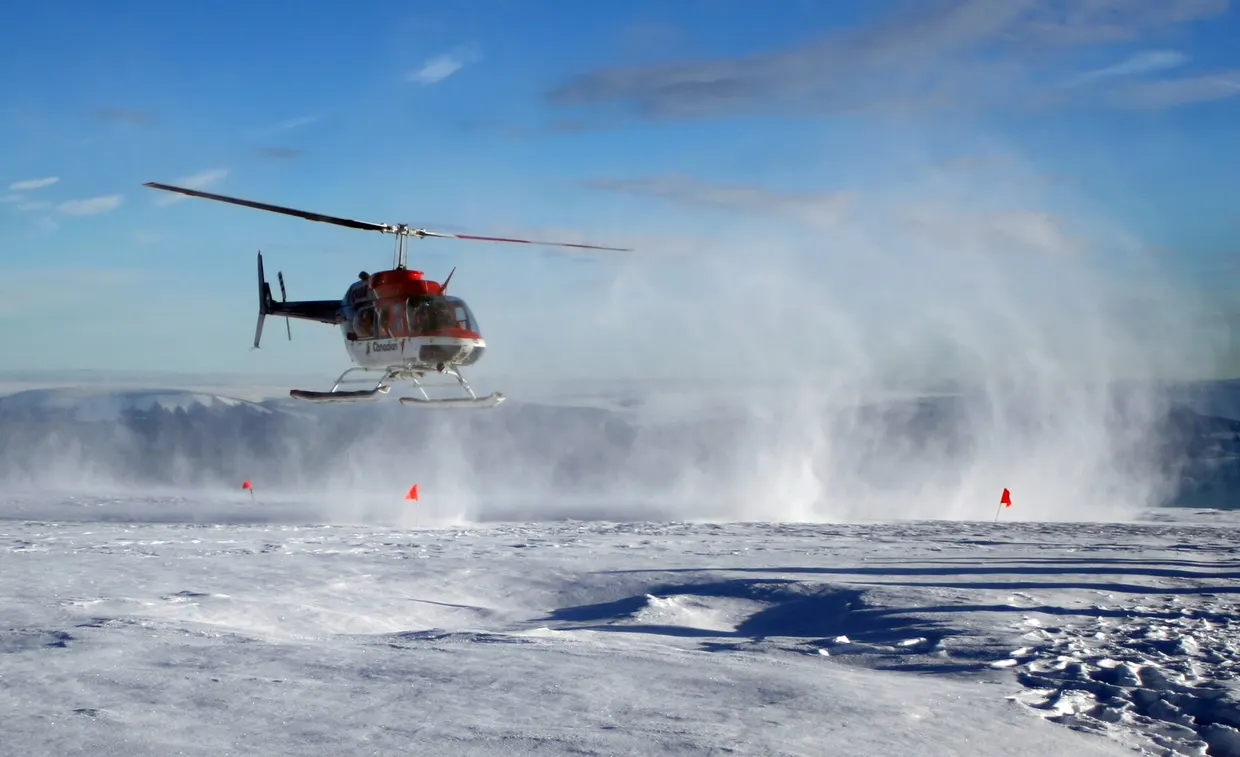
A team led by the University at Buffalo reconstructed summer conditions in northwestern Greenland from sediment collected beneath the ice sheet at Camp Century. According to the study in Climate of the past, the sediment dates to 416,000 ± 38,000 years ago, Marine Isotope Stage 11 (MIS 11). Summer air temperature then was 4.7 ± 3.2 °C warmer than in the 20th century doi.org
Climate of the pastdoi.orgOpen source ↗.
The material was recovered during drilling in the 1960s from nearly a mile (1.6 kilometers) below the surface. Earlier work showed that the sediment last saw sunlight about 416,000 years ago. Exposing the site required the edge of the ice sheet in that region to retreat more than 60 miles (97 kilometers) from its present position.
Biomarkers and summer temperature
The researchers analyzed fatty molecules produced by bacteria and preserved in the sediment. The types and proportions of these molecules change with temperature, so the team compared them with similar molecules found in modern Arctic lakes. Interpreting the result required accounting for how the land's elevation changed as the ice sheet grew and melted.
Atmospheric water vapor isotope values were 22 ± 18 ‰ 2H-enriched, which indicates a greater contribution of locally evapotranspired moisture doi.org
Climate of the pastdoi.orgOpen source ↗. According to the authors, this is the first quantitative estimate of summer temperatures on land anywhere in Greenland for this warm period. Such records are rare because later ice advances eroded most sediment of that age.
The MIS 11 summer climate was similar to the middle Holocene. It was similar to or slightly warmer than peak Holocene warmth on Greenland and cooler than the Last Interglacial. Biomarkers from lower in the section likely represent an earlier ice-free interval, potentially during the Pliocene or early Pleistocene, with conditions similar to MIS 11.
Ice extent and duration of warmth
Camp Century remained ice-covered when Greenland had similarly warm summers roughly 5,000 to 10,000 years ago. The authors interpret the smaller ice sheet during MIS 11 as a response to prolonged warmth, as reconstructed in southern Greenland. One possible explanation is that the earlier warm period lasted potentially tens of thousands of years.
Corresponding author Elizabeth Thomas noted that both the magnitude and the duration of warming matter for how the ice sheet responds. The samples were brought to the University at Buffalo in 1975 by Chester Langway, who led the Camp Century drilling. A freezer cleanout in 2018 returned them to researchers' attention.