Shot noise in a BSCCO cuprate shows electron pairs form at the pseudogap energy
Physicists at LMU Munich and Utrecht University measured shot noise with a scanning tunneling microscope and found electron pairing already at the pseudogap energy in a cuprate.
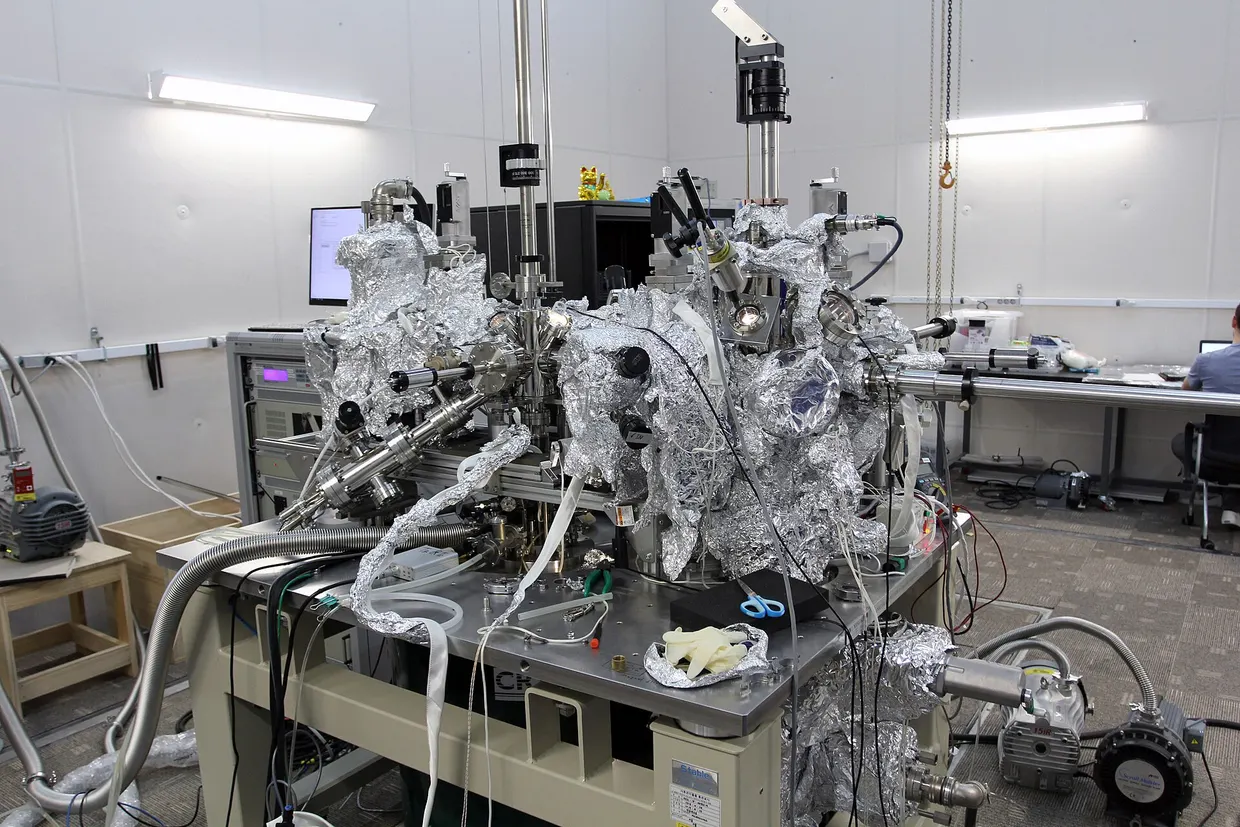
A team led by Milan Allan of Ludwig Maximilian University of Munich and Ingmar Swart of Utrecht University measured the shot noise of current flowing into a cuprate superconductor, according to a Science study covered by arstechnica.com. arstechnica.com
arstechnica.comarstechnica.comOpen source ↗ Cuprates were found in the late 1980s to superconduct at temperatures reachable with liquid nitrogen. Nearly 40 years later, physicists still do not agree on why.
Pseudogap and two competing explanations
Above the temperature at which cuprates become superconducting, some electrons seem to vanish: measurements find far fewer of them at the expected energies. This state is called the pseudogap. One explanation says the electrons freeze into patterns such as charge density waves, while superconductivity develops separately. The other links the missing electrons to pairs (Cooper pairs), which carry current in a superconductor.
Listening to pairs with a tunneling microscope
Shot noise is the fluctuation caused by the arrival of individual charges. If electrons arrive in pairs, the noise rises. The team passed current between a needle-sharp tip and BSCCO crystals cooled to a few degrees above absolute zero, choosing the electron energy by adjusting the voltage. In conventional superconductors pairing doubles the noise; in cuprates the signal is much weaker because single electrons keep flowing alongside the pairs. According to Allan, getting the instrument sensitive enough took about four years.
The extra noise began right at the pseudogap energy, which varies from spot to spot on the surface, and the same pattern held in samples with different chemical compositions. arstechnica.com
arstechnica.comarstechnica.comOpen source ↗ In magnetic fields of up to six tesla, which suppress pairing, the noise dropped back toward the single-electron level. The measured pairing energy lies well above the superconducting temperature. Swart described the picture as pre-formed pairs, with phase coherence setting in only at lower temperatures.
Limits of the result
The authors stress that the experiment does not fully answer the question. It rules out frozen patterns as the sole origin of the pseudogap, but not that such patterns are intertwined with pairing. The technique loses sensitivity as temperature rises, so the team could not yet measure above the superconducting temperature. Allan says he does not expect raising the critical temperature to be simple. Swart plans higher-resolution noise maps and, eventually, an instrument that detects coherence directly.