Göttingen study: spring crops between poplar rows yield 10–35% less once trees reach 5 years
A six-year field study at four German sites found that winter crops keep open-field yields at any tree age, while spring crops lose yield from year five. Wood output was three times higher in later rotations.
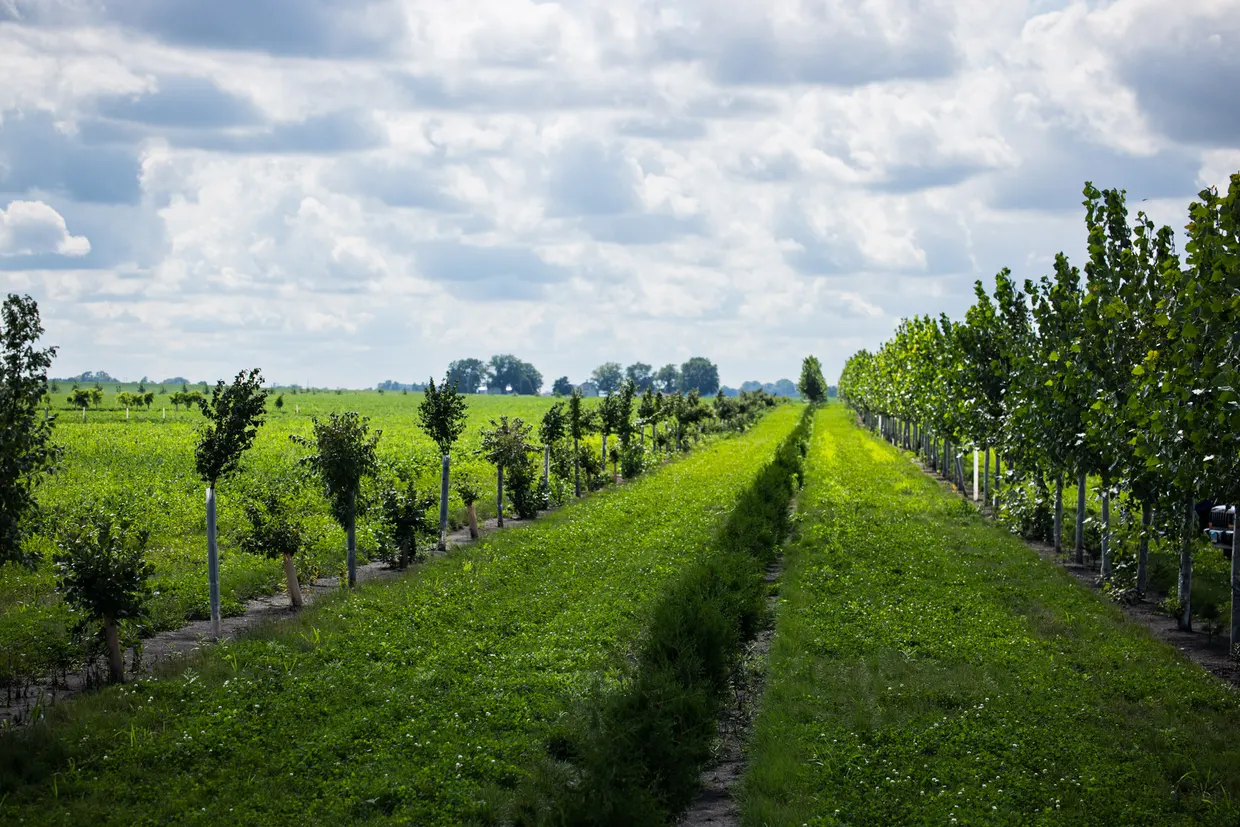
A team led by the University of Göttingen compared crop yields in alley-cropping agroforestry with yields on open cropland and measured wood production of poplar (Populus nigra × Populus maximowiczii) aged 1–9 years. The work ran for six years, 2018–2023, at four sites on different soils in Germany, and was published in Agronomy for Sustainable Development springer.com
Agronomy for Sustainable Developmentspringer.comOpen source ↗. According to the authors, it is the first study to compare crop yields between agroforestry and open cropland while quantifying wood production across tree ages and rotations.
The trees were managed as short-rotation coppice: they are cut to near ground level every three to nine years and then regrow. The study covered the first four rotations, and yields were measured at various distances from the tree rows.
Spring and winter crops by tree age
Spring crops in agroforestry yielded 10–35% less than on open cropland when the trees were five years old or older. The losses occurred 1–4 m from the tree rows, and the authors attribute them to light limitation by tree shade. Soil water and plant-available nutrients did not differ significantly between agroforestry and open cropland.
Winter crops gave yields comparable to open cropland across the whole range of tree ages, from 1 to 9 years springer.com
Agronomy for Sustainable Developmentspringer.comOpen source ↗. Professor Edzo Veldkamp, who led the research, noted that rows of trees can also shelter crops from wind and reduce moisture loss further from the rows, which can sometimes offset losses near the trees.
Wood production and crop choice
Annual wood production increased with tree age. It was three times as high in the third and fourth rotations as in the first and second.
To optimize both crop yields and wood production, the authors recommend growing spring and winter crops when trees are 3 years old or younger, and only winter crops when trees are older than 4 years. Alternatively, as the trees age beyond 4 years, shade-tolerant crops can be grown together with winter crops near the trees, within 4 m. Sarah Choe, who conducted the research as part of her PhD, said that spring crops can be grown only in the first three years after tree harvest, while winter crops can be grown throughout the rotation because they are less affected by shade.