DUSP2 loss expands virtual memory CD8+ T cells and speeds antiviral response, PNAS study
Researchers found that the phosphatase DUSP2 restrains virtual memory CD8+ T cells through the RPA complex and R-loops; without it, these cells respond to virus rapidly without antigen recognition.
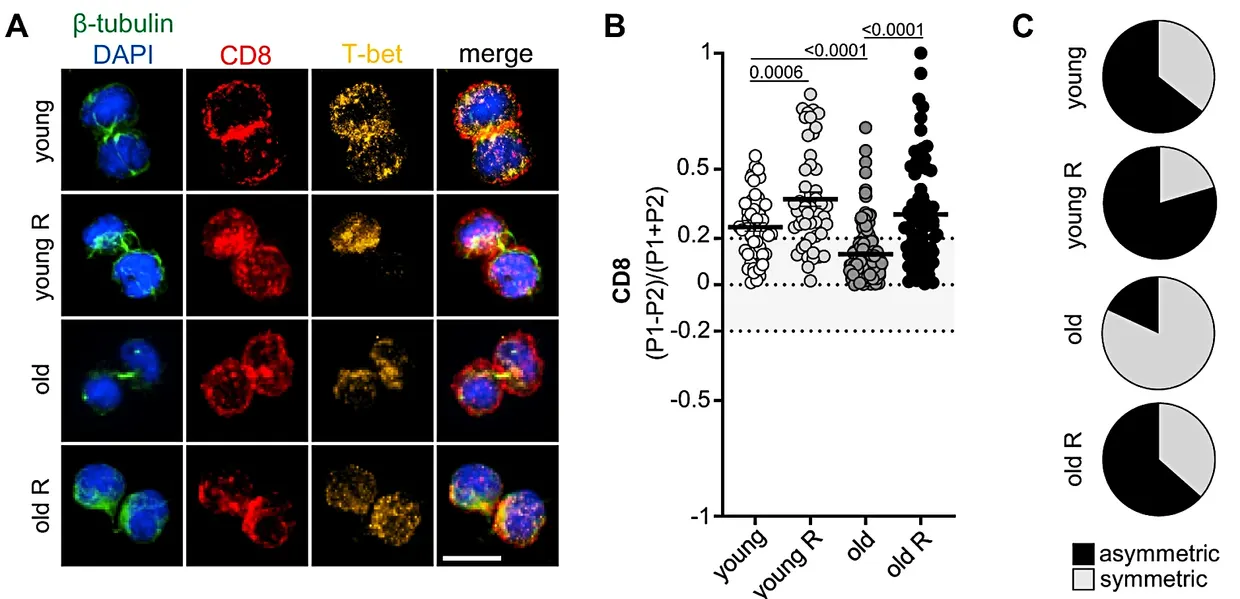
A study in Proceedings of the National Academy of Sciences examines how virtual memory CD8+ T (TVM) cells are regulated. These cells have not encountered antigen but can quickly acquire effector function. Using an autoantibody-based screening strategy, the authors identified the phosphatase dual-specificity phosphatase 2 (DUSP2) as a key regulator of TVM cell responses pnas.org
Proceedings of the National Academy of Sciencespnas.orgOpen source ↗.
DUSP2 deficiency enhanced CD8+ T cell–dependent antiviral immunity and promoted expansion of a highly activated CD44 super-high TVM subset. After viral challenge, these cells responded rapidly without antigen recognition and showed stronger effector and cytokine programs. The authors describe this as innate-like antiviral immunity rather than conventional antigen-specific recall.
Mechanistically, DUSP2 interacts with the replication protein A (RPA) complex and regulates RPA2 phosphorylation and chromatin association. Disrupting the DUSP2–RPA axis led to R-loop accumulation and higher chromatin accessibility. This activated Eomesodermin (EOMES)-associated transcriptional programs and promoted TVM cell differentiation.
T cell–specific deletion of RPA1 reproduced these effects: TVM cells accumulated spontaneously, and effector-like responses appeared rapidly after viral challenge pnas.org
Proceedings of the National Academy of Sciencespnas.orgOpen source ↗. The authors conclude that a DUSP2–RPA–R-loop axis restrains TVM cell development and innate-like antiviral immunity.