Toothed whales: in 23 species, social network structure is linked to lifespan and body size
A comparison of published data on 23 toothed whale species links social network modularity to longer lifespan, larger body size and male-biased size dimorphism.
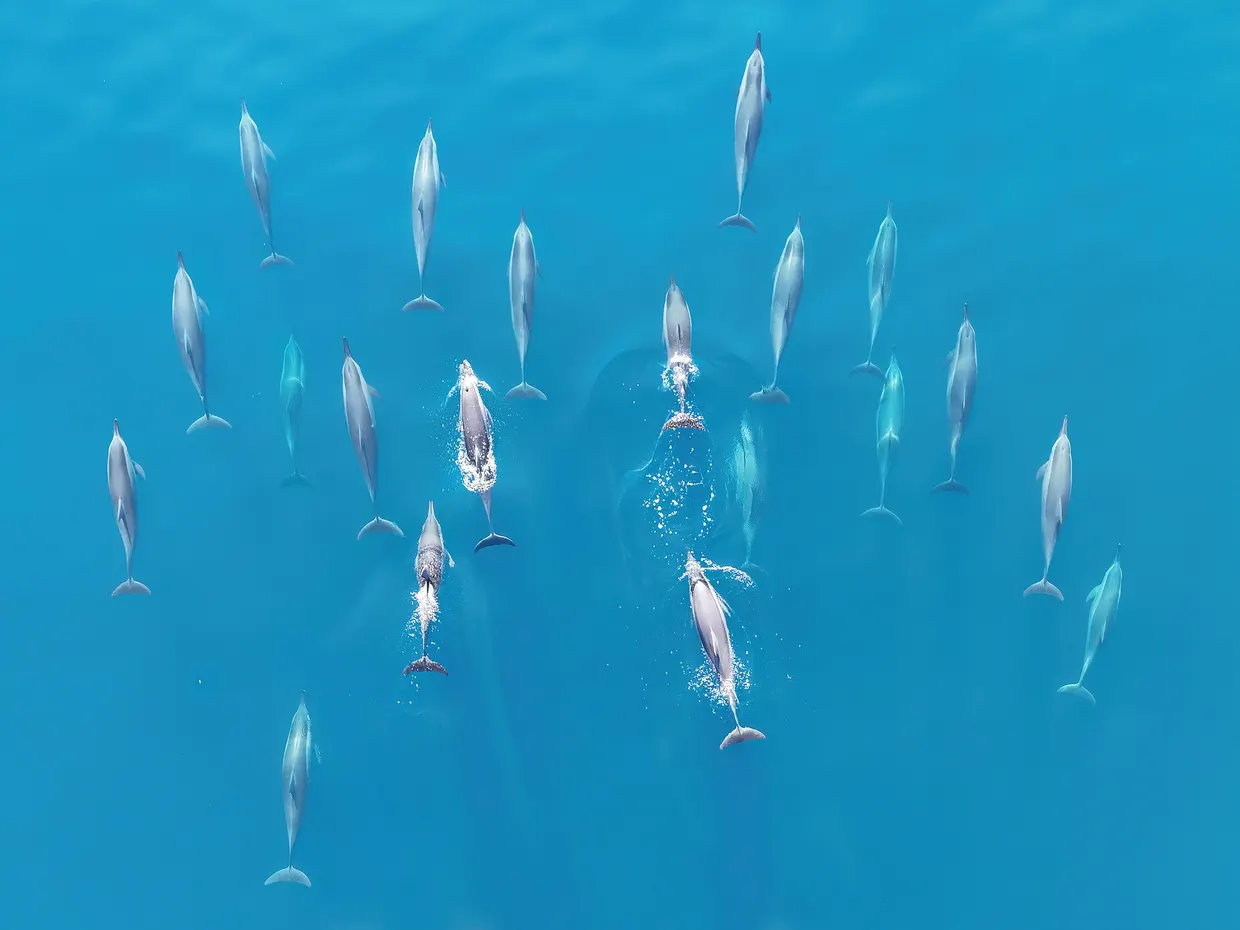
Researchers compared social network structure across toothed whales, combining published network analyses with a recent database of life history traits, according to a study in Proceedings of the National Academy of Sciences. The group's evolutionary history spans 34 million years, which the authors describe as a natural experiment for the evolution of complex mammalian societies. The analysis covered 98 measures of modularity and 89 measures of social differentiation from 23 species pnas.org
Proceedings of the National Academy of Sciencespnas.orgOpen source ↗.
Two network traits
Modularity (Q) captures divisions or "cliques" within a social community. Social differentiation (S) estimates how much animals vary in their relationships: whether they associate equally with others or form special bonds with specific individuals. The authors applied phylogenetic multilevel models to explore the origins of these traits.
Network structure was more similar among closely related species, which indicates a strong phylogenetic signal. Variability within individual species was nevertheless substantial.
Links to life history
Toothed whales with longer lifespans and larger bodies tended to form more modular social networks. The same was found for species in which males are proportionally larger than females pnas.org
Proceedings of the National Academy of Sciencespnas.orgOpen source ↗. Similar but weaker patterns were found between life history traits and social differentiation.
Causal coevolutionary models gave preliminary evidence that social structure has been both a leader and a follower of changes in life history, the authors report. They conclude that social network structure and life history traits evolved in a correlated way in toothed whales.