KAIST in lab tests: PHB mineralized in 17 days in landfill leachate, PBAT only 2.7% in 320 days
In lab incubations of landfill leachate at 35 °C, three biodegradable plastics gave very different results; PLA reached 83.6% mineralization after 320 days.
Researchers from the Korea Advanced Institute of Science and Technology (KAIST) and Ulsan National Institute of Science and Technology (UNIST) studied how three biodegradable plastics break down in landfill leachate without oxygen. The results are published in Nature Communications. The team was led by Jaewook Myung at KAIST and Changsoo Lee at UNIST. nature.com
Nature Communicationsnature.comOpen source ↗
The plastics were polyhydroxybutyrate (PHB), poly(lactic acid) (PLA) and poly(butylene adipate-co-terephthalate) (PBAT). They were incubated anaerobically at 35 °C for up to 320 days. Conventional low-density polyethylene (LDPE) was included for comparison. Degradation was measured as mineralization: the share of plastic carbon converted into gases such as methane and carbon dioxide. This separates microbial conversion of the polymer from changes in appearance or fragmentation.
Three plastics, three outcomes
PHB reached 99.9% mineralization within 17 days. PLA showed a lag of about 20 days and then degraded gradually, reaching 83.6% after 320 days. PLA is generally known to degrade more readily in high-temperature composting, so substantial mineralization at 35 °C was notable. PBAT reached only 2.7% over the same period, and LDPE 0.4%.
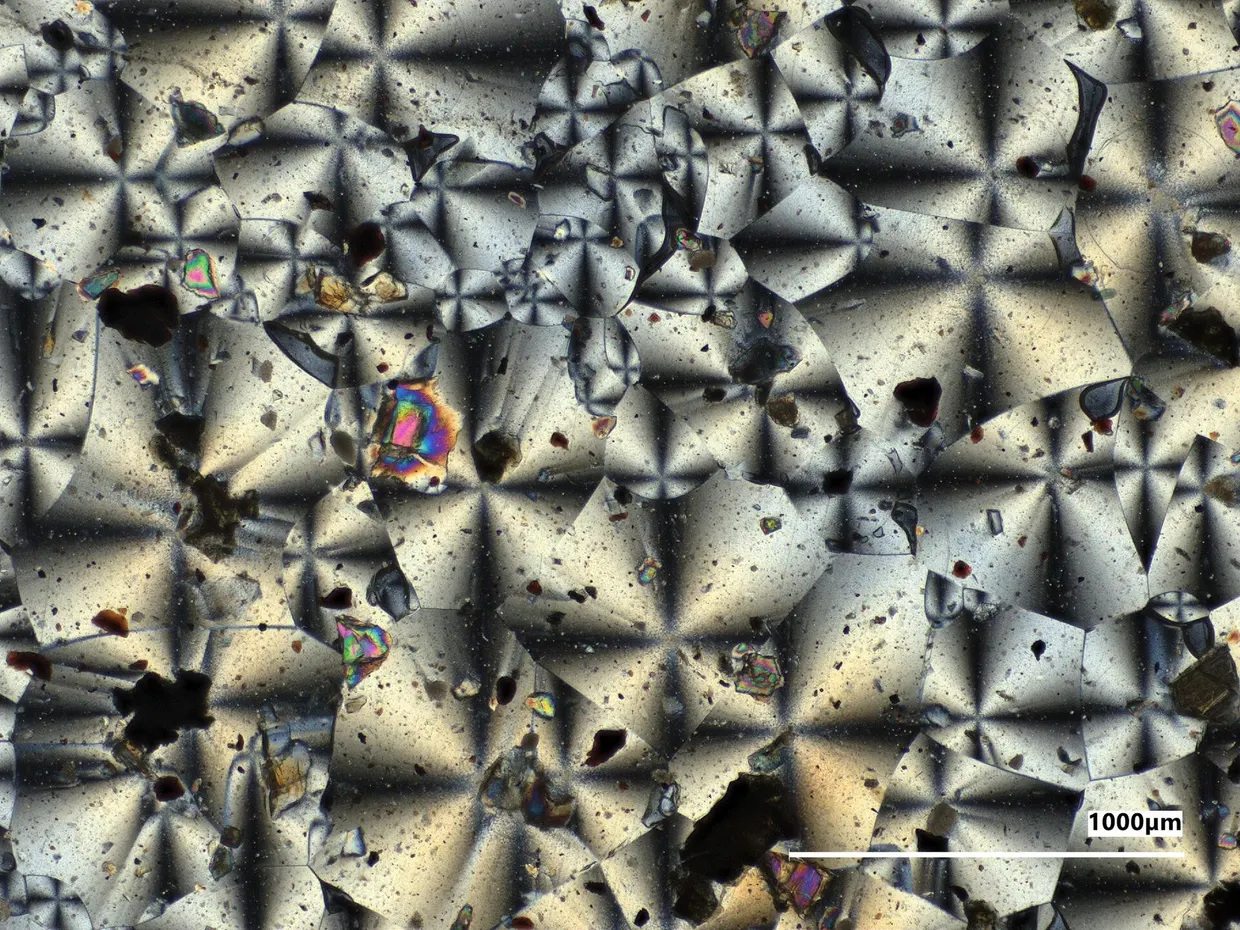
Electron microscopy showed biofilms associated with cracks and damaged areas on the PLA films. nature.com
Nature Communicationsnature.comOpen source ↗
Which microbes were active
The authors combined metagenomic analysis of microbial DNA with metatranscriptomic analysis of RNA. Among 238 reconstructed microbial genomes, 118 contained candidate genes for enzymes potentially involved in PHB or PLA depolymerization. Only 49 of these genomes showed transcription of those genes. The active genomes were predominantly within Bacillota and Pseudomonadota. They also included several poorly characterized lineages that are weakly represented in reference databases.
Transcription of these genes was more pronounced in biofilms on the plastic surfaces than in the surrounding leachate. According to the authors, the outcome of biodegradation in leachate cannot be inferred from a biodegradability label or from genomic potential alone.
The authors note that gene transcription does not by itself prove that a given microorganism or enzyme degrades the plastic, and these candidates require follow-up validation. The degradation values come from laboratory incubations at 35 °C and are not predictions of rates or extents in actual landfills. nature.com
Nature Communicationsnature.comOpen source ↗