X-ray structure of RM1-38 antibody bound to hepatitis C HVR1 peptide shows a flexible viral shield
Researchers resolved how antibody RM1-38 recognizes the C-terminal part of HVR1, a region unresolved in all E1E2 structures so far, and tested its effect on neutralization and receptor binding.
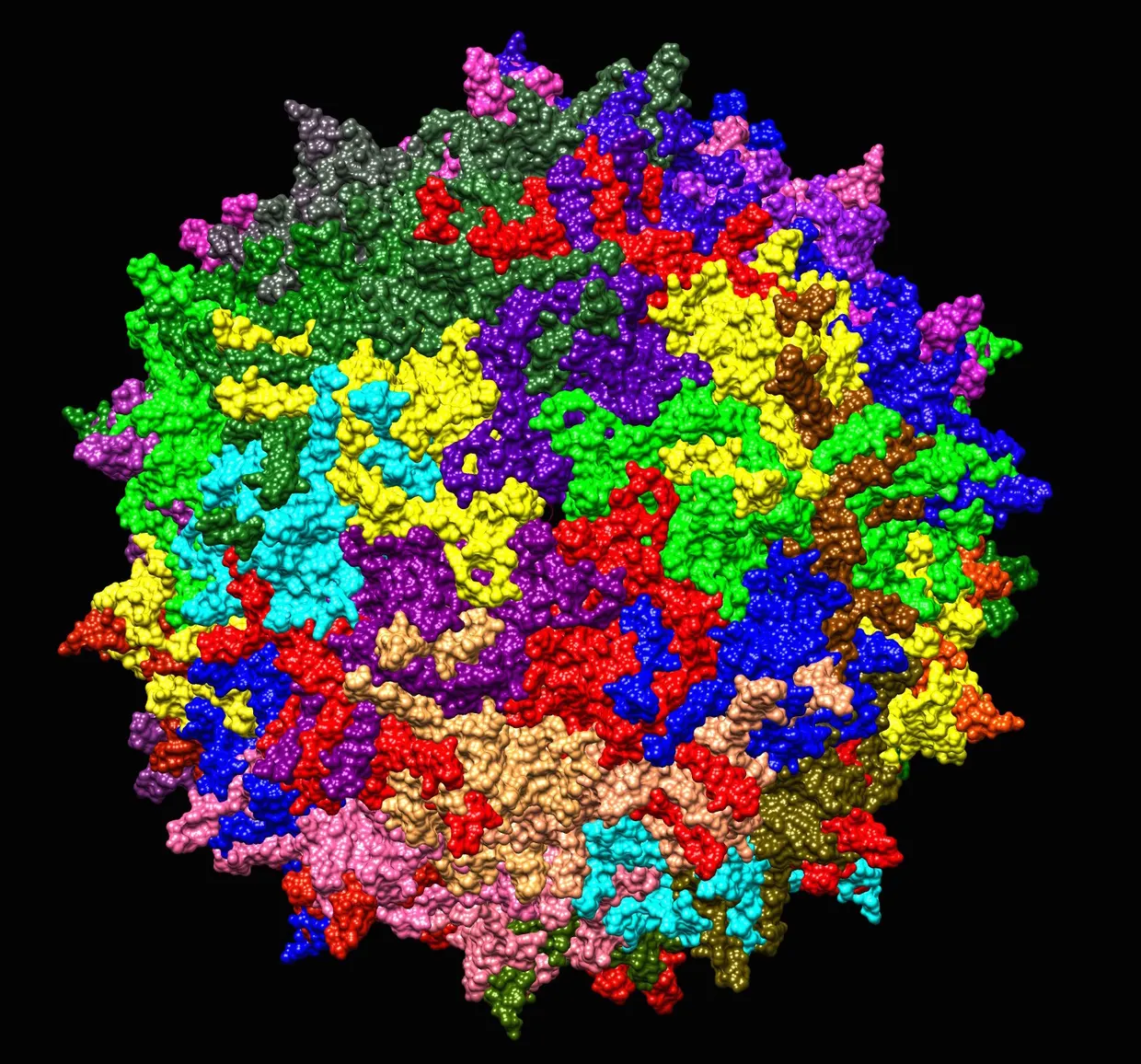
A structural study of hypervariable region 1 (HVR1) of the hepatitis C virus E1E2 glycoprotein was published in Proceedings of the National Academy of Sciences. HVR1 mutates rapidly and shields conserved neutralizing epitopes, which contributes to immune evasion pnas.org
Proceedings of the National Academy of Sciencespnas.orgOpen source ↗. In all published E1E2 or E2 structures, the C-terminal part of HVR1 (residues 394 to 411) remains unresolved. The authors used the neutralizing antibody RM1-38, which targets residues 399 to 409, a site they call antigenic site 399 (AS399).
Structure and flexibility of HVR1
The crystal structure of the RM1-38 Fab with the HVR1 AS399 peptide, combined with mutagenesis analysis, delineated the molecular basis of the antibody's strain-specific recognition and neutralization. Negative-stain electron microscopy (nsEM) and competition enzyme-linked immunosorbent assay showed that HVR1 has pronounced conformational flexibility, even when other neutralizing antibodies are bound to E1E2.
Effects on neutralization and receptor binding
In virus neutralization assays that combined RM1-38 with broadly neutralizing antibodies, RM1-38 showed antagonistic effects with them. RM1-38 also reduced E1E2 binding to cells expressing the scavenger receptor SR-BI, an HVR1-dependent receptor. It did not affect binding to the CD81 tetraspanin.
The authors report that these findings support a model in which HVR1 works as a dynamic shield. In this model, its conformational plasticity contributes both to receptor engagement and to evasion of humoral immunity in persistent infection pnas.org
Proceedings of the National Academy of Sciencespnas.orgOpen source ↗. The work combines X-ray crystallography, electron microscopy and laboratory binding and neutralization assays.
Sources · 1
Found a mistake?Read also