Notoginsenoside R1 reduced infarct volume in mice with induced stroke; iMetaMed single-cell and spatial study
In a mouse model of cerebral artery occlusion, notoginsenoside R1 reduced infarct size and shifted microglial and mural cell states, authors report. The effect depended on ABCA9 and FOXO1.
A team led by Yanrong Zheng, Shengshuang Chen, Jie Liao and Xiaohui Fan reported in iMetaMed (published 3 November 2026) a mechanistic study of notoginsenoside R1 (NGR1) in a mouse model of ischemic stroke. NGR1 is a saponin from the herb Panax notoginseng. The work was done on animals, and the authors state that validation in human neurovascular systems is still needed wiley.com
iMetaMedwiley.comOpen source ↗.
The researchers used the middle cerebral artery occlusion (MCAO) model. Systemic NGR1 reduced cerebral infarct volume in a dose-dependent manner, alleviated neurological deficits and improved 7-day survival. In the acute injury measures, NGR1 and the positive control edaravone both showed neuroprotective effects.
Single-cell and spatial profiling
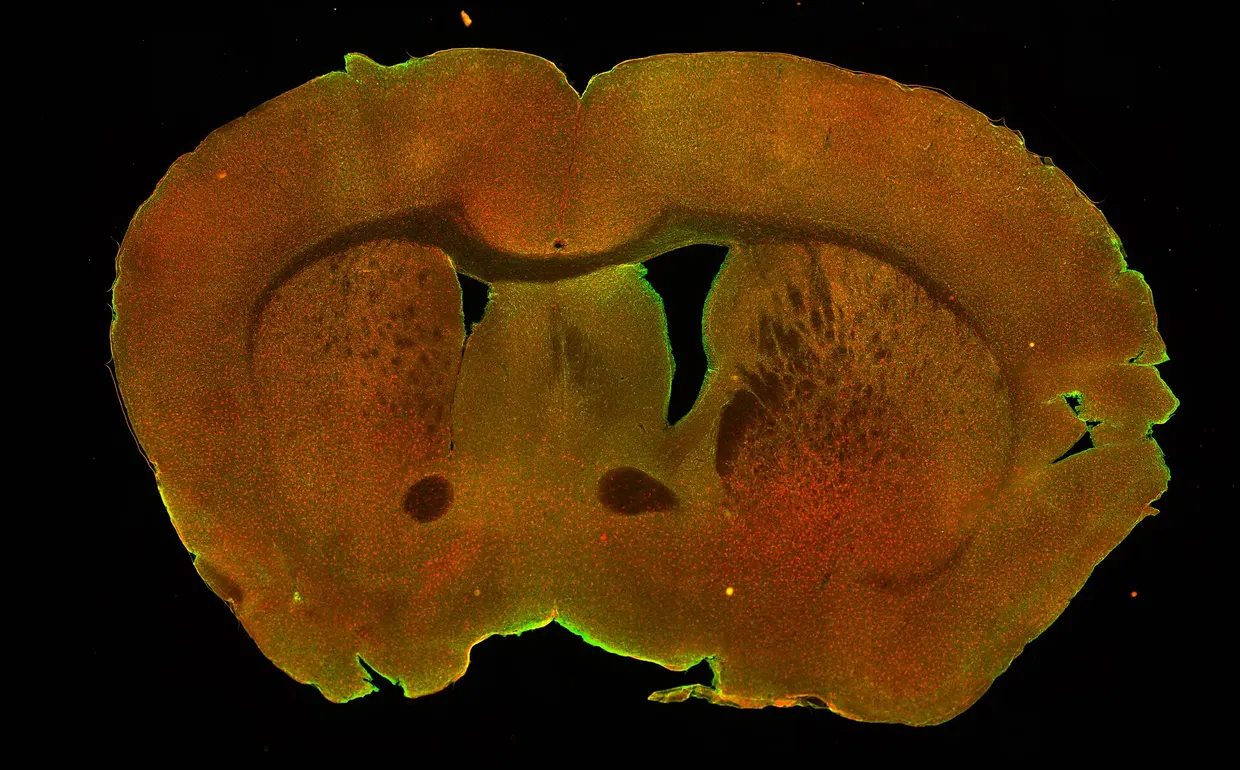
The team combined single-cell RNA sequencing, spatial transcriptomics and spatial metabolomics (SMALDI-MSI). Across 37,212 single cells they identified 15 brain cell lineages. With NGR1, the relative representation of several cell types moved toward the sham pattern, most prominently in mural cells and microglia.
Analysis suggested that NGR1 shifted post-ischemic mural cells away from inflammatory profiles. In vitro, NGR1 alleviated excessive pericyte contraction. In vivo, it increased α-SMA-positive vascular coverage and improved cerebral blood perfusion in the ischemic penumbra wiley.com
iMetaMedwiley.comOpen source ↗.
In microglia, NGR1 treatment was associated with a lower share of the ischemia-associated Adam8hi subtype and a higher share of the Socs3hi subtype. Cell-cell communication analysis suggested a shift toward more homeostatic microglia–mural signaling. SMALDI-MSI showed that NGR1 reprogrammed metabolic profiles in ischemic brains.
ABCA9 and FOXO1
RNA velocity analysis identified the lipid transporter Abca9 as a putative driver gene of the Socs3hi state. In vitro, ABCA9 knockdown diminished NGR1-mediated suppression of IL-1β and its effect on pericyte contraction in co-culture. In vivo, Abca9 knockdown in NGR1-treated mice was associated with larger infarcts and worse neurological scores.
NGR1 directly binds to FOXO1, and FOXO1 perturbation altered ABCA9 expression. The authors interpret ABCA9 as a functionally supported component of a broader FOXO1-associated transcriptional program wiley.com
iMetaMedwiley.comOpen source ↗.
The authors list limitations: the exploratory scRNA-seq analysis lacked independent library-level replication, and the mechanistic multiomic analyses were limited to the acute 24-hour phase.