Hawaiian plume melt inclusions show δ13C of –1 ± 2‰, a possible isotopic signature of core carbon
Melt inclusions from shield-stage Hawaiian lavas are richer in 13C than normal mantle. The authors link this to carbon exchanged from the core into the mantle.
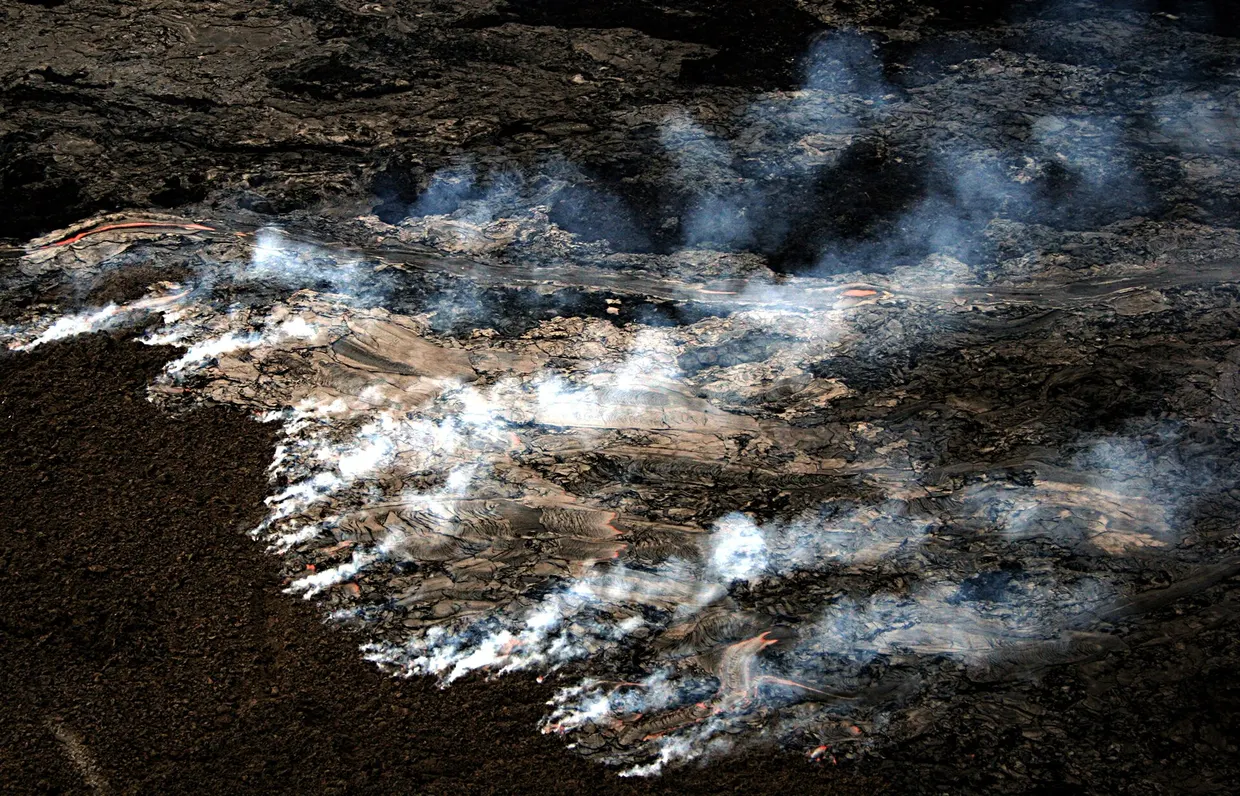
Researchers report high-precision δ13C measurements of melt inclusions from Hawaiian plume lavas in Proceedings of the National Academy of Sciences. The inclusions were entrapped before significant degassing and sample distinct mantle sources pnas.org
Proceedings of the National Academy of Sciencespnas.orgOpen source ↗.
Inclusions from shield-stage lavas, interpreted to sample the plume's central axis, converge toward a primary δ13C of –1 ± 2‰. The axis is inferred to be rooted in the core–mantle boundary thermal boundary layer. Inclusions from rejuvenated-stage lavas, derived from entrained mantle at the plume's periphery, record –7 ± 2‰, a normal mantle signature.
The authors interpret the uniquely 13C-rich shield-stage signature as the isotopic fingerprint of carbon exchanged from the core into the mantle. They point to 13C-rich carbonaceous chondrites as the primary source of Earth's carbon. The core's isotopic composition had long been presumed beyond observation.