INSIST-IT trial stops early as intra-arterial tenecteplase fails in basilar artery stroke
A randomized clinical trial was terminated prematurely after adjunctive intra-arterial tenecteplase failed to improve functional recovery following thrombectomy.
Adjunctive intra-arterial administration of the thrombolytic agent tenecteplase does not improve functional outcomes in patients with acute basilar artery occlusion following successful mechanical thrombectomy, according to findings from the INSIST-IT randomized clinical trial published in Nature Communications nature.com
Nature Communicationsnature.comOpen source ↗. The multi-center trial was terminated early on the recommendation of the Data Safety and Monitoring Committee due to lack of efficacy and safety concerns regarding numerical mortality increases in the intervention cohort.
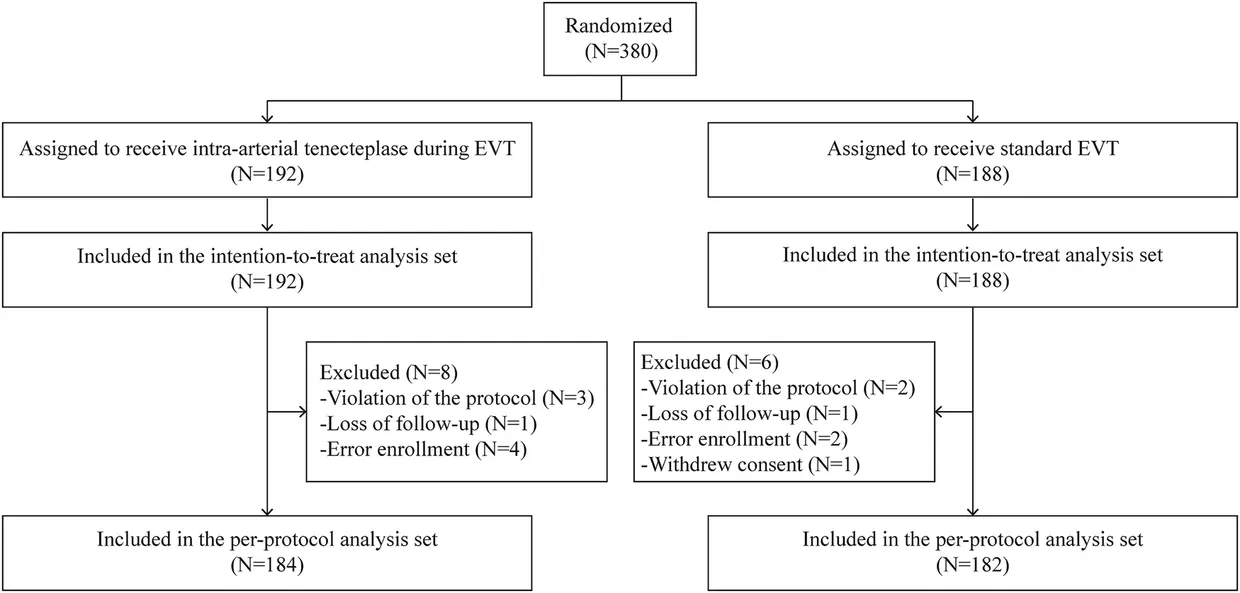
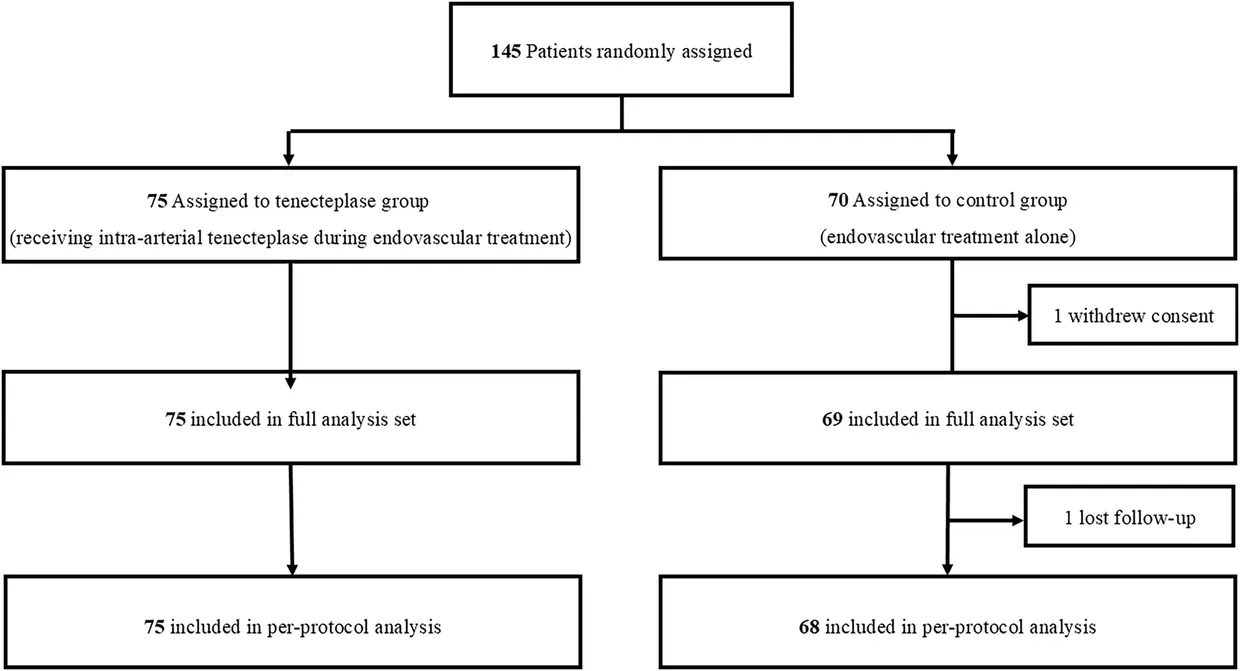
Investigators enrolled 145 patients presenting within 24 hours of estimated symptom onset who achieved successful reperfusion after endovascular treatment. Participants were randomized to receive either intra-arterial tenecteplase (n = 75) or standard medical therapy alone (n = 69 in the final primary analysis cohort). Follow-up was completed for 143 patients. Enrollment began in March 2023 and was officially halted on February 20, 2025, following an interim analysis of 107 participants.
Primary and Functional Outcomes
The primary efficacy endpoint was independent ambulation, defined as a modified Rankin Scale (mRS) score of 0 to 3 at 90 days. In the intra-arterial tenecteplase group, 40.0% of patients achieved independent ambulation compared to 50.0% in the control group (odds ratio 0.67; 95% CI, 0.34–1.29; P = 0.23). After adjustment for baseline clinical and demographic variables, the difference remained statistically non-significant (adjusted OR 0.70; 95% CI, 0.35–1.39; P = 0.30).
Secondary outcomes revealed that significantly fewer patients in the tenecteplase group achieved an excellent functional outcome, defined as an mRS score of 0 to 1 at 90 days, compared to the control group (20% versus 35%; adjusted OR 0.43; 95% CI, 0.19–0.95; P = 0.04) nature.com
Nature Communicationsnature.comOpen source ↗. Cerebral circulation time was faster and four patients (5.5%) showed improved reperfusion scores after drug infusion, but this did not translate to superior clinical recovery.
Safety and Mortality Rates
The primary safety outcome, symptomatic intracranial hemorrhage, occurred in 6.2% of patients receiving intra-arterial tenecteplase compared to 4.8% in the control cohort (odds ratio 1.31; 95% CI, 0.28–6.89; P = 0.73).
All-cause mortality at 90 days was numerically higher in the tenecteplase arm, reaching 41.3% compared with 26.5% among controls (odds ratio 1.96; 95% CI, 0.97–4.03; P = 0.063). The researchers concluded that intra-arterial tenecteplase offers no therapeutic benefit after successful thrombectomy in basilar artery occlusion.