Peking University finds wind drought duration could rise up to 40% by 2100
Analysis of 21 IPCC models projects longer low-wind spells across northern mid-latitudes, affecting 20% of existing turbines.
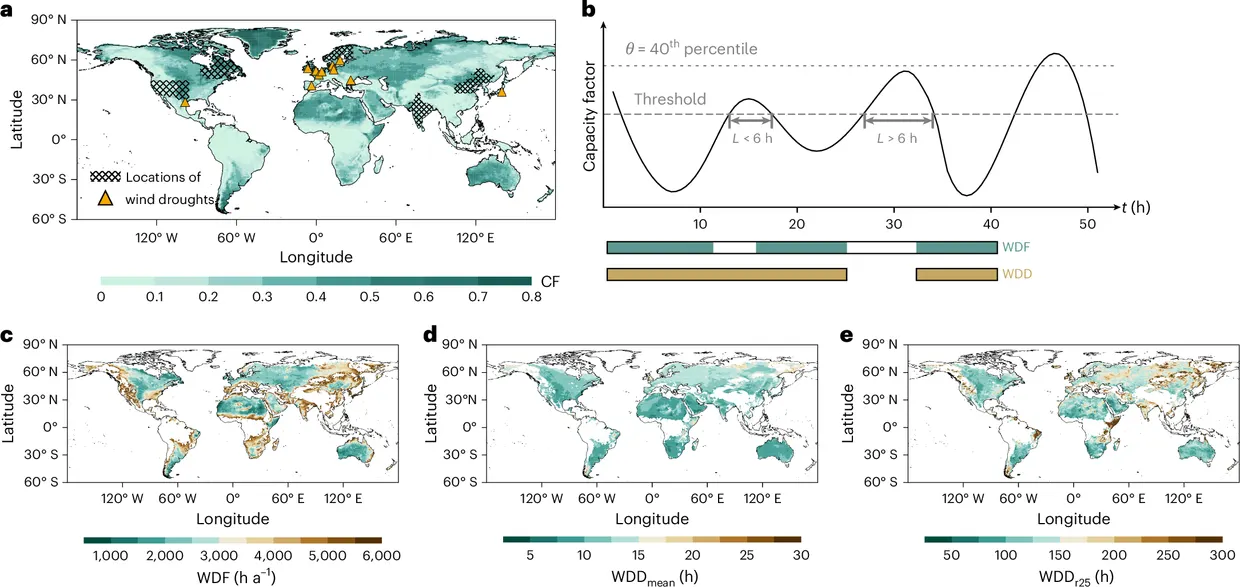
Prolonged periods of low wind speeds will become significantly longer by 2100 across both low- and high-emissions scenarios, according to an analysis of 21 IPCC climate models by Peking University researchers published in nature.com nature.com
nature.comnature.comOpen source ↗. The team evaluated hourly model projections alongside atmospheric reanalyses from 1980 to 2022 to assess future changes in uninterrupted low-generation events. The results show that northern mid-latitude regions face substantial increases in the persistence of these conditions.
Atmospheric drivers and regional risks
The lengthening of low-wind spells is primarily caused by declining mid-latitude cyclone activity and Arctic warming. For northern mid-latitude territories, the duration of rare 25-year return events is projected to expand by up to 20% under low-warming pathways and by up to 40% under very high warming scenarios. Extreme wind droughts are expected to become more frequent in eastern North America, western Russia, northeastern China, and north-central Africa.
Infrastructure exposure and grid impact
The projections indicate that approximately 20% of existing wind turbines globally are located in zones with high risks of record-breaking low-wind spells. While northern mid-latitudes between 30 and 60 degrees North exhibit longer average events, some tropical regions are projected to see reductions in wind drought occurrence. Prolonged generation deficits require longer operational backup from storage systems, alternative generation sources, and power imports to maintain grid stability.