Gut bacteria make N-MNA, an NAD precursor that boosted intestinal stem cell renewal in flies and mice
Commensal and probiotic bacteria produce N-methylnicotinamide, which cells convert to NAD+; in fruit flies and mice it promoted gut epithelial repair.
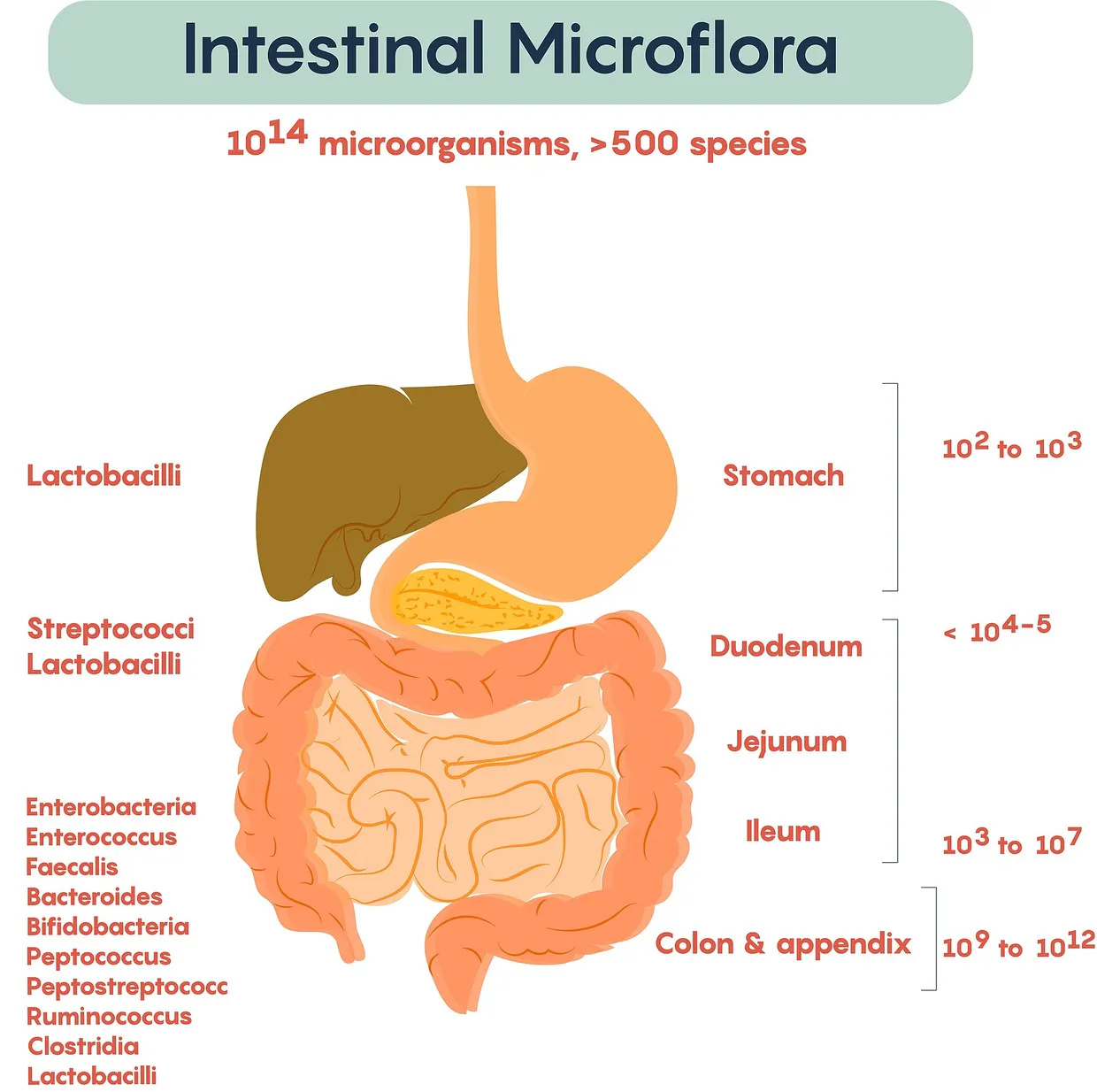
Researchers report in Science Advances that certain commensal bacteria, including specific probiotic species, produce (amide-)N-methylnicotinamide (N-MNA) science.org
Science Advancesscience.orgOpen source ↗. It is a structural isomer of methylnicotinamide, a nicotinamide degradation metabolite. NAD is a cellular coenzyme whose decline is associated with chronic and inflammatory diseases. Patients with gut dysbiosis and inflammation showed reduced N-MNA in stool.
Stable isotope tracing showed that N-MNA is rapidly taken up and incorporated into NAD redox reactions by intestinal epithelial cells and other cell types of fruit fly, mouse and human. Genetic and pharmacological analyses suggest that N-MNA is converted to NAD+ via the Preiss-Handler pathway, independent of the salvage pathway.
In Drosophila, the authors ablated or overexpressed SIRT1, an NAD-consuming enzyme, in specific cell types. In mice, they traced the lineage of intestinal stem cells. These experiments showed that systemic N-MNA supplementation promotes intestinal stem cell regeneration and gut epithelial repair.
Compared with known NAD precursors, N-MNA brings a methyl group into host cells. The authors describe it as a class of microbe-derived NAD precursor that stimulates the regenerative capacity of tissue science.org
Science Advancesscience.orgOpen source ↗.