Phase 3 BRETIS-TNK2 trial finds intra-arterial tenecteplase does not improve stroke outcomes
A randomized trial of 380 patients evaluated intra-arterial tenecteplase during thrombectomy, reporting no 90-day functional benefit over thrombectomy alone.
Intra-arterial administration of tenecteplase during endovascular thrombectomy did not improve 90-day functional recovery in acute ischemic stroke patients with large-vessel occlusion, according to phase 3 study results published in Nature Communications nature.com
Nature Communicationsnature.comOpen source ↗. The randomized, multicenter BRETIS-TNK2 trial evaluated whether combining intra-arterial thrombolysis with mechanical clot retrieval could clear microcirculatory thrombi and prevent the no-reflow phenomenon compared with thrombectomy alone.
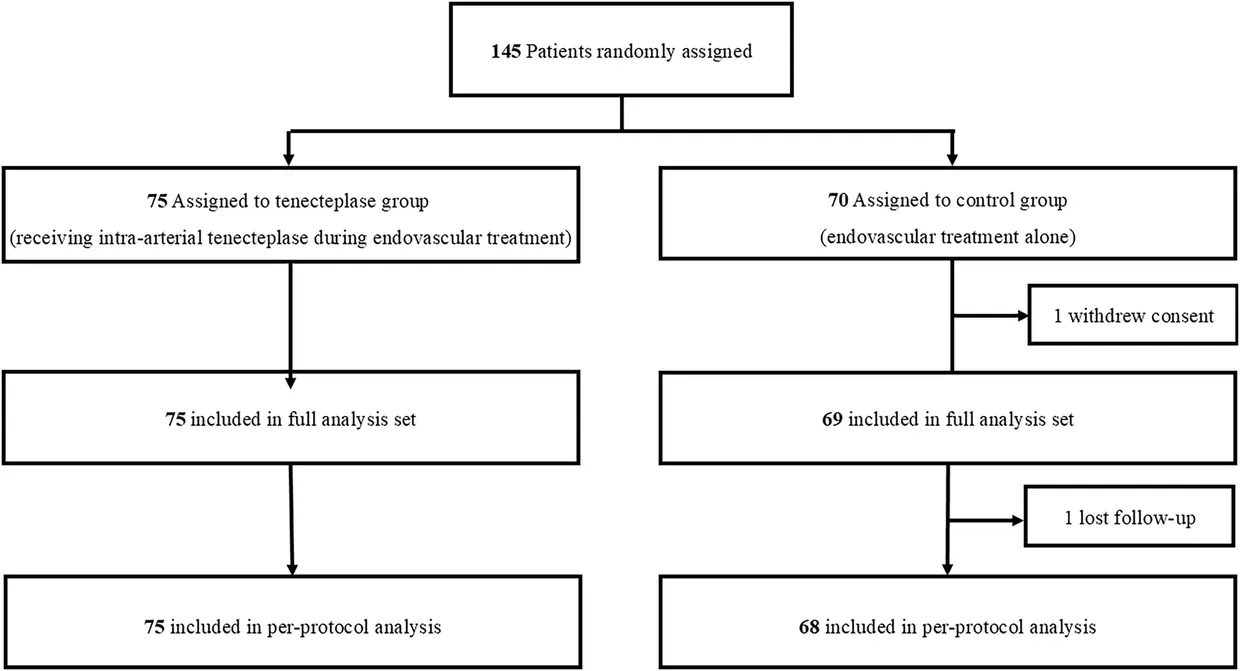
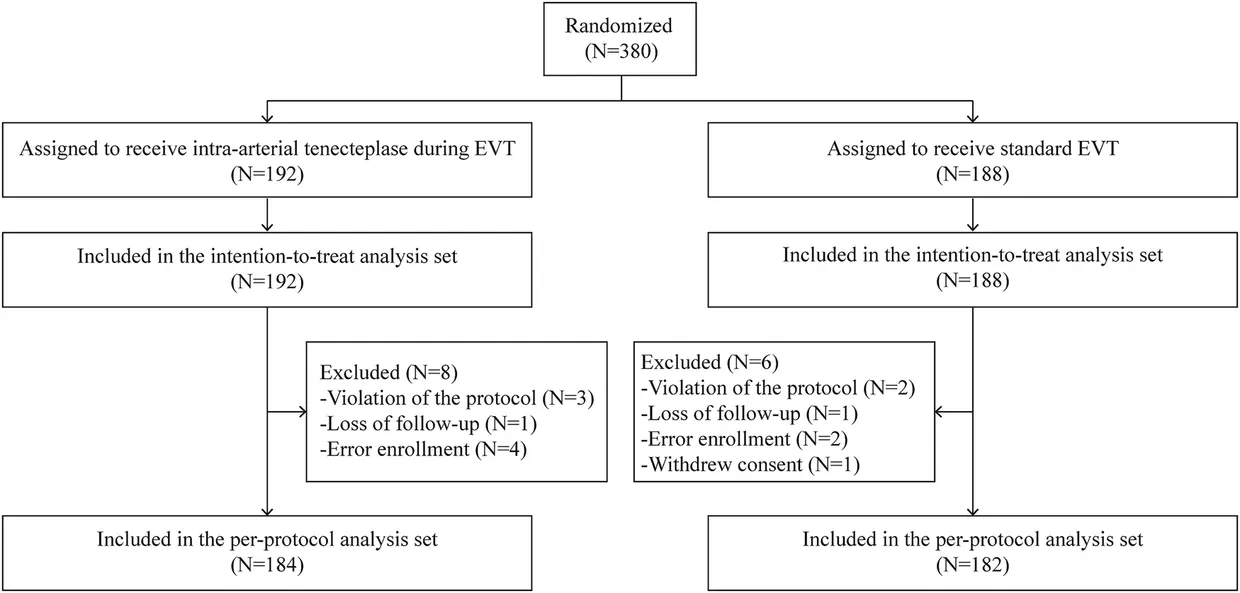
Between April 2023 and December 2024, researchers enrolled 380 adult patients eligible for endovascular treatment within 24 hours of symptom onset. Participants were randomly allocated to either intra-arterial tenecteplase administered during thrombectomy (192 patients) or standard thrombectomy alone (188 patients). Demographics and baseline characteristics were balanced between cohorts, with a median age of 65 years and a median baseline National Institutes of Health Stroke Scale score of 14 across both groups.
Primary functional endpoint
The primary outcome assessed functional independence at 90 days, defined as a modified Rankin Scale score of 0 to 2. Primary endpoint data were documented for 190 patients in the tenecteplase arm and 186 in the control arm.
Favorable outcomes occurred in 40.0% of the tenecteplase group compared with 46.8% of the control group nature.com
Nature Communicationsnature.comOpen source ↗. The unadjusted odds ratio was 0.759 (95% CI 0.504–1.142; P = 0.185), and the adjusted odds ratio was 0.688 (95% CI 0.451–1.049; P = 0.083), showing no statistically significant clinical advantage for the adjunctive intra-arterial infusion.
Secondary angiographic parameters
Secondary angiographic endpoints assessed successful reperfusion rates after the final retrieval pass during the endovascular procedure. In the intention-to-treat cohort, successful recanalization reached 95.8% (184 of 192 patients) in the tenecteplase arm and 91.4% (172 of 188 patients) in the control group (unadjusted OR 2.140, 95% CI 0.893–5.126; P = 0.088).
In the per-protocol population of 366 patients, successful reperfusion was noted in 96.7% (178 of 184) of tenecteplase recipients versus 91.7% (167 of 182) of controls (unadjusted OR 2.665, 95% CI 1.010–7.029; P = 0.048). Despite the technical recanalization trends, the authors concluded that intra-arterial tenecteplase during thrombectomy failed to yield superior 90-day neurological recovery.